Disclaimer: The information provided on loanrejectionhelp.com is for educational, informational, and financial literacy purposes only. It does not constitute legal or financial advice. Always consult with a certified financial advisor or your lending institution before making borrowing decisions.
Introduction
When you search for why a loan rejected despite good credit score happens, you are trying to understand a highly frustrating financial paradox: a lender denying your application even when your credit rating shows you have a history of paying your bills on time. Borrowers actively search for this term because there is a widespread misconception that a high three-digit credit score (such as 750 or above) is a golden ticket that guarantees automatic loan approval.
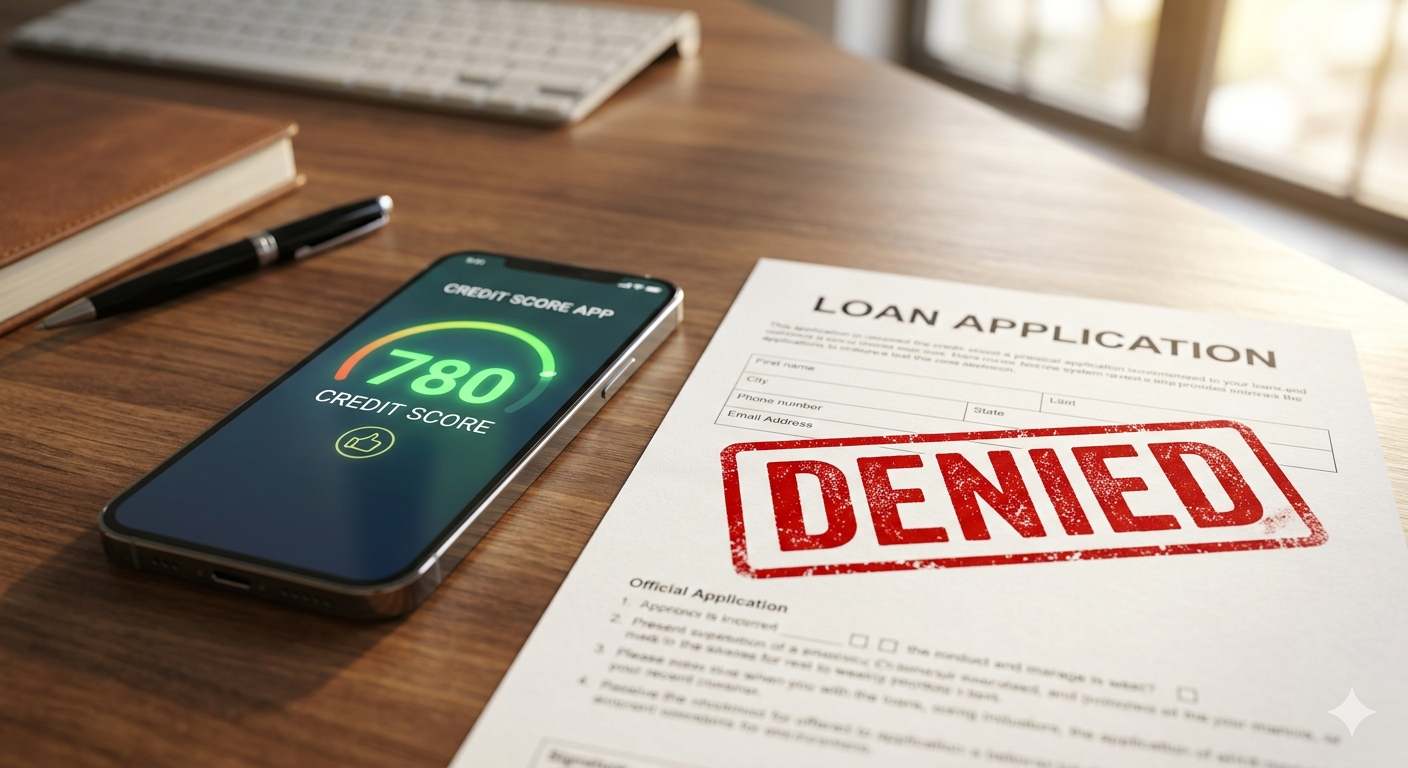
What ultimately affects this unexpected outcome is the difference between your past behavior and your current capacity; lenders evaluate your entire financial profile during a process called underwriting, heavily scrutinizing your Debt-to-Income (DTI) ratio, employment stability, and existing financial obligations before granting new funds.
For many salaried individuals, self-employed professionals, and first-time borrowers, receiving a rejection letter when you know your credit score is excellent can feel like a mistake. At loanrejectionhelp.com, we see this scenario constantly. To navigate this issue, you must understand the broader financial concepts of risk assessment and loan underwriting. This comprehensive guide will explain exactly how lenders view your application beyond your credit score and what you can do to fix it.
Table of Contents
Understanding the Financial Concept: Credit History vs. Credit Capacity

To understand why a loan is rejected despite a good credit score, you must first understand the financial concept of Loan Underwriting and how it separates your willingness to pay from your ability to pay.
A credit score (like a FICO or CIBIL score) is simply a historical grade. It measures your past behavior. If your score is high, it tells the lender: “Historically, this person is very willing to pay back their debts on time.” However, a credit score does not tell the lender how much money you currently make, how much your rent costs, or whether you just lost your job yesterday. This is where Credit Capacity comes in. Capacity is a measure of your current financial bandwidth.
Lenders use an underwriting process to calculate risk. Even if your past behavior is perfect, if the mathematical formula shows that adding a new monthly loan payment (EMI) to your current budget will stretch your finances to the breaking point, the lender will reject the application to protect both their funds and your financial stability.
The Primary Reasons for Loan Rejection Despite a Good Credit Score
If your credit score is excellent but you were still denied a personal loan, auto loan, or mortgage, the underwriter’s automated system or manual review likely flagged one of the following financial concepts as a high risk.
1. A High Debt-to-Income (DTI) Ratio
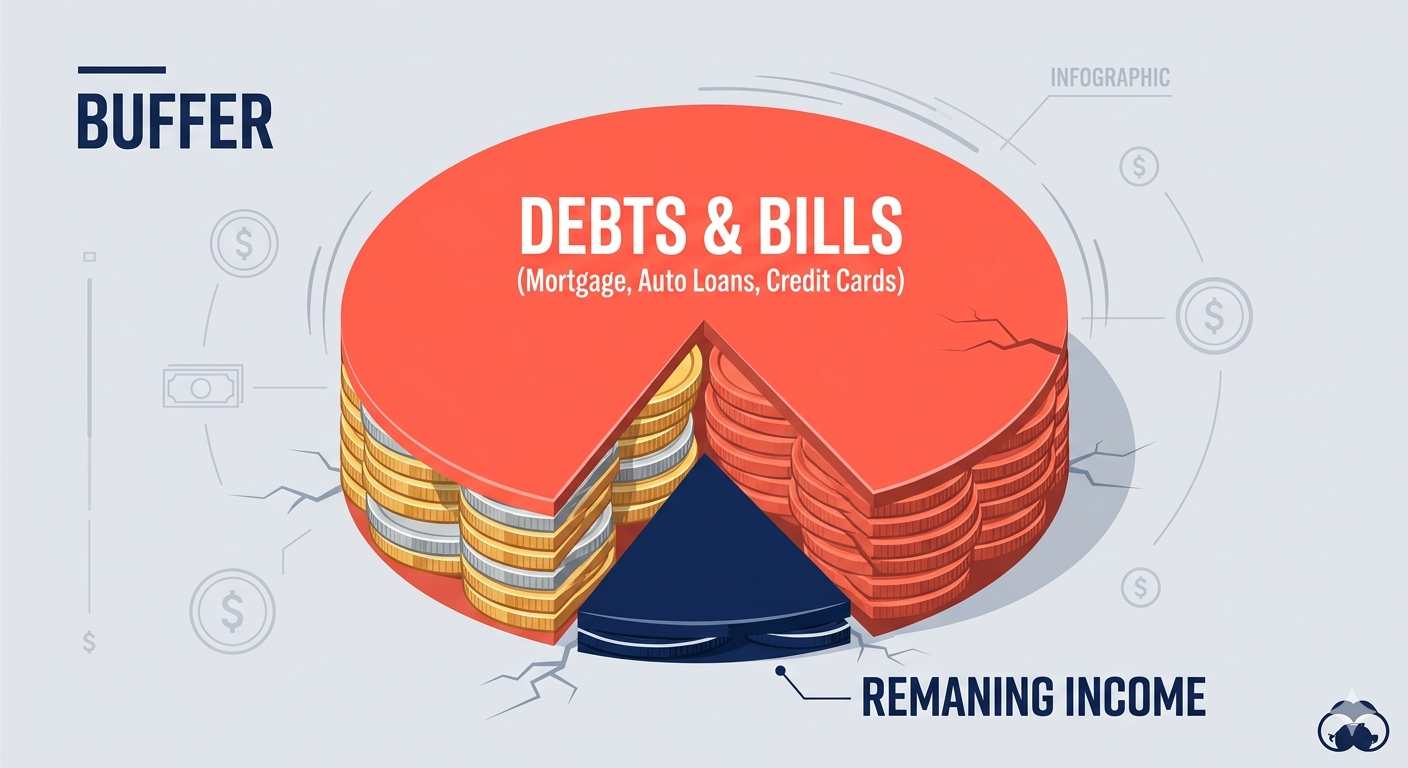
This is the single most common reason for a loan rejection when your credit score is good. The Debt-to-Income (DTI) ratio is a financial metric that compares your gross monthly income to your mandatory monthly debt payments.
- How it works: If you earn $5,000 a month and you pay $2,000 toward a mortgage, auto loans, and credit card minimums, your DTI is 40%.
- The Rejection Factor: Most traditional banks and lenders have a strict DTI ceiling, typically around 35% to 43%. If approving your new loan pushes your DTI past this threshold, the lender will reject the application. To them, the math dictates that you do not have enough “buffer” income to safely manage the new debt, regardless of how perfect your credit history is.
2. Employment Instability or “High-Risk” Income
Your income must be both sufficient and stable. Lenders look for predictability.
- Job Hopping: If you have changed jobs three times in the last year, lenders view your income as unstable. Most banks prefer to see at least one to two years of continuous employment with the same employer or within the same industry.
- Self-Employed Professionals: Freelancers and business owners often face rejections despite great credit because their income fluctuates. If your tax returns show declining revenue or high business write-offs that lower your “net” income on paper, the lender’s risk assessment software may decline you.
3. Too Many Recent Hard Inquiries (Credit Hungriness)
Every time you apply for a new credit card or loan, the lender pulls your official credit report. This is called a “hard inquiry.”

While your overall score might still be in the “Good” range, having four or five hard inquiries within a 90-day window triggers an alarm in the underwriting system. It makes you look desperate for cash—a state often referred to as being “credit hungry.” Lenders will reject you because a sudden reliance on borrowed money is a leading indicator of future default.
4. Insufficient Income for the Requested Loan Amount
Sometimes, the math simply does not align. You might have an 800 credit score, zero debt, and a perfect DTI ratio. However, if you apply for a $50,000 unsecured personal loan on a $30,000 annual salary, the application will be denied. Lenders have internal limits on the maximum principal amount they will lend based on specific income brackets, regardless of your credit rating.
5. Inadequate Collateral or Loan Purpose
If you are applying for a secured loan (like a home mortgage or a car loan), the asset you are purchasing acts as collateral. The lender will conduct an independent appraisal of that asset. If you are trying to borrow $25,000 for a car that the bank values at only $15,000, your loan will be rejected. The bank will not lend more than the asset is worth, because if you default, they cannot recoup their money by selling the collateral.
Actionable Steps: What to Do After This Type of Rejection

Facing a loan rejection despite a good credit score is an opportunity to re-evaluate your financial standing. Do not immediately apply to another lender, as this will generate another hard inquiry and worsen your profile. Instead, take these measured steps:
- Request an Adverse Action Notice: Legally, lenders are required to tell you why your application was denied. Ask for this letter to identify exactly which metric (e.g., DTI, income, or employment) triggered the rejection.
- Lower Your DTI Ratio: Aggressively pay down your existing credit card balances or smaller personal loans before reapplying. Lowering your monthly debt obligations makes you a safer bet to underwriters.
- Adjust the Loan Amount: If your income was the issue, consider asking for a smaller principal amount that fits comfortably within the lender’s DTI requirements.
- Provide Additional Income Proof: If you are self-employed or have a side business, ensure you provide audited financial statements, tax returns, and bank statements to prove your cash flow is steady.
How to Improve Your CIBIL Score Fast: A Complete Financial Guide
Responsible Borrowing and Risk Awareness
Understanding the financial mechanics behind loan underwriting is a vital part of financial literacy. A loan rejection is not a personal insult; it is a mathematical boundary designed to prevent over-borrowing.

Taking on debt that consumes too much of your monthly income can lead to extreme financial stress, missed payments, and eventual damage to that very credit score you worked so hard to build. Always borrow responsibly. Create a strict monthly budget, ensure your total EMI payments never exceed 40% of your take-home pay, and remember that holding off on a new loan until you have paid down existing debt is often the safest financial decision you can make.
Conclusion
The reality of having a loan rejected despite good credit score serves as an important reminder: your credit rating is only one piece of a much larger financial puzzle. While a good score opens the door to the lender’s office, it is your Debt-to-Income ratio, employment stability, and true capacity to repay that actually secures the funds.
By shifting your focus from merely maintaining a high credit score to maintaining a balanced, healthy overall financial profile, you can avoid unexpected rejections. Take the time to evaluate your current debt load, respect the mathematics of underwriting, and approach your next loan application with a complete understanding of how lenders view your financial health.