
Introduction: The Truth About Federal Student Aid
If you are preparing for higher education and searching for financial assistance, you have likely come across the primary federal portal and found yourself asking: is student aid gov legit? The definitive answer is yes. StudentAid.gov is the official, legitimate website operated by the U.S. Department of Education. Borrowers frequently search for this term because the internet is unfortunately filled with predatory scams, look-alike websites, and third-party companies trying to charge exorbitant fees for free government services.

When you enter sensitive information like your Social Security Number and tax records to secure education funding, you need absolute certainty that the platform is secure. The legitimacy of this site, and your safe navigation of it, directly affects your ability to receive federal grants, work-study funds, and low-interest student loans without falling victim to identity theft or financial fraud.
At LoanRejectionHelp.com, our goal is to empower first-time borrowers, salaried individuals, and self-employed professionals with clear financial literacy. In this comprehensive guide, we will explore exactly what StudentAid.gov does, how to protect yourself from student loan scams, and how to navigate the federal financial aid process—including what to do if your federal loan application faces hurdles or rejection.
Table of Contents
Understanding StudentAid.gov: The Financial Concept Explained
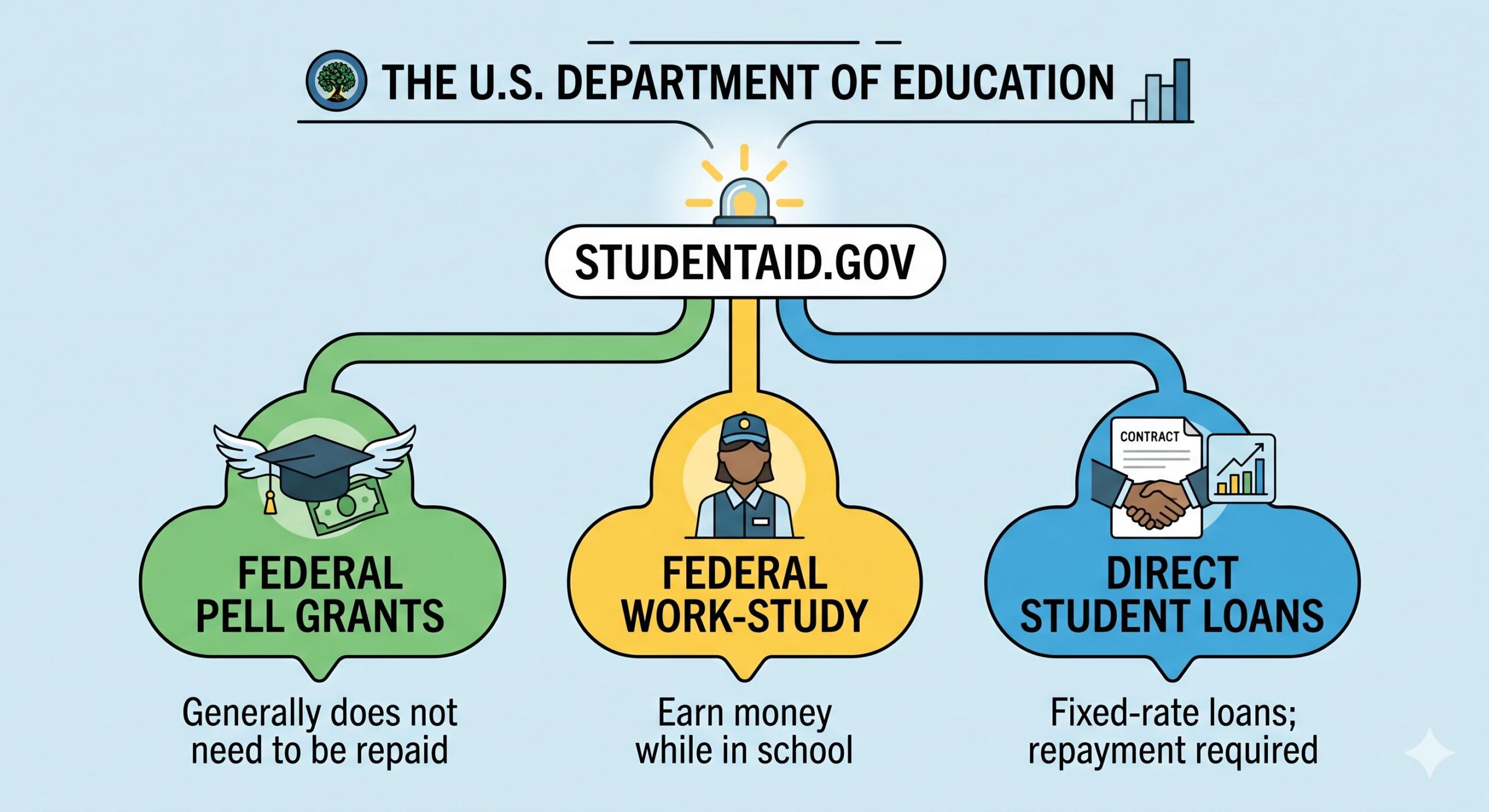
To fully grasp why student aid gov legit is such an important search query, we must look at the financial ecosystem it represents. StudentAid.gov is the centralized hub for federal student aid in the United States. It is the only official platform where students and parents can fill out the Free Application for Federal Student Aid (FAFSA®).
What Does the Platform Do?
Federal financial aid is fundamentally different from private lending. The government provides funding to ensure that education remains accessible to people across various income levels. Through StudentAid.gov, applicants can access:
- Federal Pell Grants: Free financial assistance that generally does not need to be repaid, awarded based on severe financial need.
- Federal Work-Study: A program that provides part-time jobs for students with financial need, allowing them to earn money to help pay education expenses.
- Direct Subsidized and Unsubsidized Loans: Federal student loans with fixed interest rates. Subsidized loans are based on financial need (the government pays the interest while you are in school), while unsubsidized loans are available regardless of financial need.
- Direct PLUS Loans: Federal loans for graduate students and parents of dependent undergraduate students to help pay for education expenses not covered by other financial aid.
Understanding these options is crucial for responsible borrowing. The interest rates on federal loans are typically lower and more stable than those offered by private banks, and they come with flexible repayment plans, including Income-Driven Repayment (IDR) and potential Public Service Loan Forgiveness (PSLF).
Why Do Borrowers Question if StudentAid.gov is Legit?
The primary reason borrowers doubt the legitimacy of the federal aid site is the overwhelming presence of student loan scams. First-time borrowers are particularly vulnerable to these traps.
The Rise of Look-Alike Sites
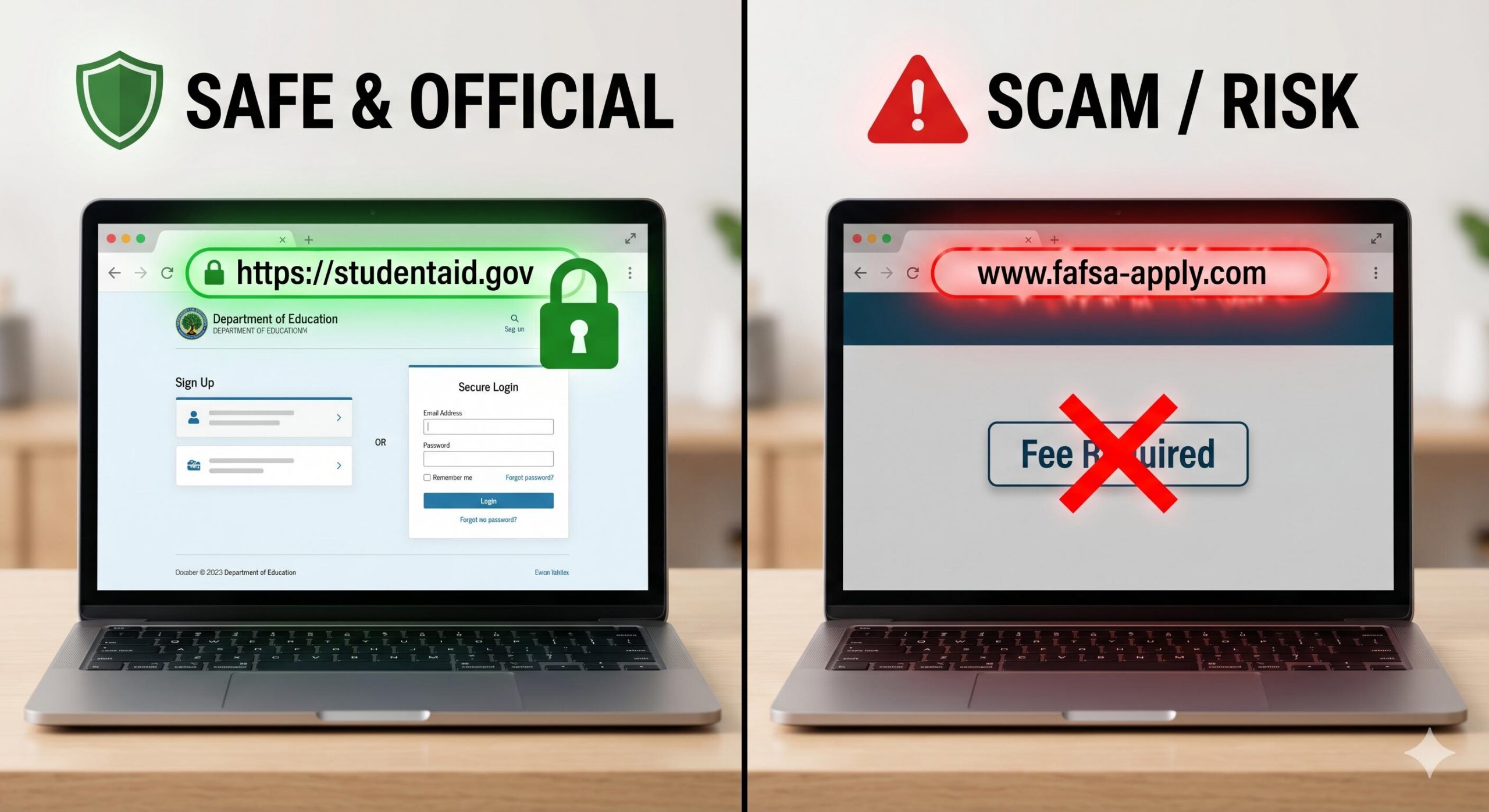
Many predatory companies create websites with URLs that look incredibly similar to official government channels (e.g., studentaid.com, fafsa.org). These sites are designed to mimic the official portal. Once a student or parent is on the fake site, the company will typically offer to “process” the FAFSA application for a hefty fee—sometimes hundreds of dollars.
Remember: The first ‘F’ in FAFSA stands for Free. You should never have to pay a fee to apply for federal financial aid.
Identifying Red Flags in Student Finance
To protect your financial future and your credit score, be aware of these common red flags:
- Upfront Fees: True federal portals will never ask for a credit card number to process an application or lower your interest rate.
- Promises of Immediate Loan Forgiveness: If a company contacts you promising to wipe out your student debt immediately, it is a scam. Only the Department of Education can forgive federal student loans through official, verified programs.
- Requests for FSA ID: Your Federal Student Aid (FSA) ID is your digital signature. A legitimate government worker will never ask for your password.
- High-Pressure Tactics: Scammers create fake urgency, claiming you will miss out on funding if you do not act immediately. Legitimate government deadlines are transparent and posted clearly on StudentAid.gov.
Federal Loan Approvals vs. Rejections: What You Need to Know
At LoanRejectionHelp.com, we specialize in helping individuals understand why they are denied credit and how to improve their financial standing. While standard federal student loans are highly accessible, rejections and funding shortfalls still happen.
Do Federal Student Loans Check Your Credit?
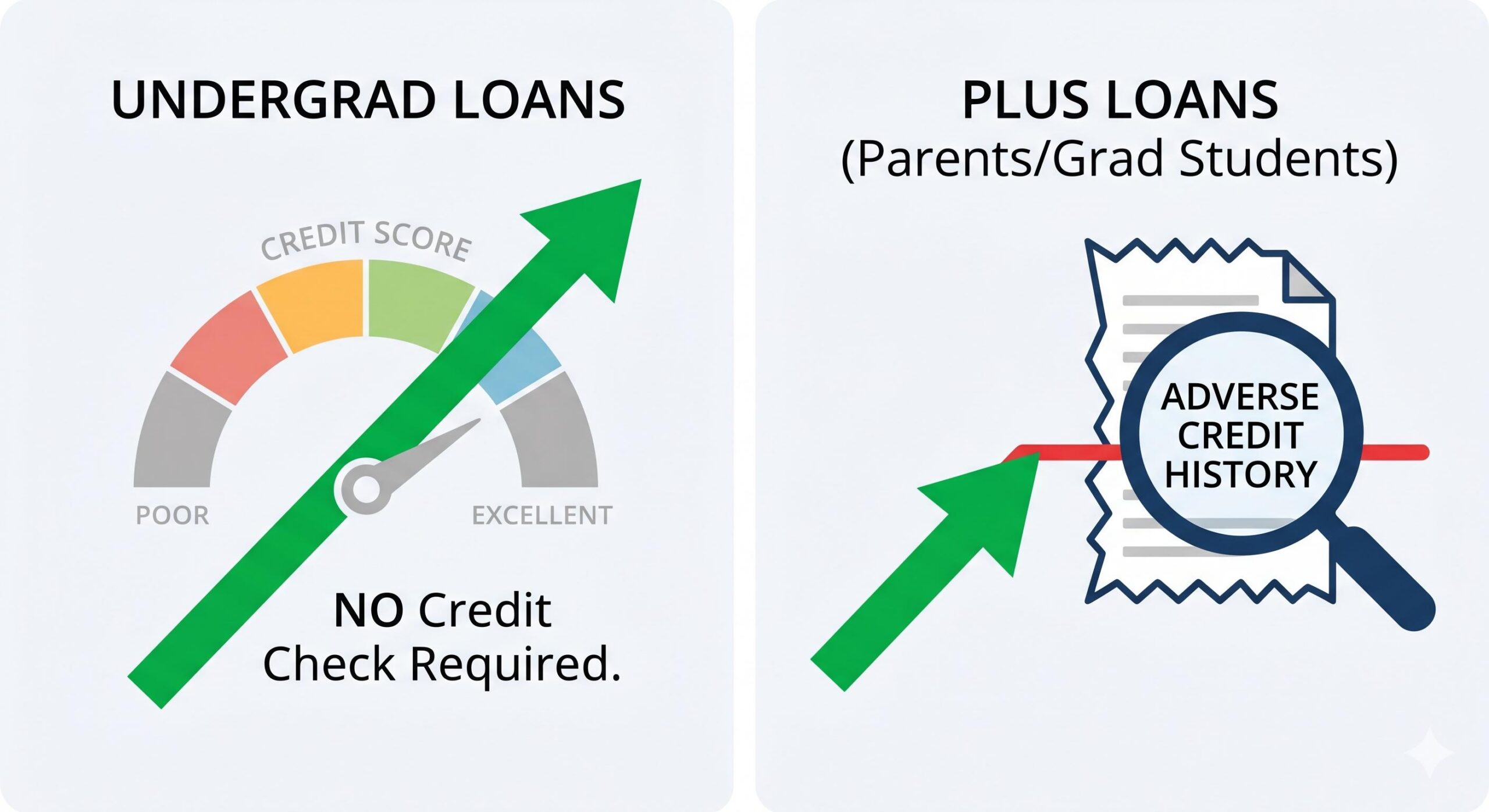
For most undergraduate federal student loans (Direct Subsidized and Unsubsidized), there is no credit check. The government does not look at your FICO score, your credit card utilization, or your repayment history. Approval is based strictly on your enrollment status at an eligible institution and your FAFSA data.
However, there is a major exception: Direct PLUS Loans.
Why PLUS Loans Get Rejected
Direct PLUS loans (for parents and graduate students) do require a credit check. If you apply for a PLUS loan on StudentAid.gov, the Department of Education will check your credit report for an adverse credit history.
You may face loan rejection if your credit report shows:
- Accounts currently 90 or more days delinquent.
- Debts placed in collection or written off in the past two years.
- A recent bankruptcy discharge, foreclosure, repossession, or tax lien.
How to Overcome a Federal Loan Rejection
If your PLUS loan application is rejected due to adverse credit, you are not entirely out of options. You can often reverse this rejection by:
- Obtaining an Endorser: This is similar to a cosigner. An endorser is someone who does not have an adverse credit history and agrees to repay the loan if you fail to do so.
- Documenting Extenuating Circumstances: If you can prove to the Department of Education that the adverse credit history was caused by extenuating circumstances (such as a medical emergency), your application may be reconsidered.
- Credit Repair: If the rejection was based on an error on your credit report, you have the right to dispute the inaccuracy with the major credit bureaus (Equifax, Experian, TransUnion). Correcting this error can lead to a subsequent approval.
Satisfactory Academic Progress (SAP) and Aid Suspension
Another common reason students lose their federal aid is failing to maintain Satisfactory Academic Progress (SAP). If your GPA drops below your school’s minimum requirement or you fail to complete enough credits, your financial aid can be suspended. If this happens, you must file a formal SAP appeal with your school’s financial aid office, detailing the circumstances that hindered your academic performance and your plan for improvement.
Loan Rejected What To Do: A Complete Guide to Bouncing Back
Responsible Borrowing Guidelines for Students
Confirming that StudentAid.gov is legitimate is only the first step. The next step is practicing responsible borrowing to ensure your debt does not overwhelm your future financial stability.

- Only Borrow What You Need: Just because you are approved for a certain amount does not mean you have to accept all of it. Calculate your actual expenses (tuition, housing, books) and decline the excess loan amounts.
- Understand Interest Accrual: If you take out Unsubsidized Direct loans, interest begins accruing the moment the loan is disbursed, even while you are in class. Paying just the interest while in school can save you thousands of dollars over the life of the loan.
- Explore Grants and Scholarships First: Always maximize “free money” before relying on loans. Federal Pell Grants, state-based aid, and private scholarships should be exhausted before turning to debt.
- Build Credit Safely: While in school, taking out a secure credit card or a low-limit student credit card and paying it off in full every month can help build a strong credit profile. A strong credit score will be vital when you eventually seek private auto loans, mortgages, or apartment leases after graduation.
Frequently Asked Questions (FAQs)
1. Is studentaid.gov a real government website? Yes, StudentAid.gov is the official and legitimate website of the U.S. Department of Education’s Federal Student Aid office. You can verify its authenticity by checking for the .gov extension in the URL, which is strictly reserved for official United States government organizations.
2. Is it safe to put my Social Security Number on StudentAid.gov? Yes, it is safe and highly secure. The federal government must verify your identity and IRS tax records to accurately award financial aid. Therefore, providing your Social Security Number (SSN) is a mandatory step. The official website uses advanced, government-grade encryption to protect your sensitive financial data.
3. Does StudentAid.gov charge a fee to apply for loans? Never. The “F” in FAFSA stands for Free (Free Application for Federal Student Aid). If a website asks you for a credit card number, a processing fee, or an “application fee” to submit your forms, you are on a fraudulent site.
4. How can I tell if a student loan website is a scam? Scam websites often use URLs that look similar to the official site (like ending in .com or .org instead of .gov). Red flags include demanding upfront fees, asking for your Federal Student Aid (FSA) ID password, or making aggressive promises about immediate, guaranteed loan forgiveness. Legitimate federal loan servicers will never charge you to consolidate your debt or change your repayment plan.
5. What happens if my federal student loan is rejected? While standard subsidized and unsubsidized federal loans do not require a credit check, Direct PLUS Loans do. If you are rejected for a PLUS loan due to an adverse credit history, you can still secure funding by obtaining a creditworthy endorser (similar to a cosigner) or by officially documenting extenuating circumstances that caused the negative credit marks.
Conclusion
So, is student aid gov legit? Absolutely. It is the safest, most critical tool for funding your higher education in the United States. By ensuring you are on the verified .gov domain, you protect your sensitive personal data from scammers and secure your access to federally regulated, low-cost financial aid.
Understanding the financial concepts behind the FAFSA process, knowing the difference between credit-checked and non-credit-checked federal loans, and knowing how to handle an unexpected rejection will set you up for a successful educational journey. Remember to borrow responsibly, protect your credit score, and always verify the source of your financial platforms.

1 thought on “Is Student Aid Gov Legit? Your Complete Guide to Federal Financial Aid and Loan Safety”