Disclaimer: The information provided on loanrejectionhelp.com is for educational and informational purposes only. It does not constitute financial or legal advice. Always consult with a certified financial advisor before making borrowing decisions.
Introduction
When you are looking for how to improve your CIBIL score fast, it means you looking genuine avenues to increase the number that represents your credit history on file with Credit Information Bureau (India) Limited. An important discipline in this regard is the CIBIL score, since a high score is not only your ticket to loan approval and/or lower interest rates but low ones are sole reason for credit applications getting rejected. Your “repayment discipline,” your total number of credit used from the banks, and how accurately those facts are reported to the bureau is what impacts your score most.
While, for many salaried professionals and first time borrowers, a credit score seems like yet another hurdle. But all it does is reflect what you are doing financially. If you have recently had a loan rejected, or intend to submit a mortgage application in the near future, learning how your score works is the first step towards financial freedom. This works as a guide, giving you an effective path from “risky” profile to “elite” borrower.
Table of Contents
Understanding the Foundations of a CIBIL Score
A CIBIL score is a three-digit number, ranging from 300 to 900, that represents your creditworthiness. Think of it as a “financial report card” that lenders use to decide if they should trust you with their money.
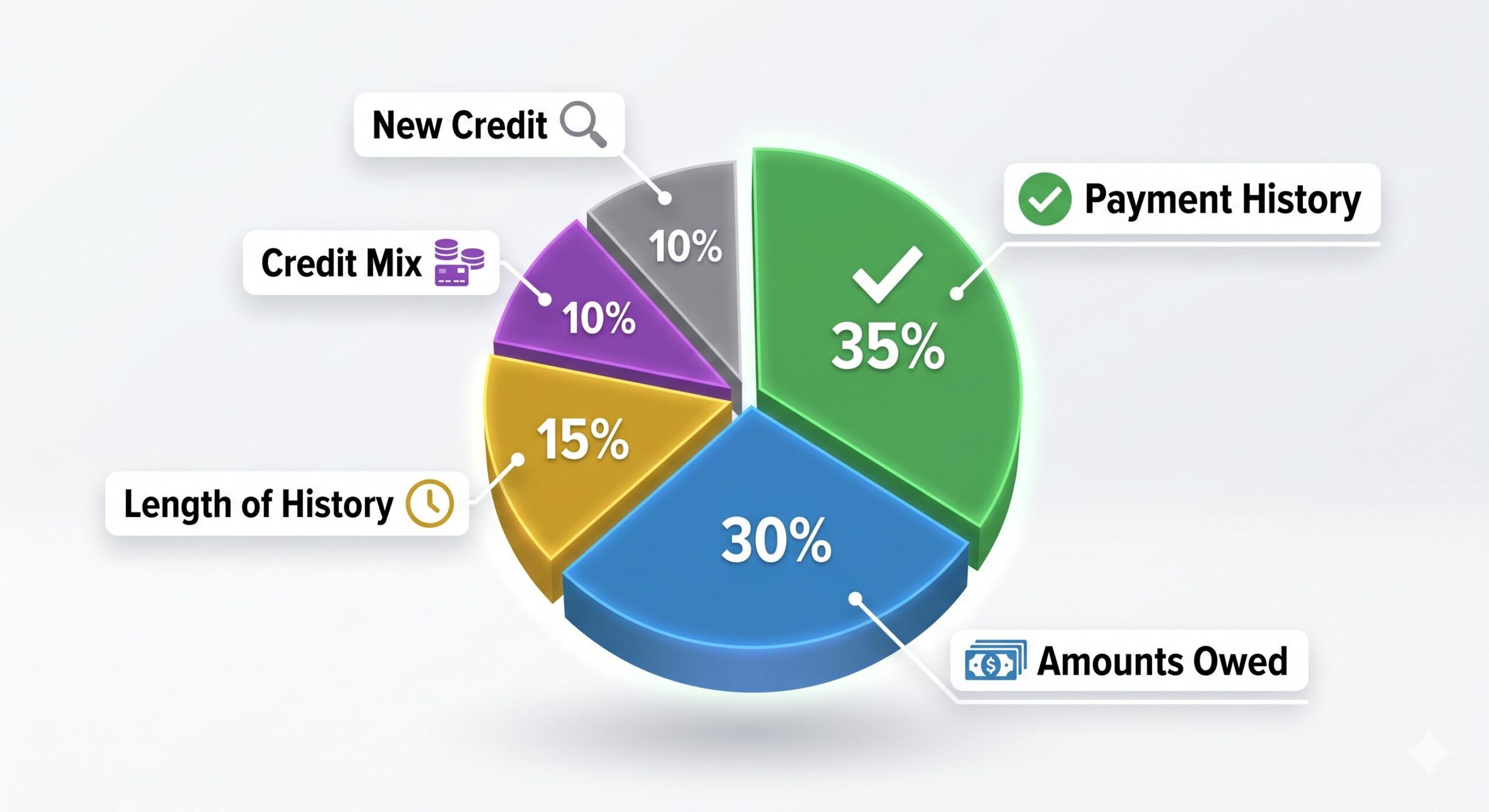
Lenders use this number to determine your interest rates and loan eligibility. While various factors contribute to the final number, the bureau calculates your score based on these primary weights:
- Payment History (30%): This is the most critical factor. It tracks whether you pay your EMIs and credit card bills by the due date.
- Credit Utilization (25%): This measures how much of your available credit limit you are using. High usage signals “credit hungriness.”
- Credit Mix and Duration (25%): A healthy balance of secured loans (like car or home loans) and unsecured loans (like personal loans or cards) over a long period helps your score.
- Recent Inquiries (20%): Frequent applications for new loans in a short window can lower your score.
To improve your score fast, your goal is to optimize these categories through strategic, responsible financial behavior.
Actionable Steps: How to Improve Your CIBIL Score Fast
While building a flawless financial reputation is a marathon and not a sprint, there are specific, highly effective strategies you can implement right now to see positive upward movement in your score over the next few months.
1. Check Your CIBIL Report for Errors and Dispute Them
This is the single fastest way to improve your score if a mistake is dragging it down. Sometimes, banks report incorrect data to the credit bureau. You might have paid off a loan, but it still shows as “active” or “defaulted” on your report. Similarly, a clerical error might assign someone else’s missed payment to your profile.
- The Action: Download a free copy of your CIBIL report (you are entitled to one free report per year). Review it line by line. If you spot an error, initiate a dispute resolution through the official CIBIL website immediately. Once the error is verified and removed, your score will adjust upward almost instantly.
2. Lower Your Credit Utilization Ratio (CUR)
Your Credit Utilization Ratio is the percentage of your total available credit that you are currently using. For example, if you have a credit card limit of ₹1,00,000 and you have spent ₹80,000, your CUR is 80%. Lenders view a high CUR as a sign of being “credit hungry” or overly dependent on debt.
- The Action: To see a fast improvement, aggressively pay down your credit card balances to bring your overall CUR below 30%. If you cannot pay it down immediately, you can request a credit limit increase from your bank. If your limit goes up but your spending stays the same, your CUR drops automatically.
3. Clear All Past Due Amounts
Payment history accounts for the largest chunk of your CIBIL score. A single late payment can drop your score by several points, and accounts in “collections” or “default” will ruin it.
- The Action: If you have any outstanding dues, missed EMIs, or delayed credit card payments, pay them immediately. While the late payment will stay on your record, bringing the account to a “current” status stops the ongoing damage to your score.
4. Stop Applying for Multiple Loans or Cards
Every time you apply for a new line of credit, the lender requests your CIBIL report. This is known as a “hard inquiry.” Multiple hard inquiries within a short timeframe signal to the bureau that you are desperate for credit, which knocks points off your score.
- The Action: Pause all new credit applications. Only apply for a loan or a credit card when you absolutely need it, and space your applications out by at least six months.
5. Maintain a Healthy Credit Mix
If your credit profile consists entirely of unsecured debt (like personal loans and credit cards), it may suppress your score. Lenders like to see that you can handle different types of financial products.
- The Action: If you only have credit cards, successfully managing a small, secured loan (like a gold loan or consumer durable loan) and paying it off on time can add a positive dimension to your credit mix.
How a Low CIBIL Score Leads to Loan Rejection
At loanrejectionhelp.com, the most common issue we see among loan applicants is the shock of sudden rejection. When you apply for a home loan, personal loan, or auto loan, human emotion is removed from the process. Automated underwriting systems look strictly at the numbers.
If your CIBIL score is below 700, the system flags you as a risk. From the lender’s perspective, a low score indicates historical difficulty in managing money. Even if your current salary is high, a poor credit history suggests that the incoming money is mismanaged.
By proactively applying the steps above—lowering your utilization, disputing errors, and paying EMIs on time—you transition your profile from a “high risk” category to a “safe investment” category. This not only prevents painful loan rejections but also gives you the leverage to negotiate lower interest rates, saving you substantial money over the life of a loan.
Responsible Borrowing and Risk Awareness
As you work on how to improve your CIBIL score fast, it is crucial to stay grounded in reality and avoid common financial traps.
- Avoid “Instant Score Boost” Scams: Be highly skeptical of agencies or websites that promise to “guarantee an 800 CIBIL score overnight” for a fee. No one can illegally alter bureau data. Legitimate credit improvement relies on consistent, positive financial behavior.
- Do Not Close Old Accounts: Once you pay off an old credit card, your first instinct might be to close it. Do not do this. Closing an old account reduces your total credit history length and lowers your total available credit, both of which can temporarily drop your score. Keep old, no-fee cards open and use them sparingly.
- Borrow Only What You Can Repay: Improving your score is meant to unlock better financial tools, not to encourage deeper debt. Always create a monthly budget, ensure your EMIs do not exceed 40% of your monthly income, and borrow responsibly.
How to Build Credit Score Without a Credit Card: A Complete Financial Guide
FAQ: Most Frequently Asked Questions
1. How long does it actually take to see an improvement in my CIBIL score?
Although you can do things on the spot, easily once that when well knock for 30 to 45 day agency restoring records. If you settle a substantial debt or rectify an error today, the immediacy (in as little as one billing cycle and typically no more than two) should show up in the so-called “fast” increase of your credit score.
2. Does checking my own CIBIL score reduce it?
No. A “Soft Inquiry”, which does not affect your credit score, is created when you do a check on yourself. Only “Hard Inquiries”—those that occur when a bank checks your score after applying for a loan—can cause a small short-term loss.
3. Can I improve my score fast by “settling” an old loan?
No. Choosing a “One-Time Settlement” (paying less than the full amount owed) is actually harmful. It results in a “Settled” status on your report, which can stay for seven years and lead to future loan rejections. Always aim for a “Closed” status by paying the full amount.
4. Will a higher salary automatically increase my CIBIL score?
No. Your income, bank balance or the assets you hold has no relevance to your CIBIL score at all. So you are essentially only living by the measure of behavior. An average income earner with no defaults, would get a better score compared to someone in high income bracket who had payment defaults.No. Your CIBIL score is entirely independent of your income, bank balance, or assets. It is purely a measure of behavior. A person with a modest salary and perfect repayment habits will have a much higher score than a high-earner who misses payment deadlines.
5. What is the minimum CIBIL score required for a home loan?
As far as credit scores are concerned, it is recommended by most major banks in India to have a score of at least 750. Though lenders will lend on a 650 credit score, it can be tricky between the 650–700 range because many lenders do charge much higher interest rates to make up for risk.
Conclusion
Your CIBIL score is one of the most important aspect of your long-term financial health. It is not only for avoiding loan rejection but also to gain a certain level of “trust” from the financial system so you can have capital with the lowest interest rates possible. An observant and disciplined approach is key to learn about how to improve your CIBIL score fast.
Issue a credit report before you need to borrow money, monitor it for errors, restrict credit card variable and project repayments as an immutable commitment. With the right resolve, even the most ruined profile can be rebuilt. Note that a high CIBIL score is a by-product of financial knowledge. Be informed, be steady and take the reins of your money story today!