Introduction
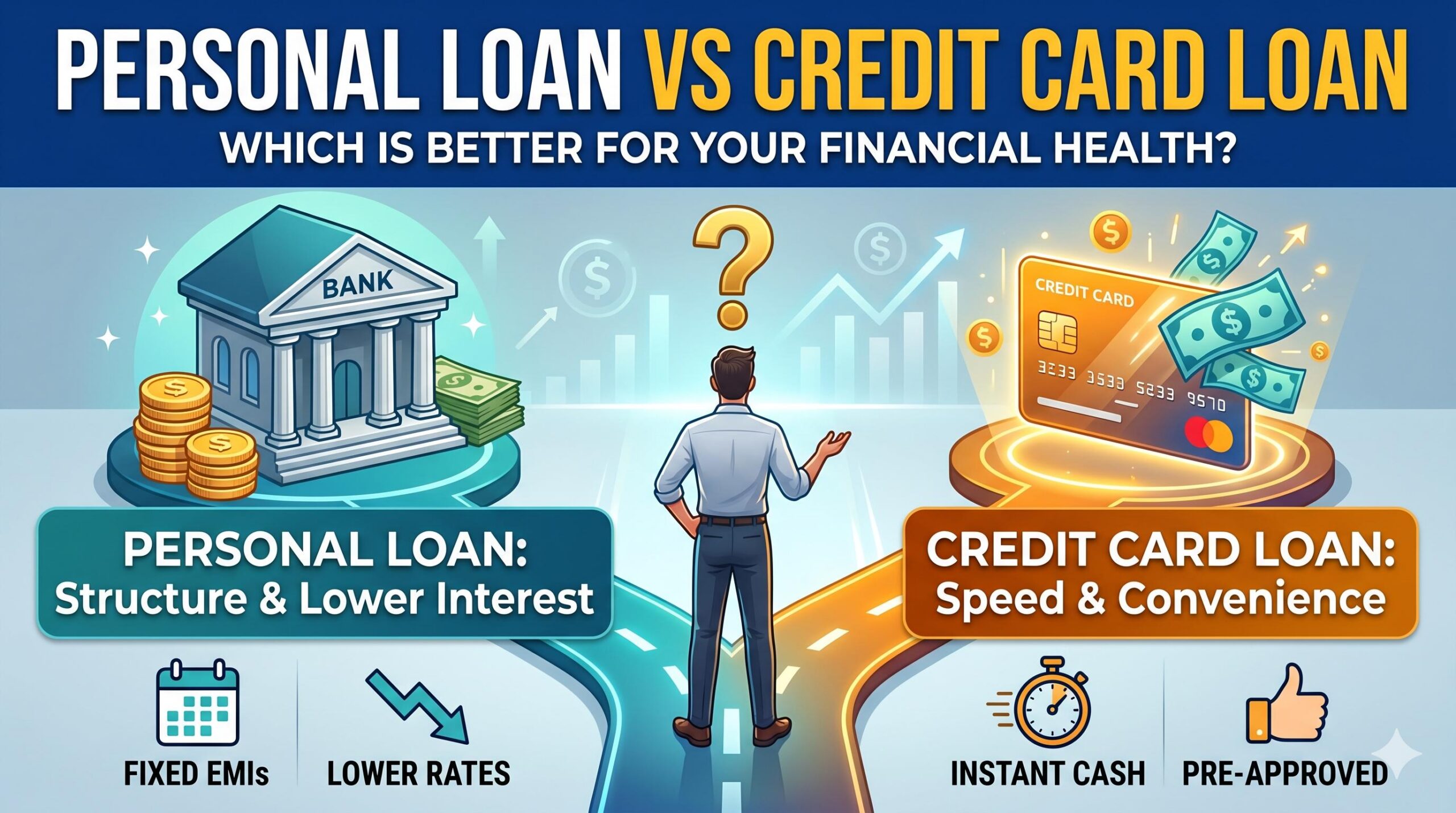
How to pay for the unexpected expense — a medical bill, home repair, or planned large purchase — is often critical when it arises. The majority of borrowers get caught in a tussle deciding on Personal Loan vs Credit Card Loan depending on the best combination of affordability, speed and chances or getting approved. A personal loan is a lump sum installment loan availed for bigger, planned expenses while a credit card loan is an already pre-approved that cardholders can borrow against to utilize their existing limit.

Borrowers compare them because the interest structures and repayment terms between these two are worlds apart. Your current score, monthly income/debt ratio as well as your urgency to get the money disbursed into your account carry the biggest weight in the final call. You need to have a good understanding of your own financial “health” to navigate these options appropriately. Choosing the wrong product can result in falling into a highly costly high-interest debt trap, or worse still a rejection for your loan completely and raise red flags on your financial progress. This guide explains all you need to know about selecting wisely while protecting your credit score.
Disclaimer: The content of this article is borrowed from the loanrejectionhelp. Educational purposes only, not professional financial advice. However, it is important to carefully evaluate your finances, know the implications of borrowing money, and read the terms from your lender before applying for any credit product.
Table of Contents
What is a Personal Loan?

Personal Loan: This is a basically traditional unsecured installment loan. It is not secured with collateral like a home or car loan. The lender gives you a fixed amount of money in cash, and you pay that back over a period (12-60 months) with fixed monthly payments (EMIs).
Key Financial Mechanics:
- Fixed Interest Rates: Most personal loans come with a fixed interest rate. This means your monthly payment never changes, making it the “gold standard” for long-term budgeting.
- Structured Repayment: Because the term is fixed, you have a clear “end date” for your debt.
- Strict Approval Process: Lenders will perform a “hard” credit inquiry and verify your income documents, employment history, and bank statements before approval.
What is a Credit Card Loan?

A credit card loan (often called a “Loan on Card”) is a specialized facility offered to existing credit card users. It is essentially an “instant loan” that uses your unused credit card limit as the pool of funds. It is different from a “cash withdrawal” at an ATM, as it usually carries a lower interest rate than cash advances but higher than personal loans.
Key Financial Mechanics:
- No Documentation: Since you are already a customer, the bank usually offers this with “zero paperwork” and “instant disbursement.”
- Interest Structure: The interest rate is usually higher than a personal loan but lower than the standard 36–45% APR (Annual Percentage Rate) found on credit card revolving balances.
- Credit Limit Impact: Taking this loan “blocks” a portion of your credit card limit. For example, if your limit is $5,000 and you take a $3,000 loan, you only have $2,000 left for your monthly shopping until the loan is paid down.
Direct Comparison: Personal Loan vs Credit Card Loan

| Feature | Personal Loan | Credit Card Loan |
| Ideal For | Large, planned expenses (Debt consolidation, Wedding). | Urgent, mid-sized emergencies. |
| Approval Speed | 24 hours to 7 business days. | Instant to 24 hours. |
| Interest Rate | Generally 10% to 20% (Lower). | Generally 14% to 24% (Higher). |
| Credit Check | Hard inquiry (May slightly dip score). | Soft inquiry or none (No immediate dip). |
| Max Loan Amount | High (Based on total income). | Limited (Based on card limit). |
| Repayment Term | Long (Up to 5 years). | Short to Medium (Up to 2-3 years). |
Impact on Loan Approval and Rejection
At loanrejectionhelp.com, we focus on helping you stay “approval-ready.” The choice you make today affects your ability to borrow tomorrow.
1. Why Personal Loans Get Rejected
High Debt-to-Income (DTI) ratio– A high DTI ratio is the top reason behind personal loan rejection. If your high income is accompanied by 50%, or more, ratio of total EMIs in proportion to your income, then lenders class you as a high-risk borrower. Another top factor is “credit hungriness” — applying to multiple personal loans within a short time frame leads to several hard inquiries, which indicates financial desperation to lenders.
2. Why Credit Card Loans Can Be Risky
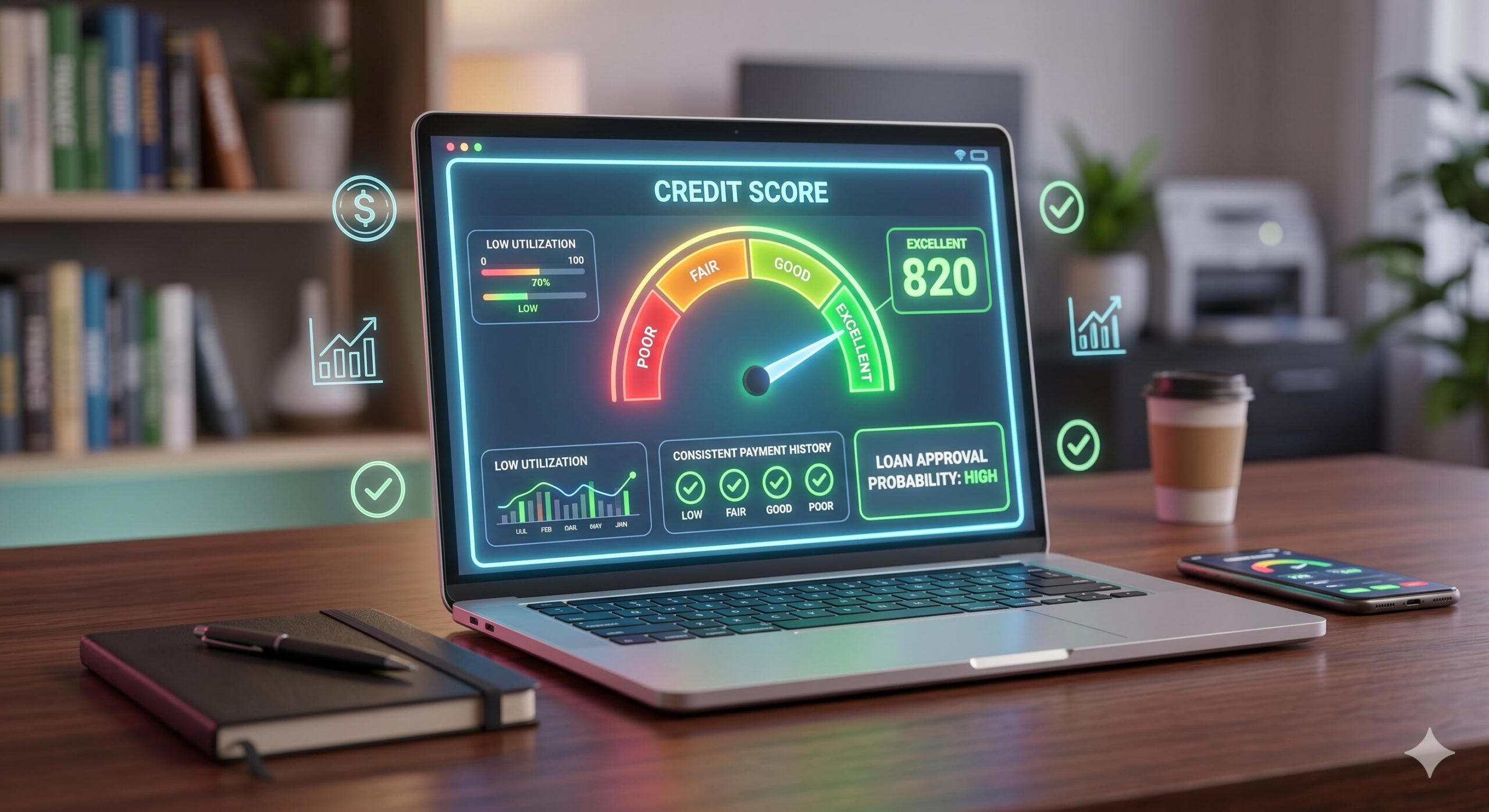
Pre-approved credit card loan applications are much more difficult to be “rejected” from, but it affects your Credit Utilization Ratio. This ratio keeps an eye on how much of your combined credit limit you are utilizing. If for example, you were to use 80% of the limit for a loan your credit score can fall considerably. And that could potentially result in rejections further down the line when you apply for more significant loans such as a mortgage or land loan.
Which One Should You Choose?
Choose a Personal Loan if:
- You need a large sum (e.g., to consolidate several high-interest debts).
- You have 3–5 days to wait for the bank to process the paperwork.
- You want the lowest possible interest rate.
- You prefer a long repayment tenure to keep monthly EMIs low.
Choose a Credit Card Loan if:
- You have a medical or family emergency that requires funds today.
- The amount you need is small (less than 50% of your credit limit).
- You plan to pay it back very quickly (within 6–12 months).
- You want to avoid the hassle of submitting payslips and bank statements.
Best Place to Get a Personal Loan: Rates, Approvals, and Avoiding Rejection
Responsible Borrowing Checklist
Before hitting “Apply,” ask yourself these three questions:
- Can I afford the EMI? Use an online EMI calculator to ensure the payment fits your budget without sacrificing essentials like rent or groceries.
- What is the “Total Cost of Borrowing”? Don’t just look at the monthly payment. Look at the processing fees and the total interest paid over the life of the loan.
- Is this a “Need” or a “Want”? Borrowing for an emergency is responsible; borrowing for a luxury vacation you can’t afford is a risk to your financial future.
Conclusion
And thus, with the comparison of Personal Loan vs Credit Card Loan, there can be no one “winner” but simply the one that is more suited from a financial standpoint for you. For the most competitive rates available and structured, longer-term repayment, personal loans are still your best bet. Credit card loans – the most expensive option, but more often than not, are unbelievably fast if you need cash urgently.
No matter what you choose, keeping a high credit score and a low debt-to-income ratio is the single best insurance policy against ever getting turned down for a loan when you need it most. Always borrow no more than what you require, check the particulars and make certain to remain dedicated on an organized repayment schedule.
Frequently Asked Questions (FAQ)
1. Which is easier to get approved for: a Personal Loan or a Credit Card Loan?
A credit card loan is usually simpler because it is often “pre-approved” on the basis of your current relationship with the bank. In addition, because applying for a personal loan involves a full credit check and income verification, it has more stringent approval terms.
2. Does a Credit Card Loan have a higher interest rate?
Yes, in most cases credit card loan is more expensive than personal loan. This is the “fee” you pay for instant disbursement and zero fu*g paperwork.
3. Can I pay off my loan early to save on interest?
Most personal loans allow “pre-closure” after a certain period (e.g., 6–12 months), though some may charge a small penalty fee. Credit card loans also allow early repayment, but you should check if the bank charges a “foreclosure fee” before doing so.
4. Will taking a loan against my credit card stop me from using the card?
No, you can still use your card, but your “available limit” will be reduced by the amount of the loan. As you pay your monthly EMIs, your available limit will slowly increase again.
5. How can I avoid loan rejection for a Personal Loan?
To improve your chances, ensure your credit score is above 750, maintain a stable employment history, and ensure your total monthly debt payments are less than 30–40% of your take-home pay.
6. Does a Personal Loan help improve my credit score?
Yes, if paid on time. A personal loan adds “Credit Mix” to your profile (an installment loan vs. revolving credit like a card), which can positively impact your score over time, provided you never miss a payment.