Introduction
When you need funds for an emergency, debt consolidation, or a major life event, identifying the best place to get a personal loan is the most crucial step in your financial journey. In the financial world, this phrase does not refer to a single, magical bank that works for everyone; rather, it means finding the specific lending institution that offers the lowest Annual Percentage Rate (APR) and the most favorable repayment terms for your unique financial profile.

Borrowers constantly search for this phrase because applying at the right institution minimizes long-term borrowing costs and significantly reduces the agonizing risk of loan rejection. Ultimately, the “best place” for you is highly subjective and is directly affected by your current credit score, your debt-to-income ratio, your employment stability, and the specific risk-assessment formulas used by different types of lenders.
Welcome to LoanRejectionHelp.com. In this comprehensive guide, we will break down the personal lending landscape, explain how interest rates are determined, and show you how to match your financial profile to the right lender to secure an approval.
Educational Disclaimer: The information provided in this article is strictly for educational purposes and financial literacy. It does not constitute formal financial advice. Interest rates, loan approval criteria, and lender policies change frequently. We do not guarantee loan approvals or specific interest rates. Always evaluate your ability to repay before entering into any credit agreement.
Table of Contents
1. Demystifying the “Best Place”: What Are You Actually Looking For?
Before looking for a lender, you must understand what makes a lender the “best.” Personal loans are typically unsecured, meaning they are not backed by collateral like a house or a car. Because the lender is taking on more risk, they charge interest.
When searching for the best place to get a personal loan, you are primarily looking for the institution that prices your personal financial risk the lowest. You should evaluate lenders based on three financial concepts:
- Annual Percentage Rate (APR): This is the true cost of borrowing. It includes the interest rate plus any mandatory fees (like origination fees) charged by the lender, expressed as a yearly percentage. The best place will always offer you the lowest APR.
- Repayment Terms: This is how long you have to pay the money back (usually 12 to 84 months).
- Fee Structure: The ideal lender charges zero origination fees (a fee taken out of your loan amount just for processing it) and zero prepayment penalties (a fee charged if you pay off your loan early).
2. The Three Main Places to Get a Personal Loan
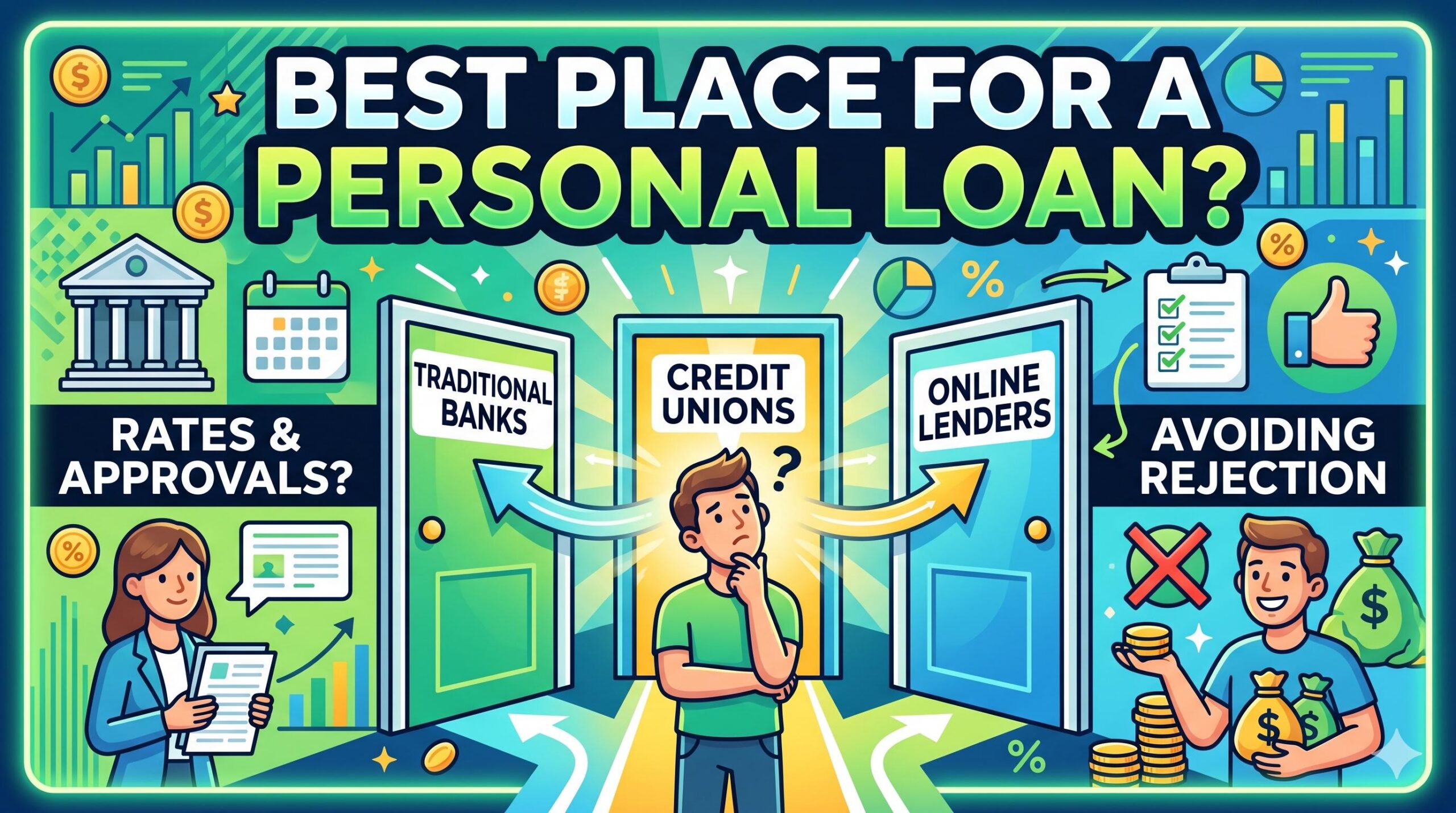
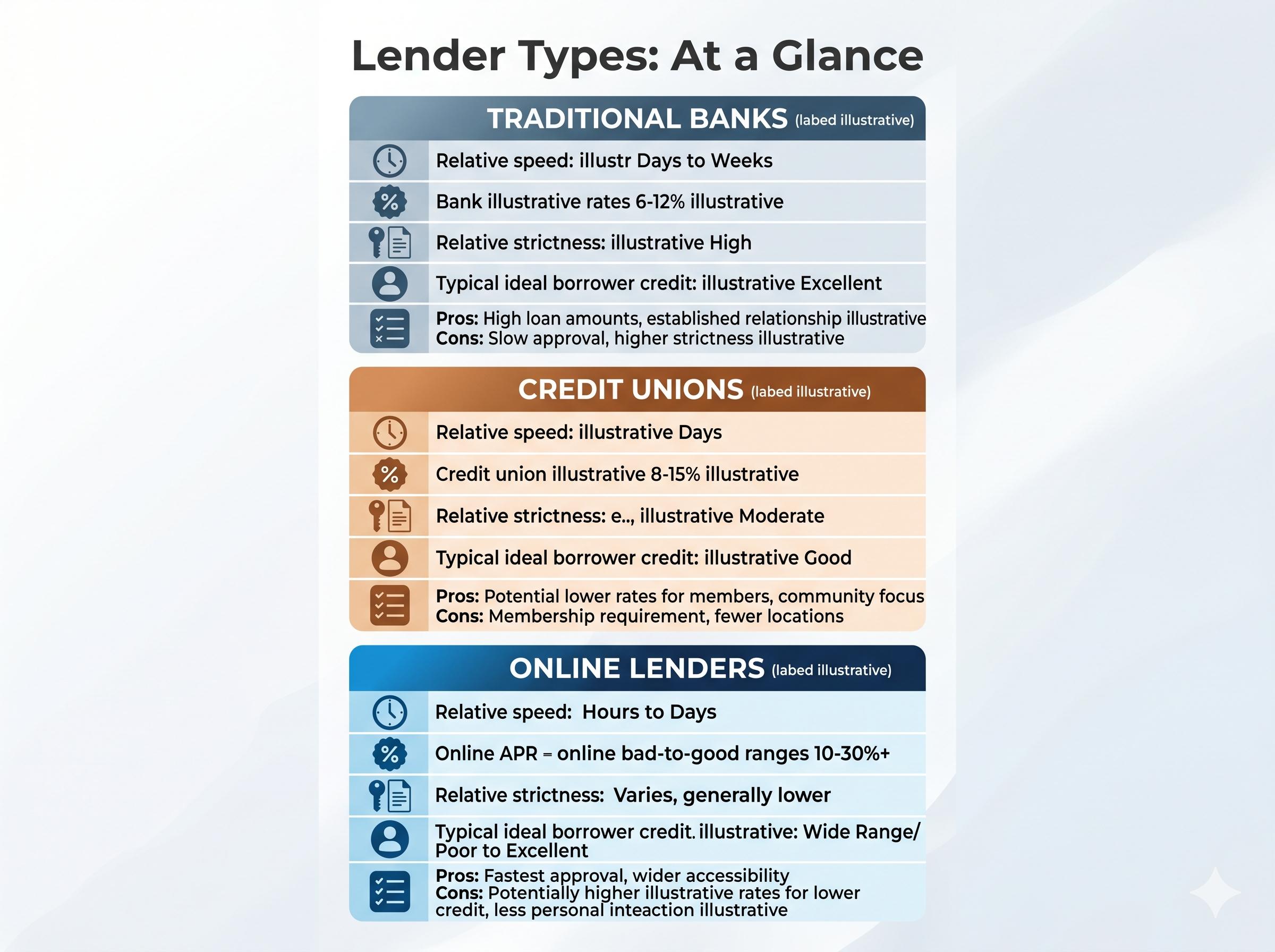
The lending market is divided into three primary categories. Understanding how they operate is key to figuring out which one is the right fit for your application.
A. Traditional Banks
Traditional national and regional banks are often the first place people look.
- How they work: Banks typically have strict underwriting standards. They prefer lending to existing customers who already have checking or savings accounts with them.
- Who they are best for: Borrowers with excellent credit scores (usually 750 and above), long credit histories, and low existing debt. If you meet their strict criteria, your own bank might be the best place to get a personal loan because they may offer loyalty discounts on interest rates.
B. Credit Unions
Credit unions are not-for-profit financial cooperatives owned by their members.
- How they work: Because they do not have to generate profits for shareholders, credit unions often pass their savings on to members in the form of lower interest rates and fewer fees.
- Who they are best for: Borrowers with average or fair credit. Credit unions are known for looking beyond just the credit score, taking into account your character and history as a member. They are frequently the best place for first-time borrowers or those recovering from past financial mistakes.
C. Online Lenders and Fintech Companies
The internet has revolutionized lending, creating a massive market of online-only financial institutions.
- How they work: Online lenders use advanced algorithms to assess risk quickly, often providing funding within 24 to 48 hours. The online market is diverse; some lenders cater exclusively to perfect credit, while others specialize in bad credit.
- Who they are best for: Borrowers looking for speed, convenience, and those who want to easily compare rates. If you have a less-than-perfect credit score, specialized online lenders are often more willing to approve you than strict traditional banks.
3. How Your Financial Profile Determines Your “Best Place”
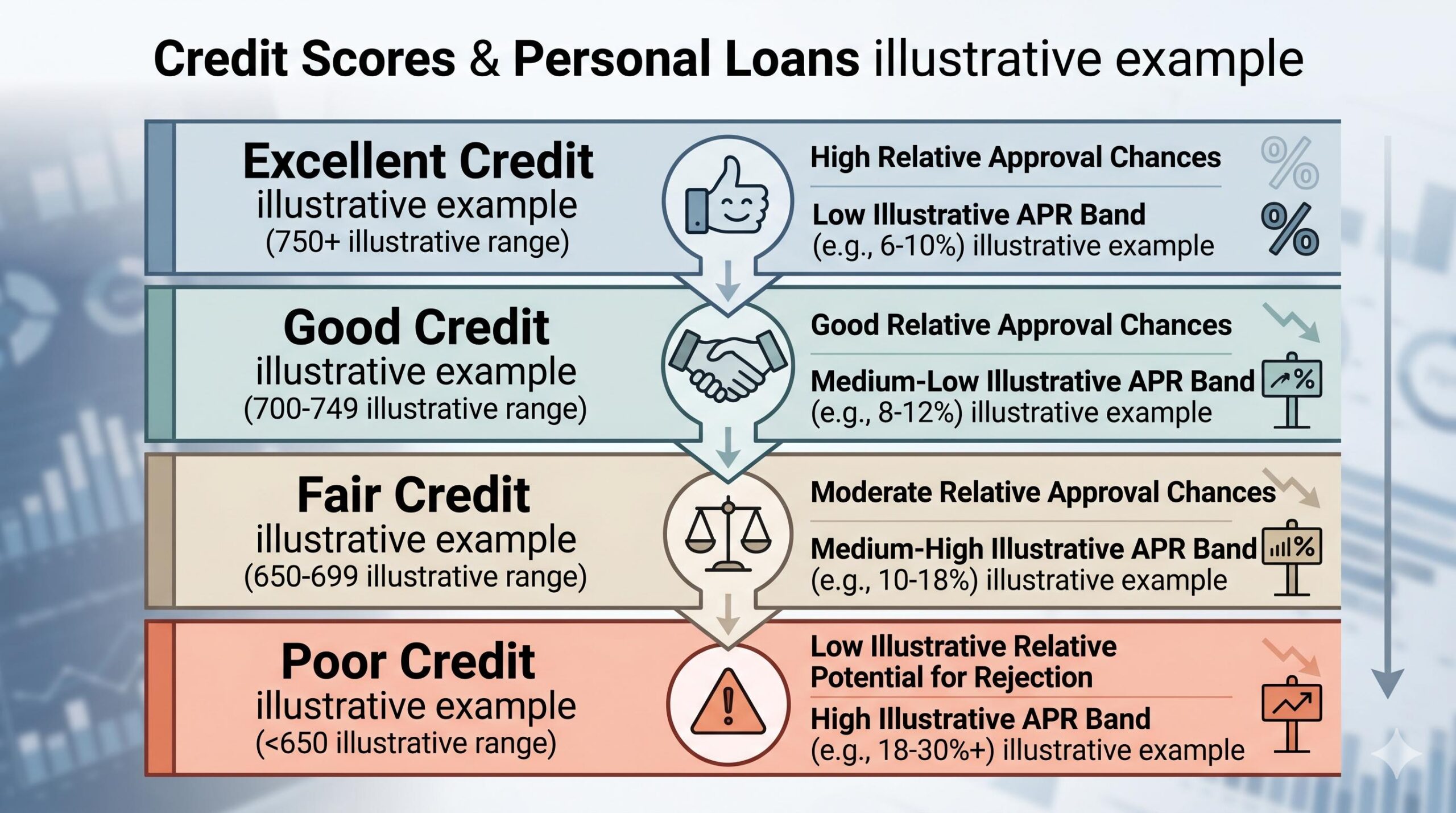
Applying to the wrong type of lender is the number one cause of loan rejection. A lender that is perfect for your neighbor might instantly reject your application. Here is how your specific profile affects where you should apply:
Your Credit Score acts as a Compass
Your credit score is a three-digit number representing your history of paying back debts.
- If your score is excellent, the doors are open everywhere. Your “best place” is simply whoever offers the lowest APR.
- If your score is fair to poor, applying to a top-tier traditional bank will likely result in a rejection. Your “best place” shifts toward local credit unions or online lenders that explicitly state they work with lower credit bands.
Your Debt-to-Income (DTI) Ratio
Lenders calculate your DTI ratio by dividing your total monthly debt payments by your gross monthly income. If you earn $4,000 a month and spend $2,000 on credit card minimums and a car loan, your DTI is 50%. Most traditional banks reject applicants with a DTI over 36% to 40%. If your DTI is high, your best place to get a personal loan will be an online lender with more flexible income requirements, though you will likely pay a higher interest rate to offset the lender’s risk.
4. Why Loans Get Rejected at the “Best Places”
Even if you find a lender offering incredible rates, your application can still be denied. At LoanRejectionHelp.com, we see the following common rejection triggers:
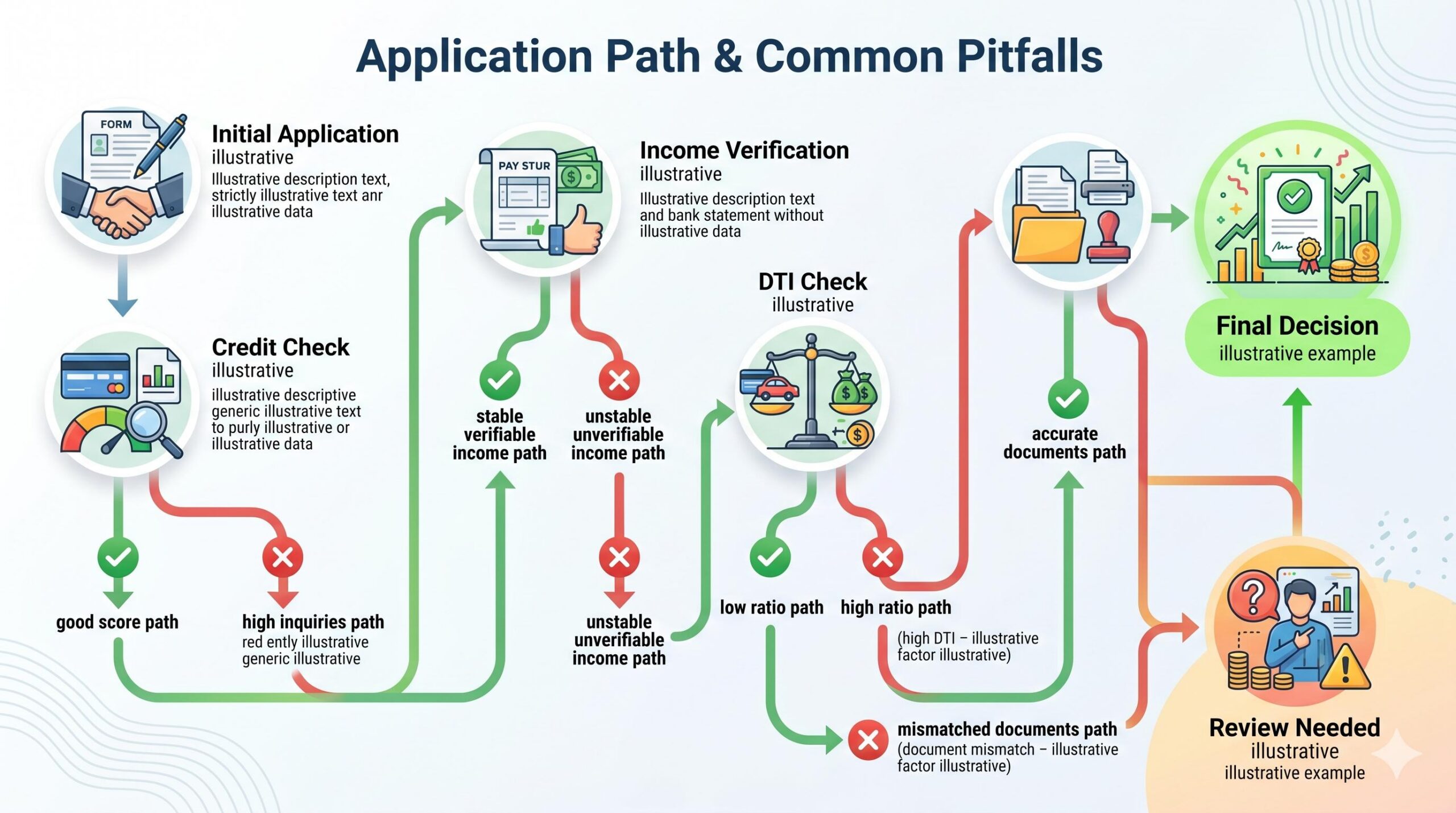
- The Hard Inquiry Trap: When you apply for a loan, the lender checks your credit (a “hard pull”), which slightly lowers your score. If you blindly apply to five different banks in one week trying to find the best rate, your credit score will drop significantly, making you look desperate for credit and causing all five banks to reject you.
- Unverifiable Income: Whether you are salaried or self-employed, if the income stated on your application cannot be perfectly matched to your bank statements or tax returns, the lender will reject the application to protect themselves from fraud.
- Insufficient Credit Age: First-time borrowers are often rejected simply because their credit profile is too “thin.” Lenders want to see a history of repayment over several years.
A Comprehensive Guide to Understanding the Kotak Mahindra Bank Personal Loan
5. Actionable Steps: How to Secure the Best Rate and Avoid Rejection
To safely find the best place to get a personal loan without damaging your financial health, follow these responsible borrowing steps:
Step 1: Check Your Own Credit First
Never apply blindly. Pull your credit report and check your score. If there are errors dragging your score down, dispute them and have them fixed before you apply for any loan.
Step 2: Utilize “Pre-Qualification” Tools
This is the most powerful tool for loan applicants. Many online lenders and some banks offer a “pre-qualification” or “check your rate” feature. This process uses a “soft credit pull,” which allows the lender to estimate your interest rate and approval odds without lowering your credit score. You should pre-qualify with multiple lenders to compare where you stand.
Step 3: Compare the Total Cost, Not Just the Monthly Payment
A common trap is choosing a lender because they offer a low monthly payment. However, a lower payment often means a longer loan term, which results in paying hundreds or thousands of dollars more in total interest. Always compare lenders based on the APR.
Step 4: Prepare Pristine Documentation
To ensure a smooth approval process, gather your recent pay stubs, W-2s, tax returns, and government-issued ID before starting the application. Accurate documentation drastically reduces the chances of a technical rejection.
6. Conclusion: Borrowing with Confidence

Finding the best place to get a personal loan requires patience, research, and a clear understanding of your own financial health. Remember that lenders are assessing your risk level; the better you manage your credit score and debt-to-income ratio, the more negotiating power you have.
Risk Awareness Statement: Taking out a personal loan is a serious financial commitment. Only borrow what you absolutely need, and ensure that the monthly payments fit comfortably within your established budget. If your credit score is currently low, consider taking a few months to improve it before applying. By approaching the lending market as an educated consumer, you can bypass the stress of rejection, secure the funding you need, and protect your financial future.
Frequently Asked Questions (FAQs)
1. Does searching for the best personal loan rate hurt my credit score? It depends on how you search. Using a lender’s “pre-qualification” or “check your rate” tool usually results in a “soft inquiry,” which does not affect your credit score. However, submitting a full, formal application triggers a “hard inquiry,” which can temporarily lower your score by a few points. Always look for pre-qualification options when comparing lenders.
2. Can a credit union be the best place to get a personal loan if I have average credit? Yes. Credit unions are not-for-profit financial cooperatives and are generally more forgiving than traditional banks. They often look beyond just the three-digit CIBIL or credit score and consider your overall character, employment stability, and history as a member. They frequently offer lower APRs for borrowers who might be rejected by larger, stricter banks.
3. What is the difference between the interest rate and the APR? The interest rate is simply the cost of borrowing the principal amount. The Annual Percentage Rate (APR) is a broader, more accurate measure of your true cost because it includes the interest rate plus any mandatory fees the lender charges (such as origination fees or processing fees). Always compare lenders based on the APR.
4. Why did my own bank reject my personal loan application? Many borrowers assume their current bank is the best place to apply, but traditional banks often have the strictest underwriting standards. Even if you have a history with them, they may reject your application if your credit score has recently dropped, if your Debt-to-Income (DTI) ratio is too high (usually over 40%), or if you have recently missed payments on other accounts.
5. Are online lenders safe compared to traditional traditional banks? Yes, reputable online lenders are generally very safe and must adhere to the same financial regulations as physical banks. They often provide faster funding and more competitive rates because they do not have the overhead costs of maintaining physical branches. Always ensure the online lender is legitimate, secure (look for ‘https’ in the URL), and clearly transparent about their fees before applying.