

Receiving a rejection letter when applying for a home loan or attempting to refinance can be an incredibly stressful and disheartening experience. If you recently applied for a Freedom Mortgage and were denied, you are likely wondering what went wrong and how you can fix it. Navigating the complex world of real estate financing requires patience, a clear understanding of lender requirements, and a proactive approach to financial health.
When a Freedom Mortgage application is denied, it is not a permanent barrier to homeownership. Instead, it is a critical signal that certain aspects of your financial profile require adjustment before a lender can safely extend credit to you. Whether the issue stems from a low credit score, a high debt-to-income ratio, or missing documentation, understanding the root cause is the first step toward a successful future application.
This comprehensive guide is designed to help you decode the mortgage underwriting process. We will explore the common reasons behind loan rejections, detail exactly how financial institutions evaluate your application, and provide actionable, step-by-step strategies to help you build a stronger financial foundation.
Table of Contents
What is a Freedom Mortgage?
Freedom Mortgage is one of the largest independent mortgage lending companies in the United States. They specialize in a variety of home financing products, including conventional loans, Federal Housing Administration (FHA) loans, Veterans Affairs (VA) loans, and United States Department of Agriculture (USDA) loans. They are particularly well-known for servicing government-backed loans designed to help first-time homebuyers, veterans, and individuals in rural areas secure housing.
While government-backed loans generally offer more flexible qualification criteria compared to strict conventional loans, they still require applicants to meet specific baseline standards set by both the federal government and the lender’s own internal underwriting overlays.
A loan from this institution, like any mortgage, is a long-term financial commitment where the property itself acts as collateral. Basic eligibility typically hinges on a minimum credit score (often starting around 580 for certain government loans, though higher scores yield better terms), stable employment history, verifiable income, and a manageable level of existing debt. Interest rates vary widely based on the applicant’s creditworthiness, the type of loan selected, market conditions, and the size of the down payment.
Why Loan Applications Get Rejected
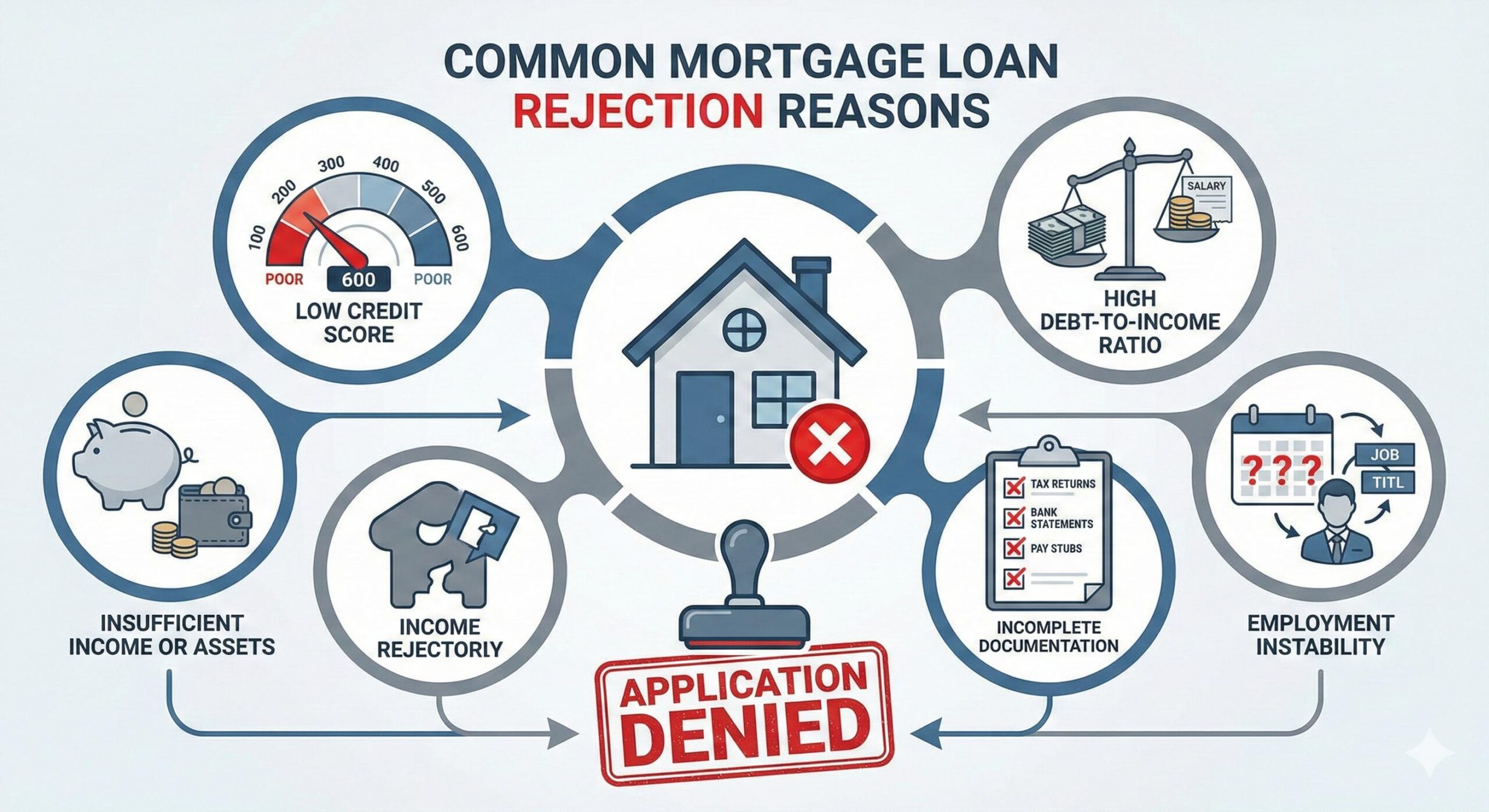
Mortgage underwriting is a rigorous process designed to protect both the lending institution and the borrower from the risks of default. If your application was denied, it likely falls into one of the following common categories:
- Low Credit Score: Your credit score is a numerical representation of your reliability as a borrower. If your score falls below the lender’s minimum threshold, the application will be automatically flagged. Recent late payments, collections, or a history of bankruptcy severely impact this number.
- High Debt-to-Income (DTI) Ratio: Lenders calculate how much of your gross monthly income goes toward paying debts. If your DTI ratio exceeds acceptable limits (typically 43% to 50%, depending on the loan program), lenders will conclude that you do not have enough disposable income to safely manage a new mortgage payment.
- Incomplete or Inaccurate Documentation: Mortgages require extensive paperwork, including tax returns, W-2s, bank statements, and proof of assets. Missing pages, unexplained large deposits, or discrepancies between your stated income and your tax transcripts can cause an underwriter to halt the process.
- Multiple Recent Loan Inquiries: Applying for several new credit cards, auto loans, or personal loans right before or during the mortgage application process signals financial distress. These “hard inquiries” temporarily lower your credit score and make lenders wary.
- Employment Instability: Lenders prefer to see a consistent two-year work history in the same field. Frequent job changes, shifts from W-2 employment to self-employment right before applying, or gaps in employment can lead to a rejection.
- Errors in Credit Report: Sometimes, a rejection is not your fault. Mistakes on your credit report, such as debts that belong to someone with a similar name, incorrectly reported late payments, or accounts that were closed but still show as active, can artificially suppress your score and lead to a denial.
How Lenders Evaluate Applications
To understand how to position yourself for future success, you must understand the framework lenders use to evaluate risk. Underwriters typically look at the “Four Cs” of credit:
Credit History
Lenders pull reports from all three major credit bureaus (Equifax, Experian, and TransUnion) to form a tri-merge credit report. They look at the middle score of the three to determine your baseline eligibility. They scrutinize your payment history, the length of your credit history, and your credit utilization rate (how much of your available revolving credit you are actively using).
Capacity to Repay
This refers directly to your income and your existing liabilities. The underwriter will verify your gross monthly income and compare it against your proposed housing expense (principal, interest, taxes, and insurance) and your existing minimum monthly debt obligations (car loans, student loans, credit cards). This mathematical risk assessment ensures you are not taking on a financial burden that will inevitably lead to default.
Capital (Cash Reserves)
Lenders want to see that you have enough funds to cover the down payment, closing costs, and ideally, a few months of reserve mortgage payments left over in your bank account. The source of these funds is heavily scrutinized; “sourced and seasoned” money means the funds have been in your account for at least 60 days and are not the result of an undisclosed loan.
Collateral
The property you are purchasing must be worth the purchase price. The lender will order an independent appraisal. If the appraisal comes in lower than the agreed-upon purchase price, the lender will not approve the loan for the original amount, as their investment would not be fully secured by the asset.
Step-by-Step Ways to Improve Approval Chances

If you have faced a setback, do not rush to reapply immediately. Taking strategic, measured steps to improve your financial profile is the most effective way to approach a future application.
- Review Your Adverse Action Notice: By law, if a lender denies your application, they must provide an Adverse Action Notice. This document explicitly states the reasons for your rejection. Use this as your roadmap for improvement. If the reason was a high DTI, focus on paying down debt. If it was a low credit score, focus on credit repair.
- Obtain and Scrutinize Your Credit Reports: Request your free annual credit reports from all three major bureaus. Comb through them line by line. If you spot inaccuracies, file formal disputes with the respective credit bureaus to have the errors removed.
- Pay Down Revolving Debt: Credit utilization plays a massive role in your credit score. Aim to keep the balances on your credit cards below 30% of their total limits. Paying down these balances will simultaneously improve your credit score and lower your debt-to-income ratio.
- Establish a Flawless Payment Record: Ensure every single bill, from student loans to utility payments, is paid on or before the due date. Setting up automatic payments can prevent accidental lapses. A solid 6 to 12 months of perfect payment history will gradually elevate your credit profile.
- Avoid Opening New Credit Accounts: While you are preparing to reapply for a mortgage, put a hard freeze on seeking new credit. Do not finance new furniture, do not buy a new car, and do not open store credit cards. Keep your credit profile as stable and quiet as possible.
- Build Your Savings: Increasing your available capital makes you a stronger applicant. A larger down payment reduces the loan-to-value (LTV) ratio, which decreases the lender’s risk. Furthermore, having substantial cash reserves shows financial discipline.
- Maintain Employment Stability: Do not change jobs, switch industries, or start a new business while preparing for a mortgage. If a job change is unavoidable, ensure it is a salaried position in the same industry, and be prepared to provide an offer letter and your first few pay stubs to the underwriter.

What to Do After Loan Rejection
The immediate period following a loan denial requires a calm and analytical approach.
First, respect the waiting period. Applying to another lender the very next day with the exact same financial profile will likely result in another rejection and add unnecessary hard inquiries to your credit report. Take a minimum of three to six months to implement the improvement steps outlined above.
Second, consider speaking with a HUD-approved housing counselor. These professionals offer free or low-cost advice on buying a home, financial management, and credit improvement. They can provide an objective assessment of your finances and help you create a realistic timeline for homeownership.
Third, explore alternative financing options if conventional or FHA loans are currently out of reach. Depending on your situation, you might look into local state housing finance agency programs that offer down payment assistance or alternative underwriting criteria for first-time buyers. Ensure you approach any alternative financing with a clear understanding of the terms and interest rates to maintain responsible borrowing habits.
Responsible Borrowing Tips

Obtaining loan approval is only the beginning of the journey; successfully managing the debt over 15 to 30 years is the ultimate goal.
Always engage in strict budget planning before committing to a mortgage. Do not rely solely on the maximum amount a lender is willing to offer you. Lenders calculate approvals based on gross income, but you pay your mortgage with your net (take-home) pay.
Utilize an EMI (Equated Monthly Installment) or mortgage calculator to understand the true cost of the loan. Factor in not just the principal and interest, but also property taxes, homeowner’s insurance, potential Private Mortgage Insurance (PMI), and routine home maintenance costs.
Avoid over-borrowing. Just because you are approved for a $400,000 loan does not mean you must buy a $400,000 house. Purchasing below your maximum limit provides financial breathing room in case of unexpected emergencies, job loss, or medical expenses. Long-term financial planning requires viewing your mortgage as one piece of a larger financial puzzle, ensuring you still have funds available for retirement savings and daily living expenses.
This guide is based on common loan rejection patterns observed across major financial institutions.
Frequently Asked Questions (FAQ)
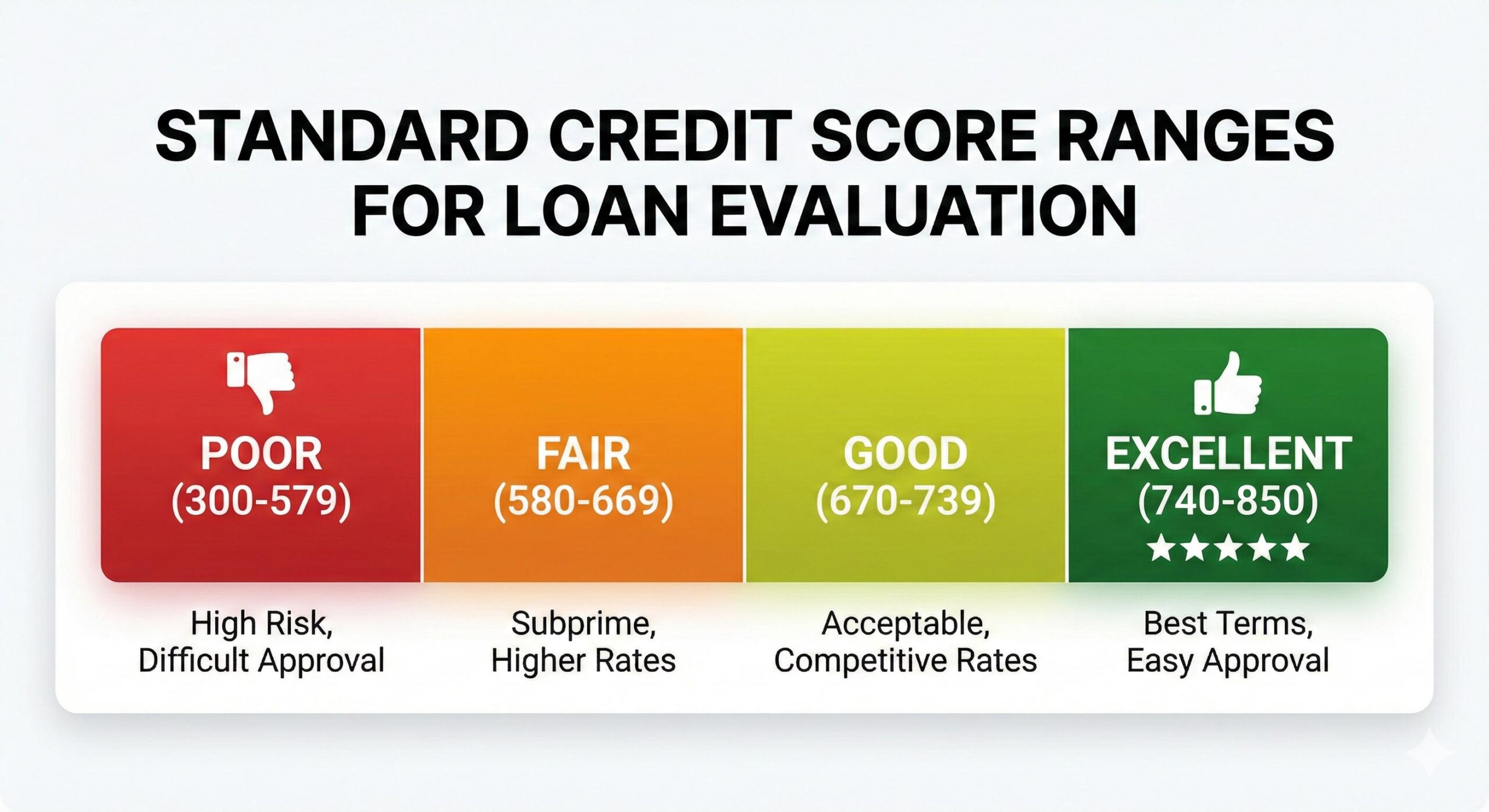
What is a good credit score to aim for before applying for a mortgage? While FHA loans may accept scores as low as 580, aiming for a credit score of 620 or higher is highly recommended for government-backed loans. For conventional loans, a score of 740 or above generally secures the most favorable interest rates and terms.
What does Debt-to-Income (DTI) ratio mean? Your DTI ratio is the percentage of your gross monthly income that goes toward paying your monthly debt obligations. Lenders use this metric to ensure you are not taking on more debt than you can comfortably afford. A DTI below 43% is generally preferred by most mortgage underwriters.
Does a loan rejection negatively impact my credit score? The rejection itself does not hurt your credit score, nor is the word “rejected” recorded on your credit report. However, the “hard inquiry” generated when the lender pulled your credit to review the application may cause a temporary drop of a few points.
How long should I wait to reapply after a mortgage denial? It is advisable to wait at least three to six months before reapplying. This timeframe allows you to review your Adverse Action Notice, correct any errors on your credit report, pay down existing debts, and establish a longer history of on-time payments.
Can a co-signer help if my application is rejected? Adding a co-signer or a non-occupant co-borrower who has a strong credit history and verifiable income can improve your chances of approval. The lender will evaluate both profiles, potentially lowering the overall risk assessment. However, the co-signer is equally legally responsible for the debt if you fail to pay.
What is an Adverse Action Notice? An Adverse Action Notice is a formal letter required by the Equal Credit Opportunity Act. It must be sent to you by the lender after a denial and must explicitly state the specific, primary reasons why your application for credit was rejected.
Latest Post
- Employer Category Loan Rejection: Why It Happens and How to Overcome It
- What Does “Written Off” or “Suit Filed” Mean in CIBIL? (And How to Fix It)
- Do BNPL Apps Ruin Credit Score? Understanding the Risks and Your Loan Approval Odds
- Understanding the Kredito24 Loan: Features, Eligibility, and Why Applications Get Rejected
- Understanding the Gold Loan Bank Process: A Complete Guide to Borrowing Against Your Gold
Conclusion
A rejected mortgage application is a temporary hurdle, not the end of your real estate goals. By taking a step back to understand the stringent requirements of modern underwriting, you can transform a denial into a constructive learning experience. Focus on the variables within your control: paying down high-interest debt, meticulously reviewing your credit reports, and building a robust savings safety net.
Financial health requires consistency and patience. Take the time to implement these responsible financial practices, and you will find yourself in a much stronger position when you are ready to apply again.
Explore more loan rejection guides on loanrejectionhelp.com to make smarter borrowing decisions.






1 thought on “Freedom Mortgage Application Rejected? Common Reasons and Smart Approval Tips (2026 Guide)”