

Introduction
When you step into a dealership, the excitement of choosing a new vehicle often masks the technical financial paperwork waiting inside. For most drivers, Mazda Finance—the brand’s dedicated lending arm—is the primary tool used to turn the dream of ownership into a reality. Borrowers typically search for Mazda Finance to uncover competitive interest rates, explore flexible leasing options, or determine if their credit profile meets the specific eligibility criteria of the manufacturer. At its core, Mazda Finance is a captive lending service where interest rates and approval odds are primarily dictated by an applicant’s credit score, debt-to-income (DTI) ratio, and the overall value of the vehicle being financed.
At loanrejectionhelp.com, we believe that transparency is the key to financial empowerment. Understanding how a captive lender evaluates your application can be the difference between a high-interest burden and a manageable, low-rate contract. Whether you are a salaried professional or a first-time buyer, this guide will break down the mechanics of Mazda Finance and provide the clarity needed to navigate the approval process with confidence.
Disclaimer: The information provided on loanrejectionhelp.com is for educational and informational purposes only and does not constitute financial or legal advice. Interest rates, terms, and approval criteria are subject to change by the lender. Always perform your own due diligence and consult with a qualified financial professional before signing any financing agreement.
Table of Contents
What is Mazda Finance?
Mazda Finance (officially operating as Mazda Financial Services) is a captive finance provider. Unlike a traditional retail bank, a captive lender exists specifically to support the automotive manufacturer by providing accessible credit to consumers. This relationship often results in specialized incentives that you won’t find at a standard bank or credit union.
When you enter into a contract with Mazda Finance, you are signing a secured loan agreement. The vehicle acts as collateral for the debt. Because the lender has the security of the vehicle, they can often offer “subsidized” interest rates—such as 0.9% APR or 1.9% APR—to move inventory during new model year launches. However, these “teaser rates” are highly selective and generally reserved for “Tier 1” applicants with excellent credit.
Key Components of the Agreement
- APR (Annual Percentage Rate): This is the total annual cost of your loan, including interest and any mandatory fees.
- Loan Term: This is the duration of your contract, typically ranging from 36 to 72 months. Longer terms lower the monthly payment but increase the total interest paid.
- Principal Amount: The actual cost of the vehicle after your down payment and any trade-in equity have been subtracted.
- Residual Value: In a lease agreement, this is the predicted value of the car at the end of the term.
How Interest Rates Are Determined
In the Mazda Finance ecosystem, your interest rate is a mathematical reflection of the risk you represent to the lender. As of 2026, market rates vary based on the model and the borrower’s profile.
1. Credit Tiering
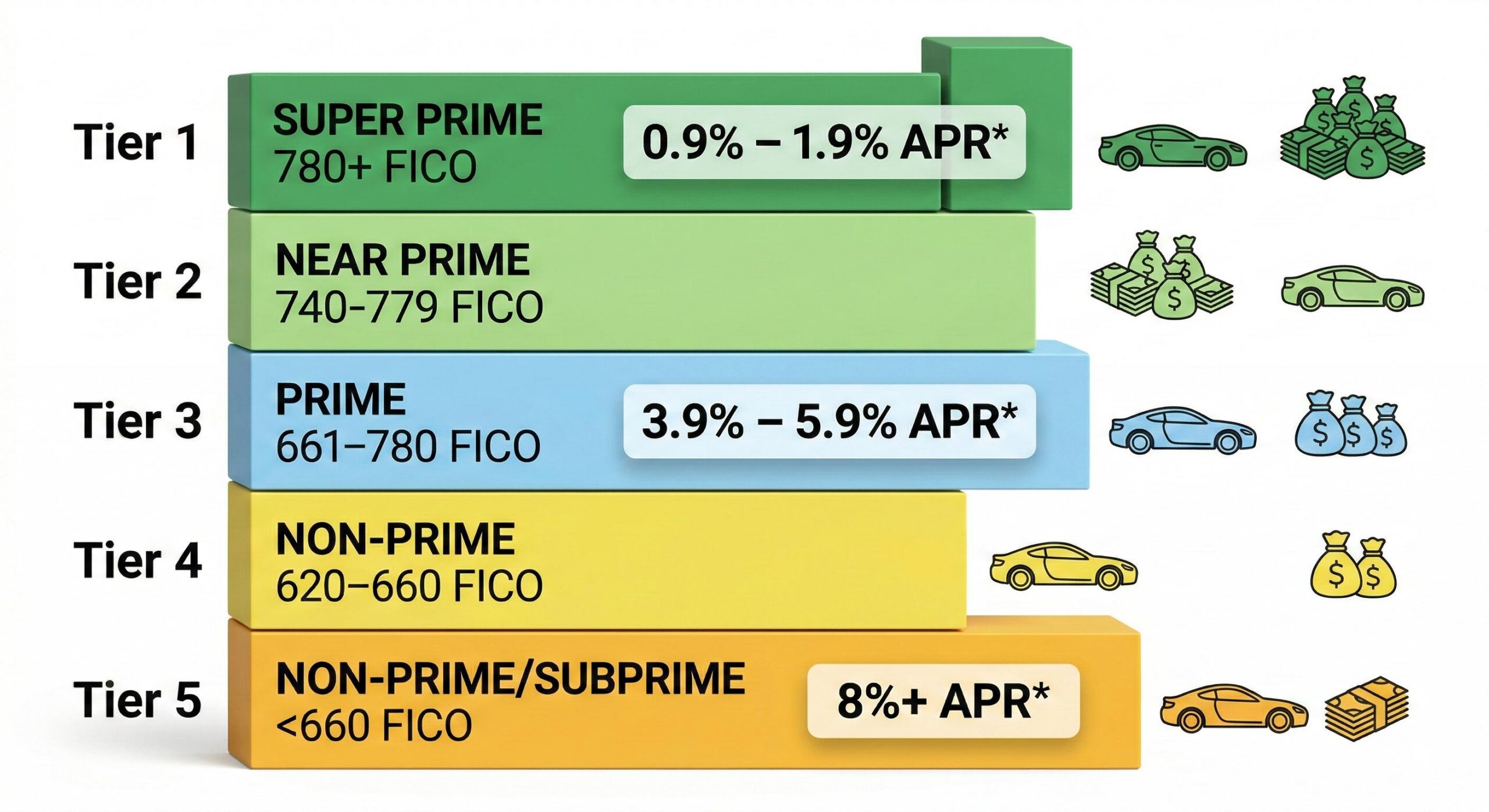
Lenders categorize applicants into “tiers” based on their credit scores.
- Super Prime (780+): Qualifies for the absolute lowest rates, such as 0.9% on models like the 2026 CX-70 or CX-90.
- Prime (661-780): Competitive rates, usually within a few percentage points of the advertised specials.
- Non-Prime/Subprime (Below 660): Approval is possible, but interest rates may climb significantly, sometimes reaching 10-15% depending on the used car market and historical risk data.
2. Market Trends
While Mazda sets its own promotional rates, the “floor” is influenced by the broader economic climate. If the national interest rate environment is high, “0% APR” deals become rarer or are restricted to very short loan terms (e.g., 36 months).
3. New vs. Used Vehicles
Typically, new Mazdas qualify for significantly lower interest rates than “Certified Pre-Owned” or used models. This is because new cars have higher resale predictability and are covered by factory warranties, reducing the financial risk for the lender.
The Mazda Finance Approval Process

To successfully secure a loan, it helps to understand what happens behind the scenes when you submit your application through a dealership or the online portal.
The Hard Credit Inquiry
Mazda Finance will perform a “hard pull” of your credit report. This allows them to see your payment history, current credit utilization, and any derogatory marks like collections. While this inquiry may temporarily dip your score by a few points, it is a necessary step for the lender to verify your creditworthiness.
Income and Employment Verification
Lenders look for “Ability to Pay.” They calculate your Debt-to-Income (DTI) ratio, which compares your monthly debt obligations to your gross monthly income. Ideally, lenders prefer that your total debt (including the new car payment) does not exceed 36% to 43% of your income.
Loan-to-Value (LTV) Ratio
This is the relationship between the loan amount and the actual value of the car. If you are trying to finance more than the car is worth (often due to rolling over “negative equity” from a previous loan), Mazda Finance may reject the application because the loan is “over-advanced.”
Common Reasons for Mazda Finance Rejection
If your application was declined, it is rarely a personal judgment. Usually, it stems from a specific financial metric that fell outside of the lender’s risk appetite.
- Insufficient Credit Depth: Commonly referred to as a “thin file,” this occurs when a borrower hasn’t had enough credit accounts over a long enough period. Even with a high score, a lack of “comparable credit” (like a previous auto loan) can lead to a rejection.
- High Credit Utilization: If your credit cards are maxed out, it signals that you are reliant on debt to manage daily life. This increases your risk profile.
- Recent Credit Seeking Behavior: Applying for multiple credit cards or personal loans in the months leading up to a car purchase can be a red flag suggesting financial instability.
Strategies to Improve Your Approval Odds

If you are planning to apply for Mazda Finance in the near future, taking these proactive steps can significantly strengthen your profile:
- Reduce Revolving Debt: Paying down credit card balances to below 30% of their limits can provide a rapid boost to your credit score.
- Audit Your Credit Report: Ensure there are no errors, such as paid-off collections still appearing as “active” or incorrect late payment markers.
- Increase the Down Payment: A larger down payment reduces the LTV ratio. When you have more “skin in the game,” the lender feels more secure.
- Add a Co-signer: If you have a thin credit history, a co-signer with established, high-tier credit can help you qualify for the best promotional APRs.
Comparison: Leasing vs. Financing
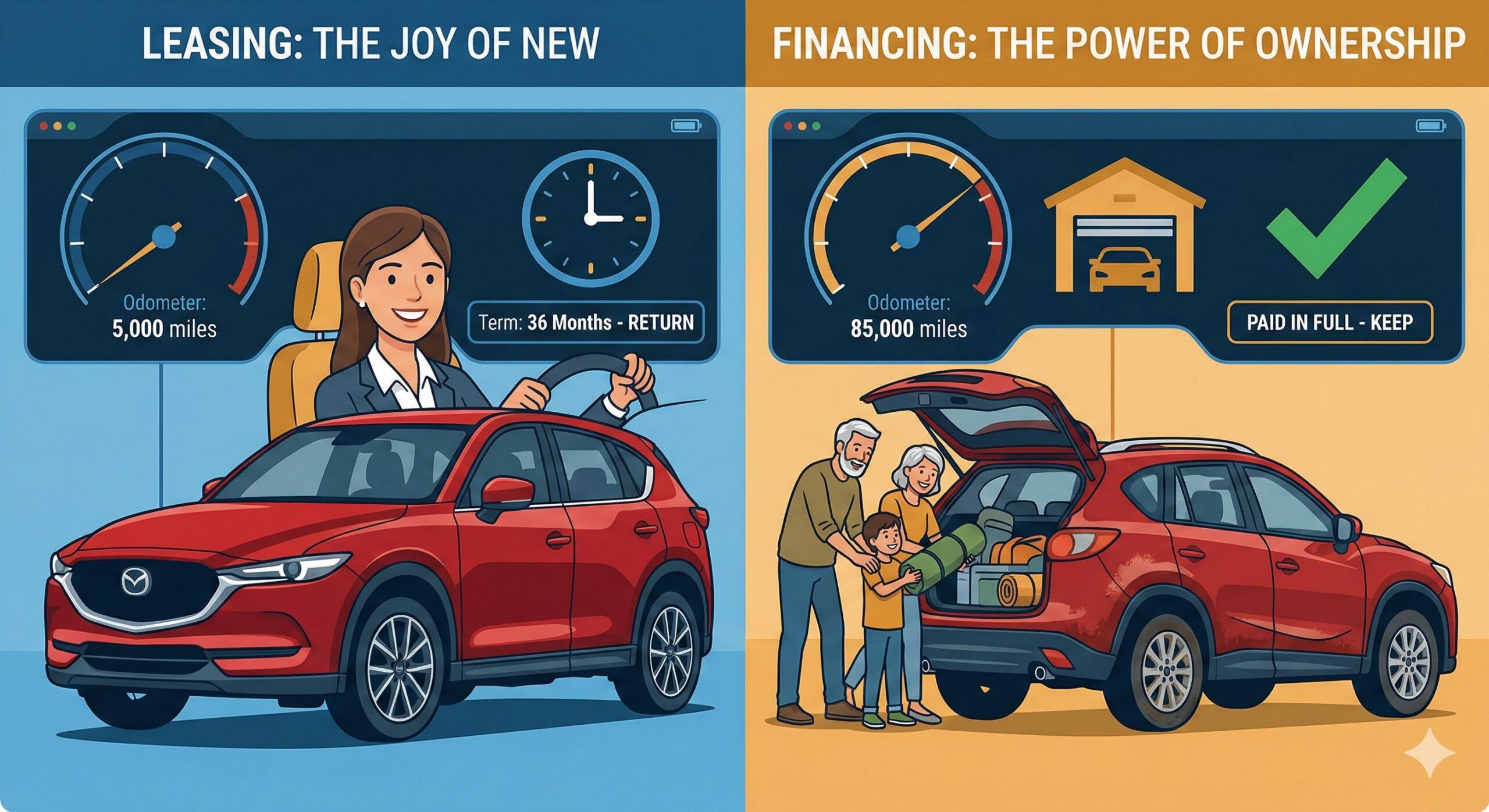
| Feature | Mazda Lease | Mazda Loan (Financing) |
| Ownership | No (Option to buy at end) | Yes (Once paid off) |
| Monthly Payment | Typically Lower | Typically Higher |
| Mileage Limits | Yes (e.g., 10k-12k miles/yr) | Unlimited |
| Customization | Not allowed | Fully allowed |
| Maintenance | Often covered/Warranty-aligned | Owner’s responsibility |
Frequently Asked Questions (FAQ)
1. What credit score do I need for Mazda Finance?
While there is no “official” minimum, a score of 660 or higher is generally required for prime rates. Borrowers with scores in the 600–650 range can still be approved, but often at higher interest rates. Special 0.9% or 0% APR offers usually require a score of 740+.
2. Can I get 0% APR through Mazda Finance?
Yes, Mazda frequently offers 0% APR on select models for well-qualified buyers. However, these deals are often limited to specific loan terms (like 36 or 48 months) and are usually available only on new or outgoing model year inventory.
3. Does Mazda Finance allow for early payoff?
Most Mazda Finance retail installment contracts allow you to pay off your loan at any time without a prepayment penalty. Paying off your loan early is an excellent way to save on total interest costs.
4. Can I have a co-signer on my Mazda Finance application?
Absolutely. A co-signer can help you meet income requirements or leverage a higher credit score to secure a better interest rate. Remember that the co-signer is equally responsible for the debt if you miss a payment.
5. What happens if my Mazda Finance application is rejected?
You will receive an “Adverse Action Notice” in the mail explaining the specific reason for the rejection (e.g., low score, high DTI). Use this information to improve your financial standing before re-applying in 3–6 months.
Muthoot Finance Gold Loan Interest Rate: A Complete Guide for Borrowers
Conclusion
Navigating Mazda Finance doesn’t have to be a stressful experience. By understanding the core mechanics of interest rates, credit tiers, and the approval process, you put yourself in the driver’s seat of the negotiation. Whether you choose to lease for the lower monthly payments or finance for long-term ownership, the key is to ensure the debt aligns with your overall financial health.
At loanrejectionhelp.com, we recommend checking your credit score at least three months before visiting the dealership to address any potential “red flags.” With the right preparation, you can secure a rate that makes your next Mazda as affordable as it is enjoyable to drive.
Responsible Borrowing Advice: Always calculate the “Total Cost of Ownership,” including insurance and maintenance, before signing a finance contract. Never borrow more than your budget comfortably allows.






2 thoughts on “Mazda Finance: A Complete Guide to Auto Loans and Financing”