Introduction
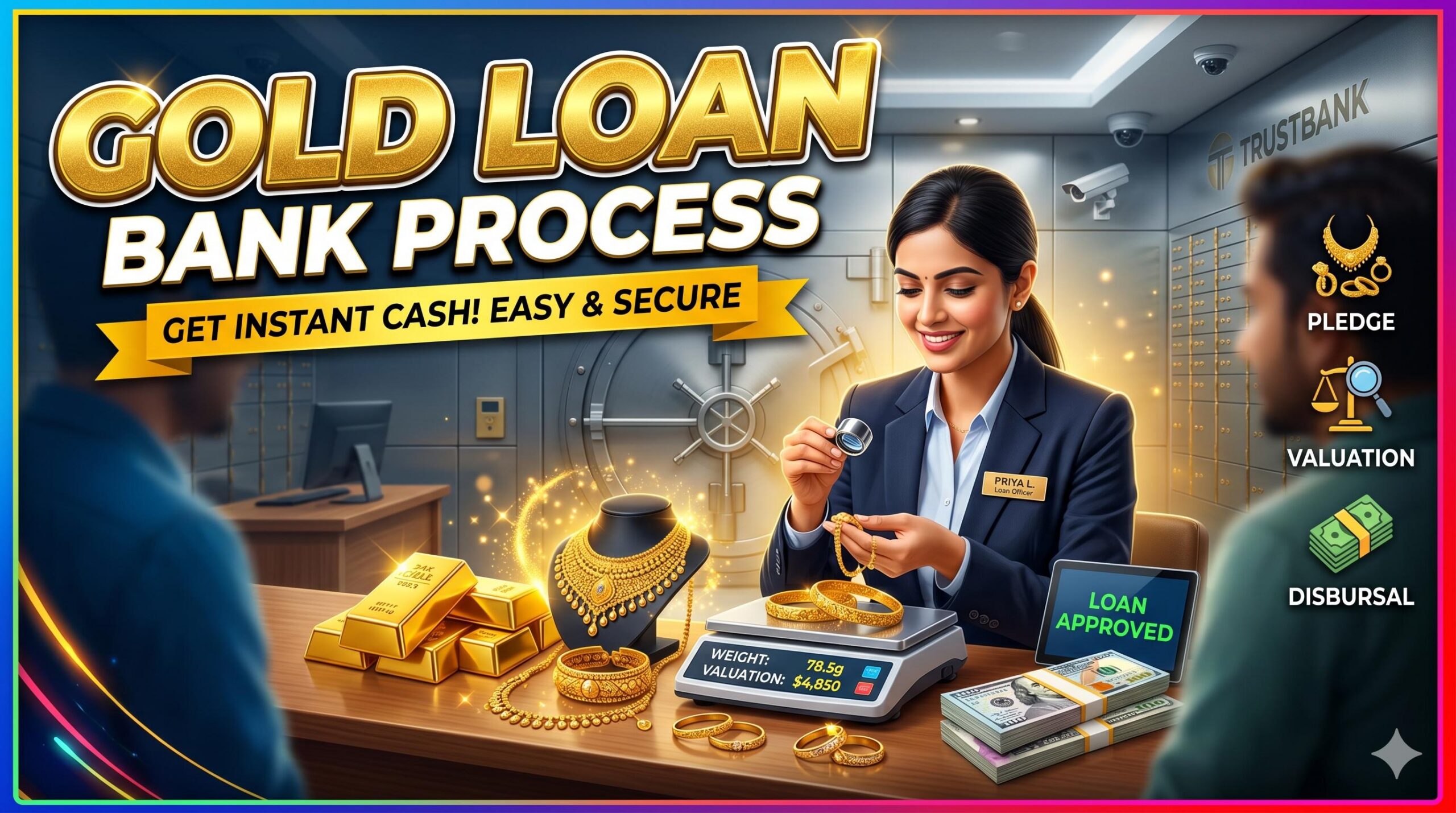
Gold loan banks are regulated financial institutions that disburse immediate funds to borrowers, after receiving personal gold jewelry and gold coins pledged by the borrowers as collateral. This type of loan has two core strengths: it carries lower interest rates than unsecured personal loans, features fast approval and high accessibility, and allows borrowers to bypass the strict credit score threshold that is commonly required for most other forms of lending. A gold loan’s amount and interest rate are jointly determined by the purity and total weight of the pledged gold, its current market price, and the bank’s loan-to-value ratio limit. Gold loans are suitable for salaried

workers facing unexpected medical expenses, as well as self-employed professionals in need of emergency working capital. The first step to responsible borrowing is to understand the bank’s gold loan approval and assessment process.
Table of Contents
How Does a Gold Loan Work?
A gold loan is a secured loan. Unlike personal loans that rely heavily on your credit history and income proof, a gold loan bank uses your physical asset—gold—to secure the debt.
The Concept of Loan-to-Value (LTV)
The most critical financial concept to understand when approaching a gold loan bank is the Loan-to-Value (LTV) ratio. Banks do not lend you 100% of your gold’s market value. Financial regulators usually cap the LTV (for example, at 75%).
- Example: If you bring gold valued at $10,000 to the bank, and the maximum LTV is 75%, the highest loan amount you can receive is $7,500.
- Why does LTV matter? This margin protects the bank against sudden drops in global gold prices. If the market value of gold falls, the bank still holds enough value to cover the outstanding loan.
How Banks Calculate Interest Rates

Gold loan interest rates are typically lower than credit cards or personal loans because the risk to the lender is minimal. However, the exact rate you receive depends on:
- Loan Tenure: Shorter repayment periods often attract lower interest rates.
- Repayment Structure: Banks offer different schemes, such as paying interest monthly while the principal is paid at the end (bullet repayment), or standard Equated Monthly Installments (EMIs).
- LTV Chosen: Opting for a lower loan amount than you are eligible for (a lower LTV) can sometimes help you negotiate a better interest rate with the bank.
Why Choose a Traditional Bank for a Gold Loan?

While many non-banking financial companies (NBFCs) and private lenders offer cash for gold, choosing a recognized gold loan bank offers distinct advantages:
- Security of Assets: This bank maintains strict security agreements and a sturdy vault, which can securely and properly safeguard your precious family heirlooms.
- Regulated Practices: Regulated banks must comply with the regulatory requirements to charge fees transparently and not impose any hidden processing fees.
- Better Interest Rates: The authors of this paper propose that traditional banks, which hold low-cost capital, can offer borrowers lower interest rates than private lending institutions.
Why Might a Gold Loan Bank Reject Your Application?
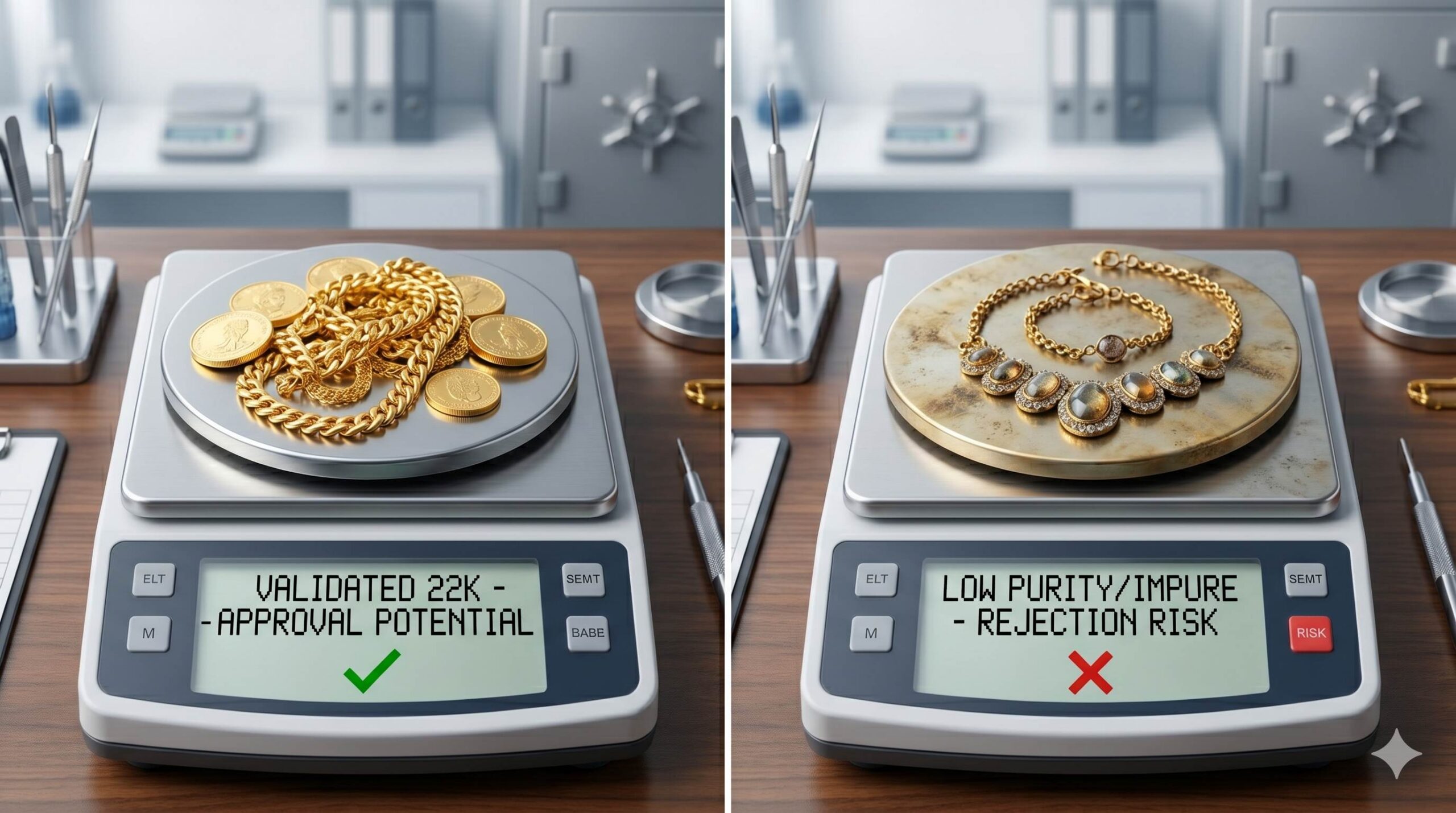
At LoanRejectionHelp.com, we emphasize that even secured loans are not guaranteed. While credit scores play a smaller role, a gold loan bank can still reject your application for several reasons:
- Low Gold Purity: Banks generally only accept gold that is 18 Karats (18K) or higher. If your jewelry has high impurities, precious stones, or falls below 18K, the bank will reject it as collateral.
- Mismatched KYC Documents: Know Your Customer (KYC) compliance is mandatory. If your identity proof, address proof, and loan application details do not align perfectly, the system will flag and reject your application.
- Disputed or Unverifiable Ownership: If a bank suspects that the gold is stolen, or if you cannot adequately explain the source of large quantities of gold, they will decline the loan to comply with Anti-Money Laundering (AML) laws.
- Below Minimum Weight: Most banks have a minimum loan amount and a corresponding minimum gold weight requirement (e.g., at least 10 grams).
Tips for a Smooth Approval Process
To ensure your loan is approved quickly and you get the best possible valuation, follow these educational tips:
- Assess Your Gold Beforehand: Understand that banks deduct the weight of any stones, gems, or enamel on your jewelry. Only the pure gold weight is calculated.
- Organize Your Documentation: Have your official government ID, proof of address, and passport-sized photographs ready and up-to-date.
- Understand the Fees: Ask the bank about processing fees, valuation charges, and prepayment penalties before signing the agreement.
- Check Your Repayment Capacity: Just because you have the gold doesn’t mean you should borrow the maximum amount. Borrow only what you can comfortably repay.
Muthoot Finance Gold Loan Interest Rate: A Complete Guide for Borrowers
Responsible Borrowing and Risk Awareness
the first step is to recognize the potential risks of secured loans. Take gold loans as an example: if a borrower is unable to repay their loan, the lending bank has the legal right to auction the mortgaged gold
to recoup its funds. Borrowers must maintain a strict budget, and make timely interest payments, or scheduled payments of equal principal and interest. A loan default will not only lead to the permanent loss of the gold, but also severely damage one’s personal credit, resulting in a sharp rise in the difficulty of obtaining future loans.
Frequently Asked Questions (FAQ)
1. Does a gold loan bank check my credit score?
Personal credit score? The core assessment factor for this type of loan is the value of the gold pledged as collateral. Most banks still conduct credit checks; very few will reject an application due to a low credit score, while applicants with high credit scores can negotiate more favorable interest rates.
2. What happens to my jewelry while it is with the bank?
We will seal and bag the jewelry in your presence, then deposit it in a high-security fireproof vault. It remains untouched throughout the entire process, and you may retrieve it as soon as you fully settle your loan.
3. Can I pay off my gold loan early?
Ahead of its scheduled repayment date? Most banks support early partial loan repayment or full early settlement. Borrowers must carefully review their loan agreements, as some institutions charge a small penalty fee for early settlement.