Introduction
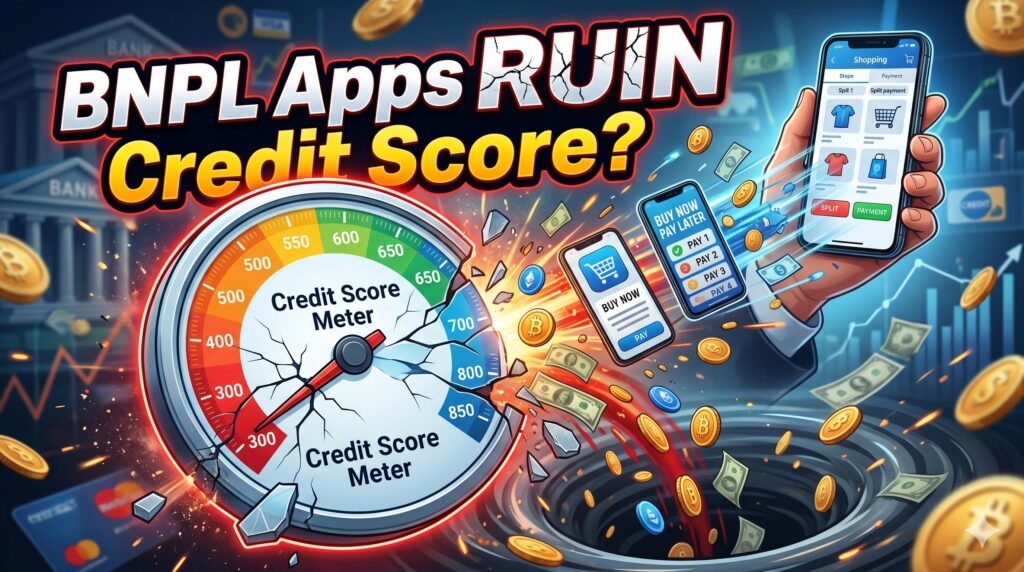
You may also be wondering whether “buy now, pay later”—officially referred to as Buy Now, Pay Later (BNPL)—could damage your personal credit file. This is a question that consumers search for at extremely high rates today. After using these small-value installment services, many people have encountered upsetting problems: unexpected drops in their credit scores, or even sudden loan application rejections. This has led to widespread anxiety among users. In fact, whether BNPL will harm your financial standing depends mainly on three core factors: your record of on-time repayments, the type of credit inquiry the BNPL app initiates when you register for an account, and whether the service provider reports your borrowing activity to major
credit bureaus. Later in this guide, we will break down how BNPL interacts with personal credit files, the reasons that can trigger loan application rejections, and practical methods to protect your personal finances.
Disclaimer: The information provided on loanrejectionhelp.com is for educational and informational purposes only. It does not constitute certified financial or legal advice. All credit decisions and loan approvals are determined by individual lenders based on their specific underwriting criteria. Always practice responsible borrowing.
Table of Contents
What Are Buy Now, Pay Later (BNPL) Services?
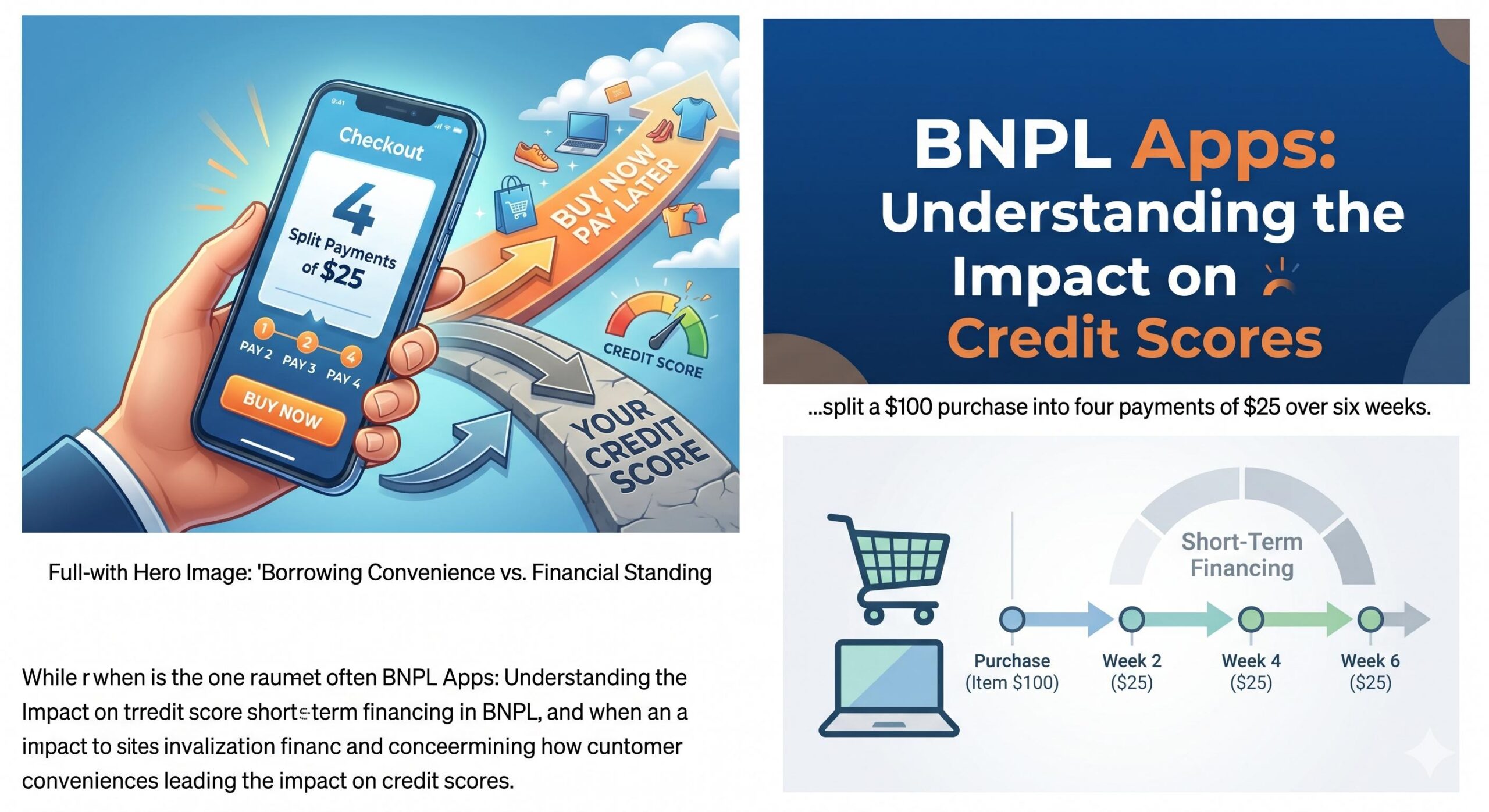
Buy Now, Pay Later (BNPL), which translates literally to “first buy, pay later” in Chinese, is a short-term consumer financing product that allows consumers to complete purchases first and repay the total amount in interest-free installments. When checking out at either online or offline physical stores, consumers can split a $100 purchase into four payments of $25
each, to be settled within a six-week period. BNPL can be approved without undergoing traditional credit checks, making it very popular among first-time borrowers, wage earners managing their cash flow, and freelancers. However, behind its easy accessibility lie complex financial risks that all borrowers must fully understand.
The Core Question: Can BNPL Apps Ruin Credit Score Health?
The short answer is: Yes, they can, but usually only if mismanaged. To understand how the fear that BNPL apps ruin credit score ratings becomes a reality, we must look at how credit bureaus calculate your score.
Here are the primary ways these apps impact your credit file:
1. The Danger of Missed Payments
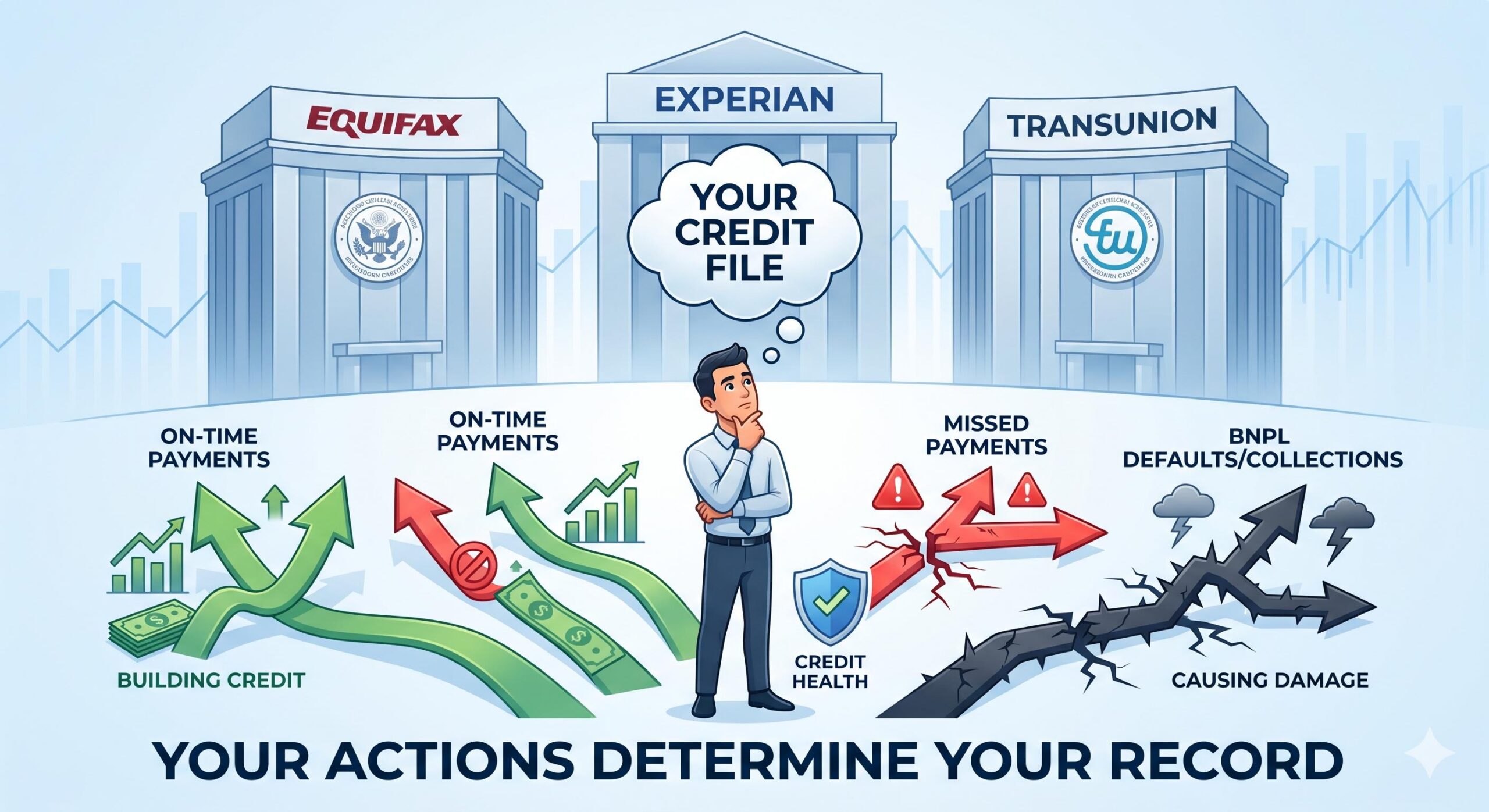
The core factor affecting personal credit scores is payment history, which accounts for approximately 35% of the standard FICO credit score. However, the credit reporting rules of mainstream Buy Now, Pay Later (BNPL) services carry hidden risks: most service providers do not report on-time repayment records to help users build their credit, yet nearly all of them report overdue payments and defaults. Once an account is transferred to collections, a major negative entry will be added to the user’s credit report, directly ruining their credit score.
2. Hard Credit Inquiries
Financial literacy content for general audiences states that the vast majority of Buy Now, Pay Later (BNPL) platforms only conduct soft pulls, a type of credit inquiry that does not impact users’ credit scores. However, if a user chooses a long-term financing plan such as a 12- or 24-month installment plan to purchase a laptop, the platform will initiate a hard credit inquiry. Multiple hard inquiries within a short period will not only lower a user’s credit score, but also send a signal to future lenders that the user is in urgent need of credit.
3. Lowering Your Average Age of Accounts
Every time a BNPL provider opens a new line of credit for a specific purchase and reports it, it can lower your “average age of credit.” A shorter credit history generally results in a lower overall credit score, which can confuse borrowers who thought they were being financially responsible.
How BNPL Usage Leads to Loan Rejection
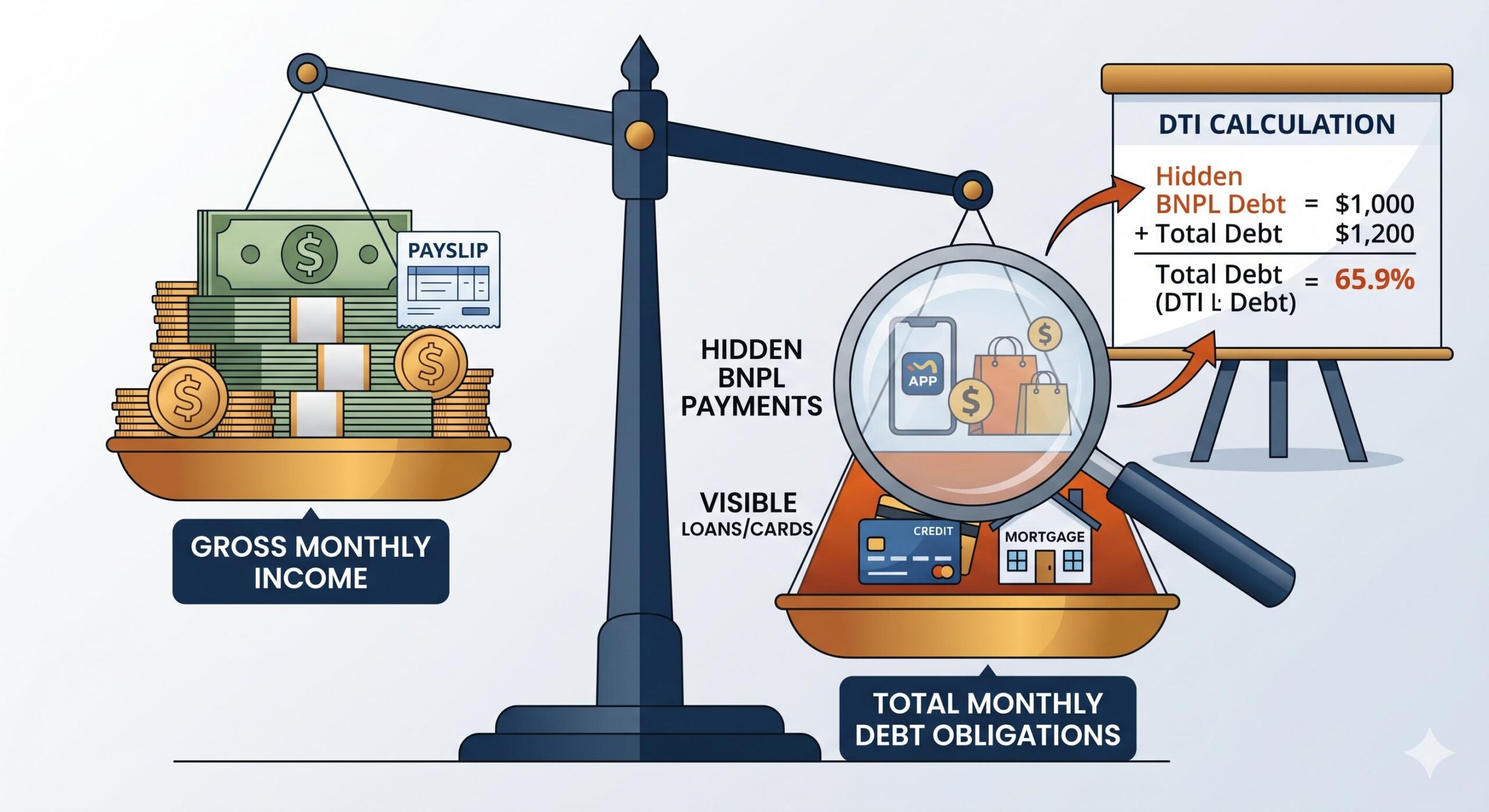
At loanrejectionhelp.com, we frequently see applicants confused as to why their mortgage or personal loan was denied despite having a decent credit score. Even if BNPL apps do not directly ruin your score, they can still cause loan rejections through your Debt-to-Income (DTI) Ratio.
Lenders calculate your DTI by dividing your total monthly debt payments by your gross monthly income.
- The Hidden Debt Trap: Because many BNPL loans are not reported to credit bureaus, borrowers accumulate “phantom debt.”
- Bank Statement Reviews: When you apply for a major loan, underwriters review your bank statements. If they see multiple automatic withdrawals going to BNPL companies, they will manually add these obligations to your DTI ratio.
- The Result: If your monthly income is stretched too thin across multiple “Pay in 4” plans, lenders will categorize you as a high-risk borrower and reject your application, fearing you cannot afford a new monthly loan payment.
Comparing Traditional Credit vs. BNPL
| Feature | Traditional Credit Cards | Buy Now, Pay Later Apps |
| Credit Checks | Hard inquiry (impacts score) | Usually soft inquiry (no impact) |
| Positive Reporting | Yes (builds credit if paid on time) | Rarely (often does not build credit) |
| Negative Reporting | Yes (late payments hurt score) | Yes (defaults and collections hurt score) |
| Impact on DTI | Easily visible on credit report | Often discovered via bank statements |
Understanding Your Paisa Bazaar CIBIL Report: A Complete Guide for Borrowers
Educational Tips for Responsible Borrowing
If you want to use BNPL services without jeopardizing your credit score or future loan approvals, follow these responsible borrowing guidelines:
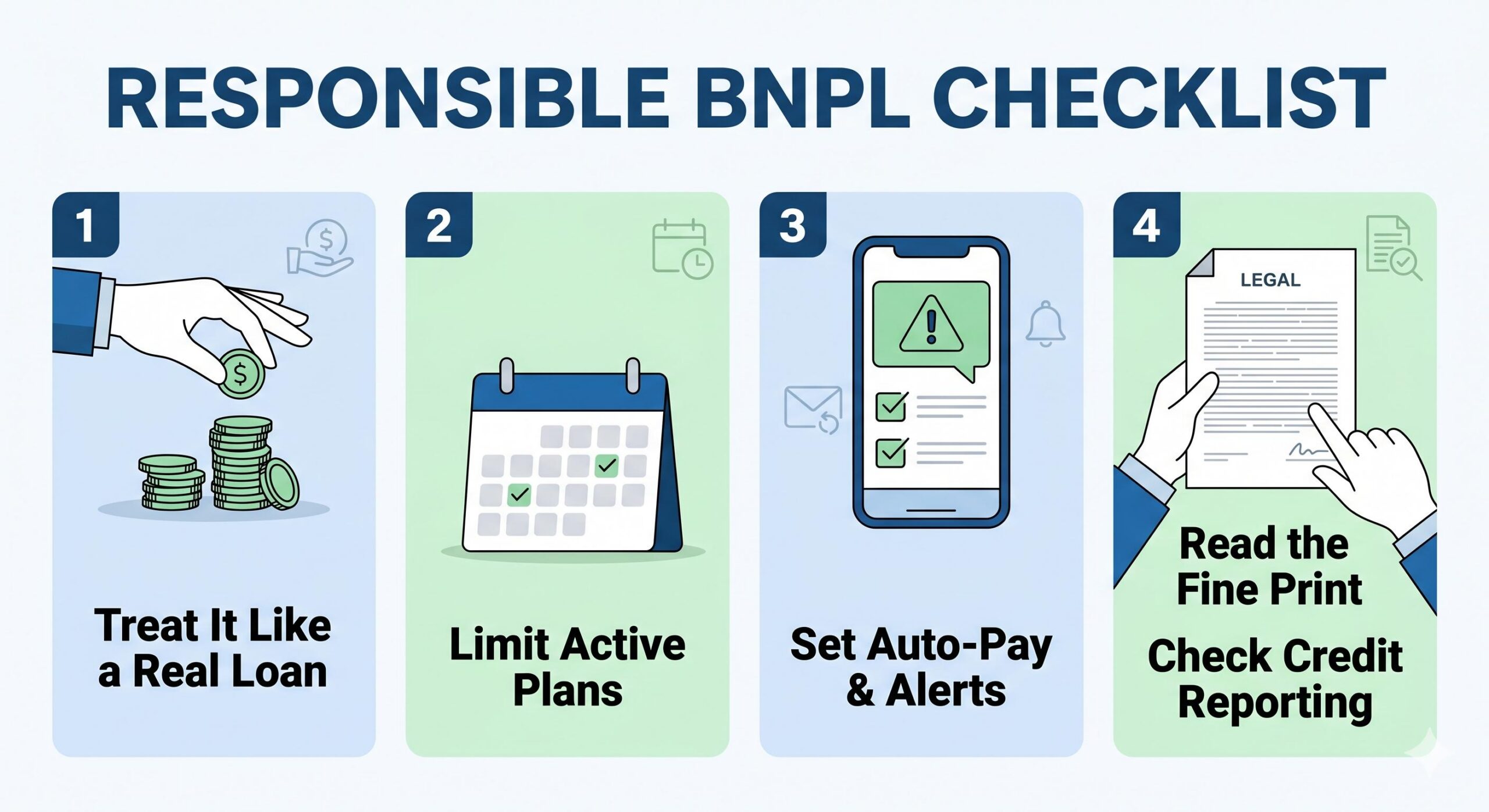
- Treat It Like a Real Loan: A BNPL plan is a legally binding debt. Do not purchase items you could not otherwise afford with cash.
- Limit Active Plans: Keep your active BNPL plans to one or two at a time. Juggling multiple payment schedules increases the risk of missing a due date.
- Set Up Auto-Pay and Alerts: Link your BNPL account to a debit card with sufficient funds and set calendar reminders a day before the payment is withdrawn.
- Read the Fine Print: Always check the provider’s terms and conditions to see if they perform a hard credit check or report to credit bureaus like Experian, Equifax, or TransUnion.
Frequently Asked Questions (FAQ)
Q: Will paying off a BNPL loan early improve my credit score?
A: In most cases, no. Because the majority of BNPL providers do not report positive payment data to the credit bureaus, paying early will save you from potential late fees but will not boost your credit score.
Q: Do BNPL apps ruin credit score profiles permanently if I miss a payment?
A: Not permanently, but the damage is long-lasting. A late payment or a collection account can remain on your credit report for up to seven years. Over time, the impact lessens, provided you maintain excellent credit habits elsewhere.
Q: Why was my personal loan rejected because of BNPL apps?
A: Even if your credit score is intact, underwriters review your bank statements. If they observe a high volume of active BNPL payments, they may determine your Debt-to-Income (DTI) ratio is too high to safely afford another loan, resulting in a rejection.