Introduction
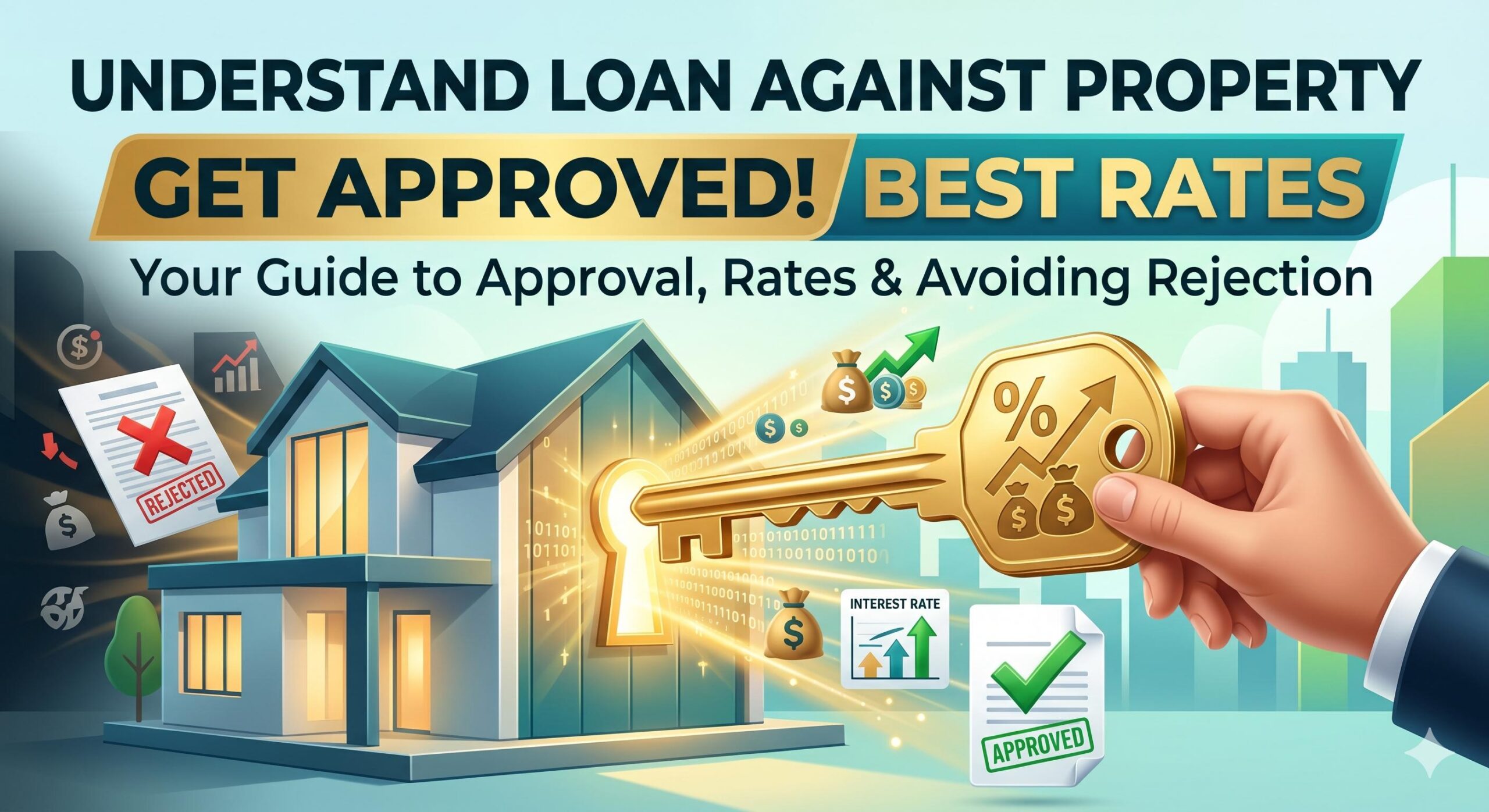
A loan against property (often referred to as LAP) is a type of secured financial product where you pledge your residential, commercial, or industrial real estate as collateral to borrow money from a bank or financial institution. Borrowers frequently search for this option because it allows them to unlock the dormant, tied-up value of their real estate, giving them access to large loan amounts at significantly lower interest rates compared to unsecured personal loans.
Ultimately, the exact amount you can borrow, the interest rate you are offered, and the success of your application are heavily affected by the current market value of your property, the strength of your credit score, and your proven ability to repay the debt over time.

Whether you are a salaried individual aiming to fund a child’s higher education, a self-employed professional looking to expand your business, or a first-time borrower trying to consolidate high-interest debts, understanding the mechanics of a loan against property is the first step toward responsible borrowing.
Educational Disclaimer: The information provided on loanrejectionhelp.com is for educational and informational purposes only. We do not provide financial, legal, or investment advice. Interest rates, loan approvals, and terms are determined solely by independent lenders based on individual financial circumstances. Always consult with a certified financial advisor before making major borrowing decisions.
Table of Contents
What Exactly is a Loan Against Property?
At its core, a loan against property is a classic mortgage loan. Instead of taking a loan to buy a property (which is a standard home loan), you already own the property free and clear, or have significant equity in it, and you use it as a security blanket for the lender.
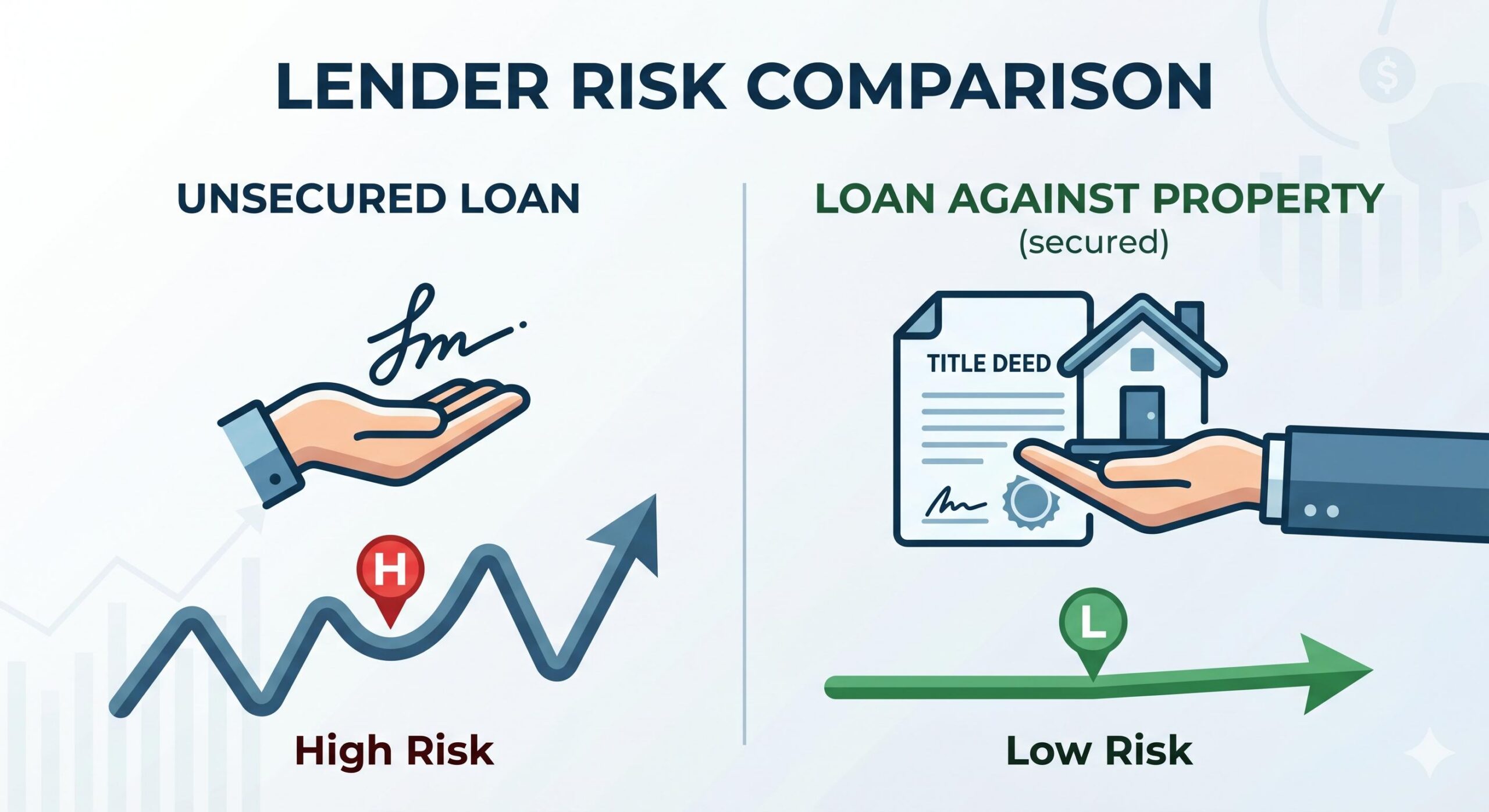
Because the lender has the physical property as a backup—meaning they can legally sell it to recover their funds if you fail to repay—their financial risk is drastically reduced. This reduced risk translates into direct benefits for the borrower:
- Higher Borrowing Limits: Depending on the property’s value, borrowers can access substantial funds.
- Lower Interest Rates: Secured loans traditionally carry much lower interest rates than unsecured personal loans or credit cards.
- Longer Repayment Tenures: Lenders often allow you to stretch out the repayment over 10 to 20 years, making the monthly installments (EMIs) much more manageable.
You continue to retain ownership and can still live in or use the property while you are repaying the loan. The lender simply holds the original title deeds until the loan is fully cleared.
How Do Loan Against Property Interest Rates Work?
The interest rate is the cost you pay for borrowing the money, and it is the most critical factor to understand before signing any agreement. Lenders typically offer two types of interest rates for a loan against property:
1. Fixed Interest Rates
A fixed interest rate remains exactly the same throughout the entire tenure of your loan. If you lock in an 8% rate for 15 years, your EMI will never change, regardless of what happens in the broader economy. This offers excellent predictability for budgeting, though fixed rates are generally slightly higher at the outset than floating rates.
2. Floating Interest Rates
A floating (or variable) interest rate fluctuates based on the broader economic conditions and the central bank’s baseline rates. If the central bank lowers interest rates, your loan’s interest rate will decrease, lowering your EMI or reducing your loan tenure. Conversely, if market rates go up, your borrowing costs increase.
The Role of the Loan-to-Value (LTV) Ratio
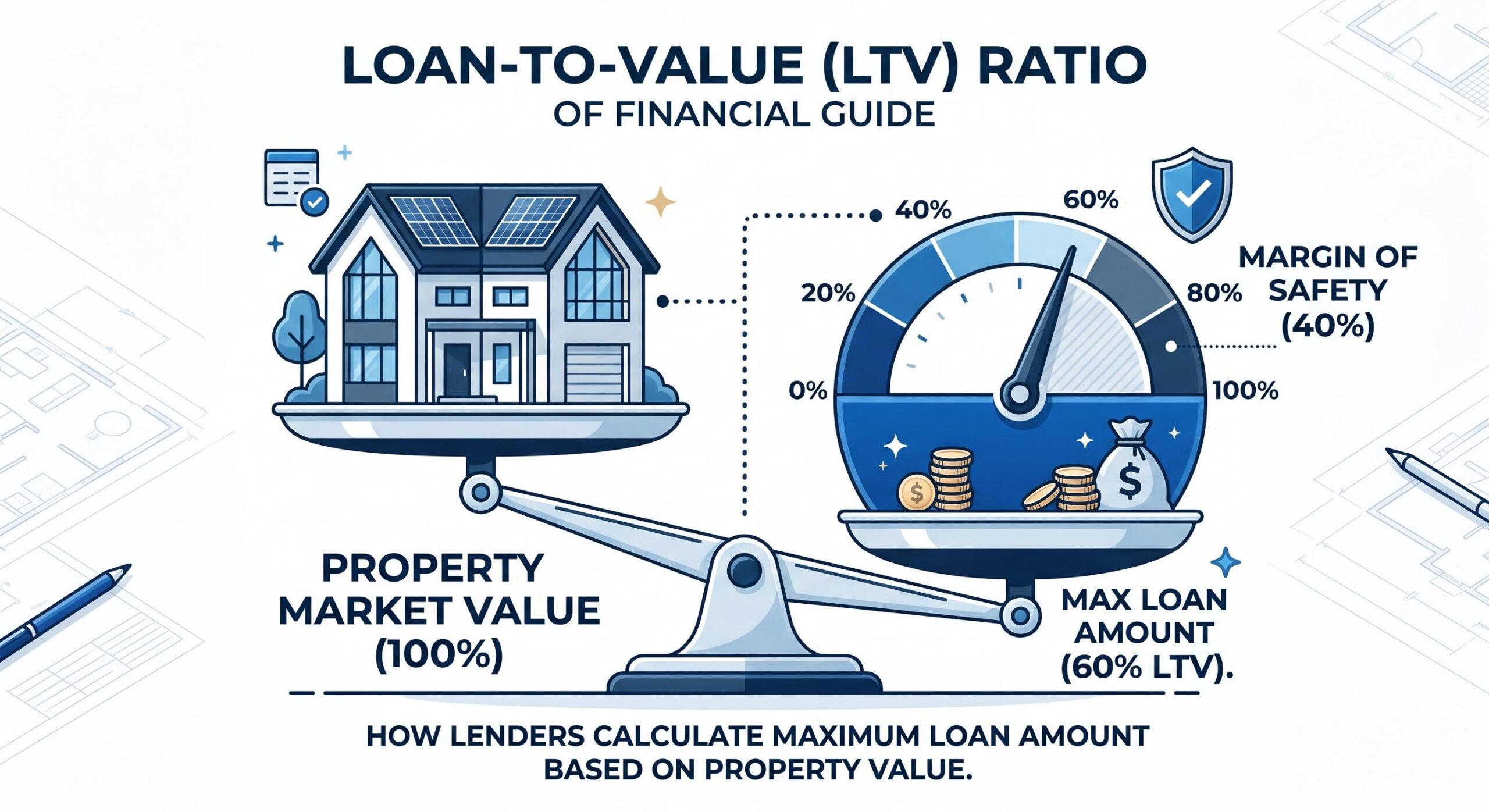
When you apply for a loan against property, you will not receive 100% of the property’s current market value. Lenders use a metric called the Loan-to-Value (LTV) ratio.
Typically, lenders cap the LTV at 50% to 70%. For example, if your commercial shop is valued at $100,000, and the lender offers a 60% LTV, the maximum loan amount you can receive is $60,000. This margin protects the lender against sudden drops in the real estate market. The lower the LTV you request, the more favorable your interest rate is likely to be, as it represents a lower risk to the bank.
Why Do Borrowers Choose a Loan Against Property?
Because there are no strict restrictions on how the funds must be used, borrowers leverage these loans for various major financial milestones:
- Business Expansion: Self-employed professionals use LAP to buy new machinery, open new branches, or manage working capital.
- Debt Consolidation: Borrowers drowning in multiple high-interest personal loans or credit card debts use a single, lower-interest LAP to pay off all other creditors, streamlining their finances into one affordable monthly payment.
- Medical Emergencies: The high borrowing limit provides a safety net for sudden, exorbitant healthcare costs.
- Higher Education: Funding expensive university degrees locally or abroad.
Common Reasons for Loan Against Property Rejection
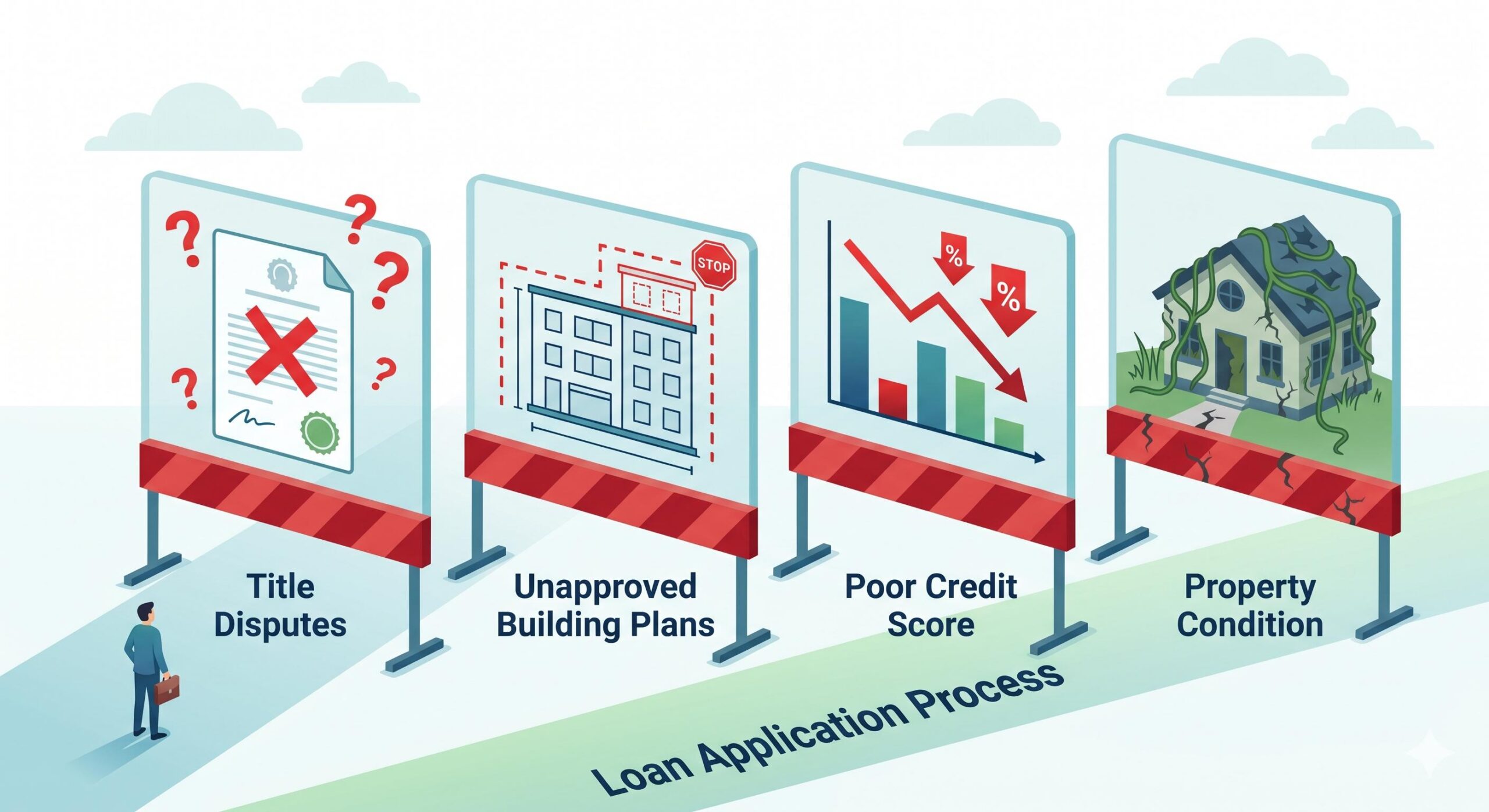
At loanrejectionhelp.com, we frequently see borrowers stunned by application rejections, assuming that simply owning a valuable property guarantees approval. However, lenders evaluate both the collateral and the borrower. Here is why a loan against property might be rejected:
1. Title Disputes and Missing Legal Documents
The most common hurdle in secured lending is unclear property ownership. If the property is inherited and the title hasn’t been legally transferred, if there are ongoing family disputes over ownership, or if the original deed is missing, the lender will reject the application immediately. The property must have a clear, marketable title.
2. Unapproved Building Plans
If you have built structures on your land that violate local municipal codes or lack official building approvals, lenders will hesitate to finance it. Illegal constructions make the property difficult to sell in the event of a foreclosure.
3. Poor Credit Score
Your credit score is a numerical representation of your past borrowing behavior. Even with a multi-million-dollar property, a history of defaulting on credit cards, bouncing checks, or missing previous loan payments signals to the lender that you are a high-risk borrower.
4. High Debt-to-Income (DTI) Ratio
Lenders analyze your current monthly income against your existing monthly debts. If more than 40% to 50% of your stable income is already going toward paying off other loans, the lender will conclude that you cannot safely afford another monthly payment, leading to rejection.
5. Age and Condition of the Property
Dilapidated buildings, extremely old structures, or properties located in hazardous or commercially unviable areas carry low resale value. If the lender believes the collateral is unmarketable, they will decline the loan.
How to Improve Your Chances of Approval
If you are planning to apply, or if you have recently faced a rejection, take these strategic steps to improve your borrower profile:
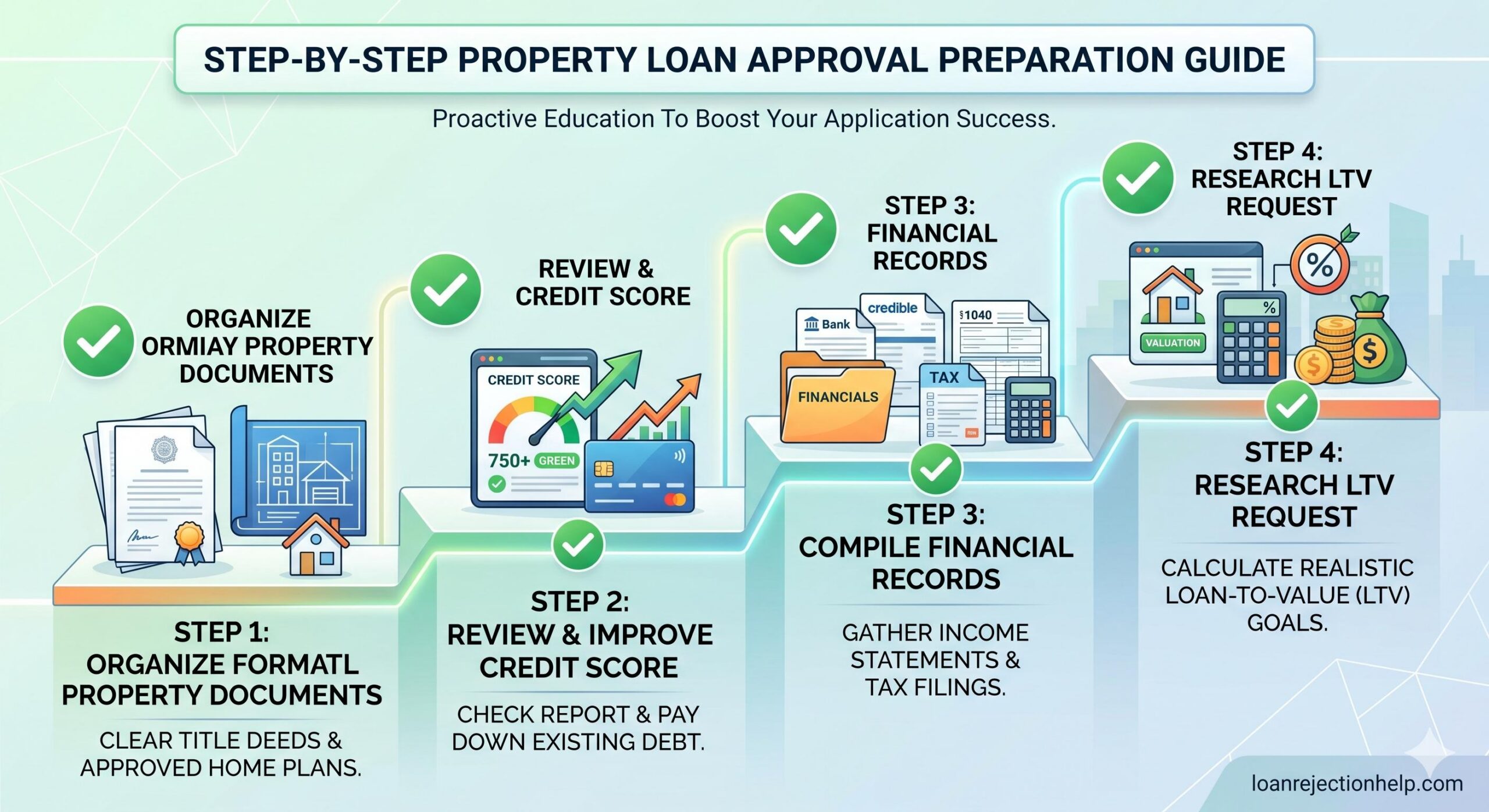
- Organize Your Property Paperwork: Ensure you have the original title deeds, the latest property tax receipts, approved floor plans, and a no-objection certificate (NOC) from your housing society if applicable.
- Boost Your Credit Score: Before applying, pull your credit report. Pay down existing credit card balances, ensure no bills are past due, and correct any clerical errors on your report. A higher credit score not only secures approval but negotiating power for better interest rates.
- Maintain Stable Income Records: Salaried individuals should have recent payslips and bank statements ready. Self-employed professionals must ensure their tax returns and audited profit-and-loss statements accurately reflect a stable, profitable business.
- Apply for a Realistic Amount: Do not ask for the absolute maximum LTV if you do not desperately need it. Requesting a moderate loan amount compared to your property’s value makes you a much safer bet for the underwriter.
Understanding the SBI Gold Loan: A Complete Guide to Features, Valuation, and Avoiding Rejection
Responsible Borrowing and Risk Awareness
While a loan against property is an incredibly powerful financial tool, it carries the ultimate risk: the loss of your asset. If you face severe financial hardship and fail to make your monthly payments for an extended period, the loan goes into default. Under the law, the lender has the right to initiate foreclosure proceedings. This means they will legally seize your property and auction it off to the public to recover their unpaid loan balance.

Never borrow against your home or business premises to fund speculative investments, stock market trading, or non-essential luxury expenses. Always ensure that your monthly EMI fits comfortably within your household budget, leaving room for unexpected life emergencies.
Frequently Asked Questions (FAQs)
1. Can my loan against property application be rejected even if my property is worth millions? Yes. Lenders evaluate both the property and the borrower. Even with a high-value property, your application can be rejected if you have a poor credit score, an unstable income, a high debt-to-income ratio, or if the property has unclear legal titles and unapproved constructions.
2. Can I get a loan against property with a low credit score? While it is difficult, it is not entirely impossible. Because the loan is secured by an asset, some lenders might still approve the application, but they will likely charge a much higher interest rate to offset their risk. To improve your chances, consider adding a co-applicant with a strong credit score or take time to improve your credit before applying.
3. How much money can I borrow against my property? You will not receive 100% of your property’s value. Lenders use a Loan-to-Value (LTV) ratio, which typically ranges from 50% to 70% of the property’s current market value. The exact amount depends on the lender’s policies, your income, and the type of property (residential vs. commercial).
4. How long does it take for a loan against property to be approved? Unlike instant personal loans, a loan against property takes longer to process—usually between 7 to 21 days. This is because the lender must conduct a thorough physical valuation of the property and perform extensive legal checks on your title documents to ensure there are no ownership disputes.
5. What happens if I cannot repay my loan against property? If you consistently fail to make your monthly EMI payments and default on the loan, the lender has the legal right to initiate foreclosure. This means they can take possession of your property and sell it at a public auction to recover the unpaid loan amount. Always ensure you have a solid repayment plan before securing a loan against your assets.
Conclusion
Securing a loan against property can be a highly effective way to unlock the tied-up value of your real estate, offering lower interest rates and higher borrowing limits than unsecured personal loans. However, simply owning a valuable property does not guarantee approval. Lenders look closely at your credit history, your repayment capacity, and the legal clarity of your property documents.
By proactively checking your credit score, organizing your property titles, and applying for a realistic Loan-to-Value (LTV) ratio, you drastically reduce your chances of facing a loan rejection. Remember, pledging your property is a major financial decision. Always borrow responsibly, ensure your monthly installments fit comfortably within your budget, and consult with a financial advisor to make the best choice for your long-term financial health.