Introduction
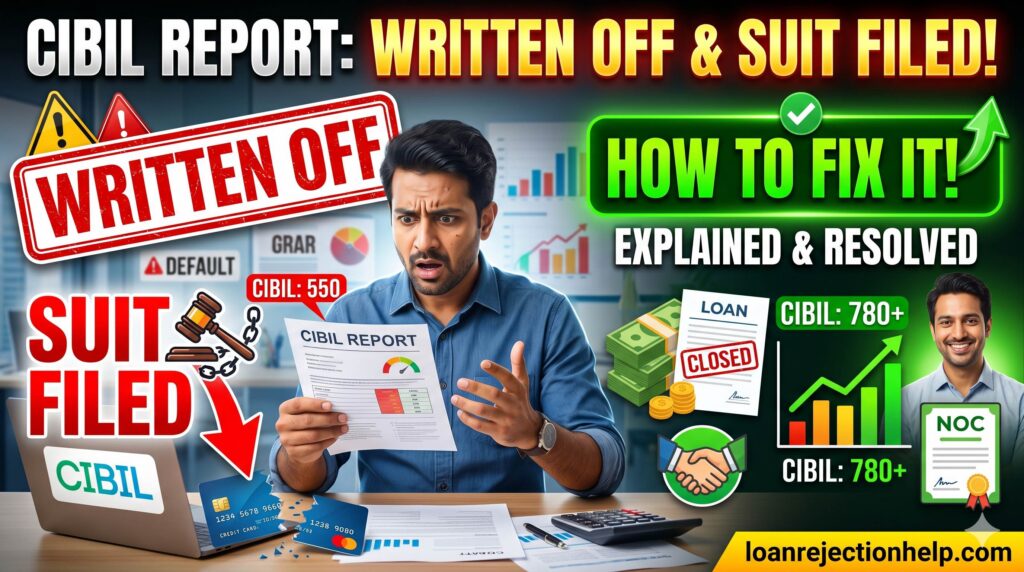
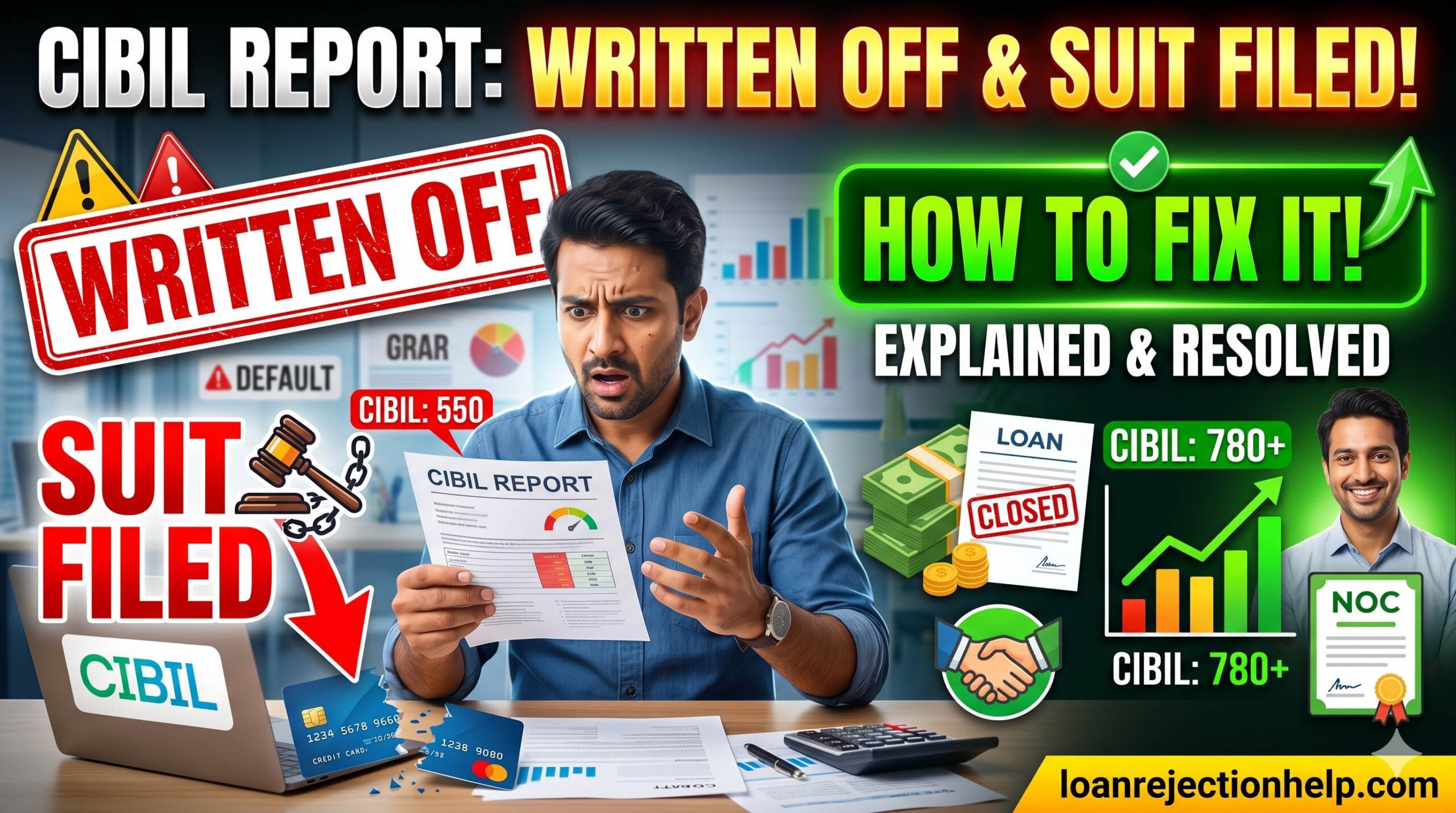
What Does “Written Off” or “Suit Filed” Mean in CIBIL? If you are an ordinary borrower in India, you will most likely panic immediately if, while checking your credit report one day, you suddenly see the two tags “Written Off” and “Suit Filed”. These are core negative default labels assigned by CIBIL, India’s credit information institution.

The “Written Off” tag refers to a recorded write-off where a bank has determined you cannot repay your full outstanding debt, while the “Suit Filed” tag marks the status that the bank has already launched legal debt recovery proceedings against you. Understanding the actual impacts of these two tags is a core prerequisite for repairing your personal credit and reapplying for loans. Below, we will conduct a detailed breakdown of the specific effects of these two tags and corresponding response plans.
Disclaimer: All information on the LoanRejectionHelp.com platform is for educational and informational purposes only, and does not constitute professional financial or legal advice. Before making any financial decisions such as debt settlement, you must consult licensed financial or legal professionals.
Table of Contents
What Does “Written Off” Mean in Your CIBIL Report?
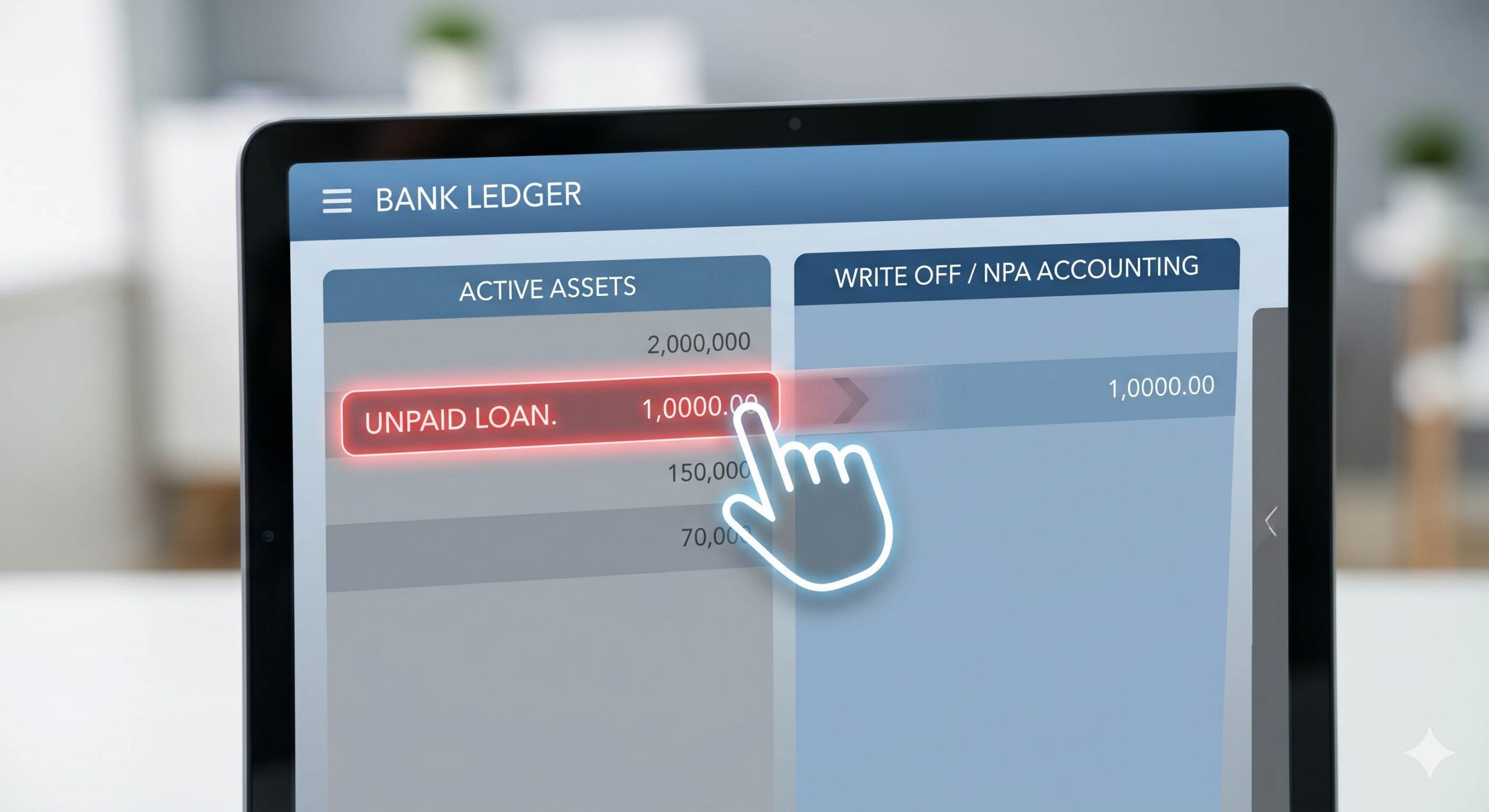
Many borrowers hold a common misconception that when a bank processes a loan via “write-off”, their debt is canceled and they no longer need
to make repayments, which is entirely unfounded. Write-off is essentially an accounting practice used by banks. In accordance with regulatory requirements, if a borrower fails to make repayments for 180 consecutive days or more, the loan will be classified as a Non-Performing Asset (NPA). Banks write off such loans for two reasons: first, to maintain the health of their own balance sheets,
and second, to claim tax deductions for bad debts. However, a borrower’s legal repayment obligation does not disappear. Banks will pursue the outstanding debt through internal recovery teams or third-party collection agencies. The write-off record will also be added to the borrower’s CIBIL credit report, which will harm their eligibility for future loan applications.
You may also see two specific variations of this status:
- Written Off (Principal): You paid the interest, but defaulted on the main loan amount.
- Written Off (Total): You defaulted on both the principal amount and the accumulated interest.
What Does “Suit Filed” Mean?
If your CIBIL report shows a “Suit Filed” remark, the situation has escalated from a missed payment to a legal battle. This means the lender has officially filed a lawsuit against you in a civil court or a Debt Recovery Tribunal (DRT) to legally force you to repay the outstanding balance.
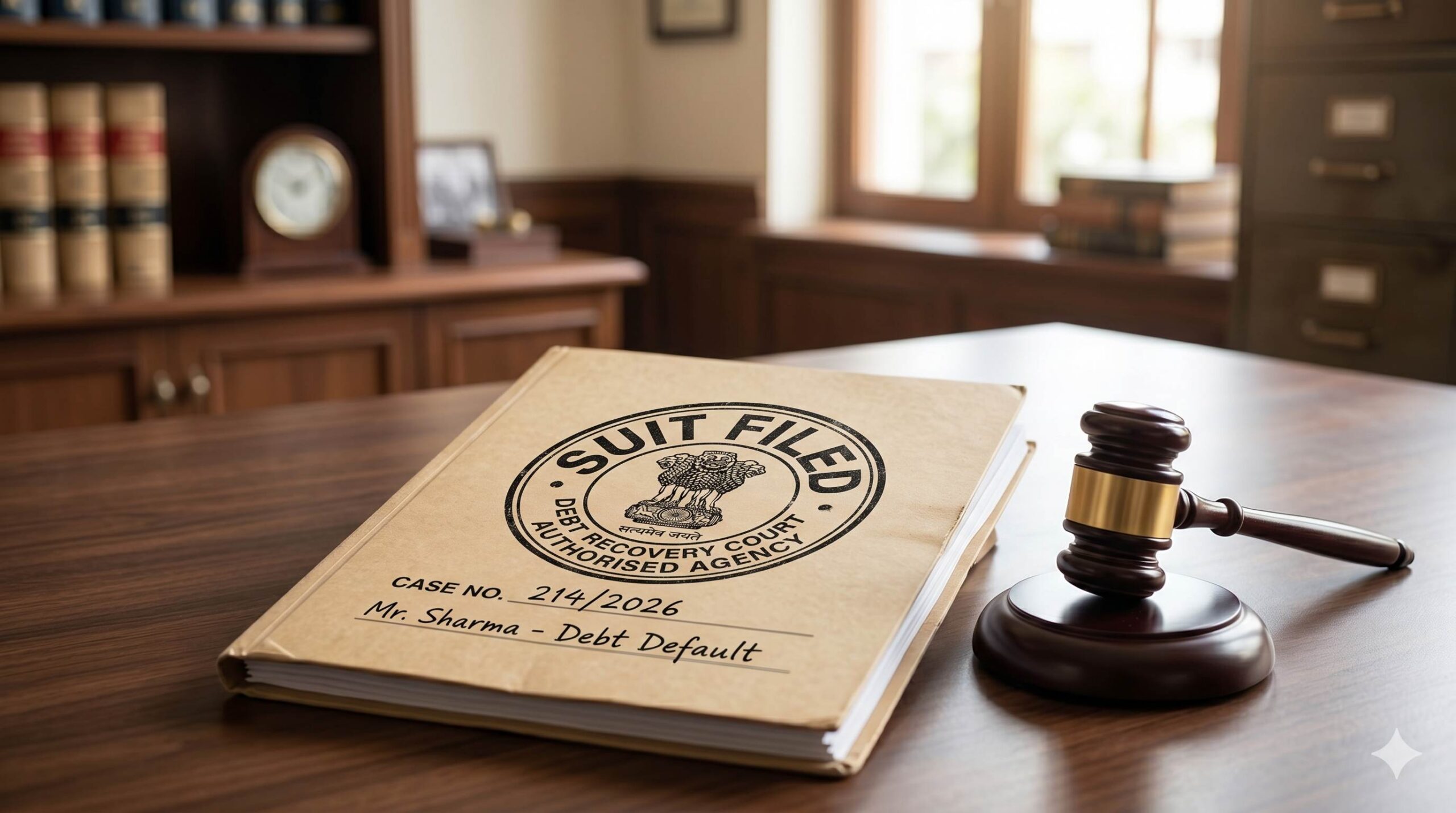
There are generally two classifications for this remark:
- Suit Filed: The lender has initiated legal action to recover the money.
- Suit Filed (Willful Default): This is far more severe. It means the bank has legally declared that you actually have the financial capacity to repay the loan, but you are intentionally choosing not to do so.
Why Do These Remarks Guarantee Loan Rejections?
LoanRejectionHelp.com continuously reviews and analyzes rejected loan cases of high-income applicants, to break down the core rules banks follow when denying loan applications: The core goal of banks’
review of an applicant’s CIBIL report is to verify trustworthiness. If an applicant’s report carries the two credit markers that guarantee an automatic loan denial: Written Off and Suit Filed, the applicant will be classified as an extreme credit risk. Even if the applicant currently has a very high income, the bank’s automated underwriting system will directly reject their application. Banks cannot issue loans to applicants who have previously forced other banks to initiate bad debt write-offs or legal proceedings.
How to Fix “Written Off” or “Suit Filed” Status in CIBIL
Having these remarks on your credit file is damaging, but it is not a permanent financial death sentence. Here is the educational roadmap to resolving these issues and paving the way for future credit approvals.
1. Contact Your Previous Lender Immediately
Do not try to hide from the debt. Reach out to the bank or NBFC that reported the negative status. Request a detailed statement of your outstanding dues, including the principal, interest, and any late payment penalties.
2. Pay the Debt in Full (Aim for “Closed,” Not “Settled”)
You will generally have two options to clear the debt:
- Settlement: You pay a negotiated, reduced amount. The bank accepts this, but your CIBIL will show a “Settled” status. While “Settled” is better than “Written Off,” it is still a negative remark that causes loan rejections, as it shows you did not pay the full original amount.
- Full Repayment (Closure): You pay the entire outstanding amount including penalties. The status changes to “Closed.” This is the best possible outcome for your credit score.
3. Obtain a No Objection Certificate (NOC)
To obtain a No Objection Certificate (NOC), You must proactively apply to the bank for an NOC or a settlement clearance letter after you have repaid all outstanding debts in full. This legally valid proof of full debt settlement must be properly kept. Once you have made the final payment, explicitly ask the bank for an NOC or a Closure Letter. This is your legal proof that the debt has been satisfied. Keep this document safe.
4. Wait for the CIBIL Update
Lending banks submit credit status updates to CIBIL, India’s credit bureau, on a 30- to 45-day cycle. You must check your own credit report one month later to confirm that the original adverse credit label has been updated to a compliant status in accordance with the agreement.
5. Rebuild Your Credit

Many people mistakenly believe that their CIBIL score can jump to 800 in a short period after paying off all outstanding debts. In fact, the core of credit repair is rebuilding trust. If a person applies for a secured credit card, controls their credit limit usage, pays all bills in full, and maintains these practices for 12 to 24 months, their credit score will rise steadily.
Responsible Borrowing Advice
To ensure you never face loan rejections or legal action in the future, always practice responsible borrowing:
- Borrow within your means: Your total EMIs should never exceed 40% of your monthly take-home income.
- Maintain an emergency fund: Keep 3 to 6 months’ worth of expenses in a savings account so you can continue paying your EMIs even if you lose your job.
- Monitor your credit: Check your CIBIL report at least twice a year to catch errors or track your progress.
Do BNPL Apps Ruin Credit Score?
Frequently Asked Questions (FAQs)
Q: Does “Written Off” mean my loan is forgiven?
No. A write-off is an internal accounting procedure for the bank. You still legally owe the debt, and the lender will continue collection efforts.
Q: Can I get a home loan if I have a “Suit Filed” remark?
It is highly unlikely. Top-tier banks and NBFCs will automatically reject major loans like home mortgages if there is an active “Suit Filed” or “Written Off” status on your report. You must resolve the issue first.
Q: How long does a “Written Off” status stay on my CIBIL report?
Credit bureaus typically retain your credit history for up to 7 years. However, if you pay off the debt and the status changes to “Closed,” the negative impact lessens over time as you build a newer, positive payment history.