Disclaimer: The information provided on loanrejectionhelp.com is for educational and informational purposes only. It does not constitute financial advice. Lending decisions are made at the sole discretion of financial institutions based on their internal underwriting policies. Always practice responsible borrowing.
Having your loan rejected despite 750 CIBIL score means that a bank or financial institution has declined your application even though you possess what is widely considered an excellent credit rating. Borrowers frequently search for this exact phrase out of deep frustration and confusion, mistakenly believing that a 750+ score acts as a golden ticket for guaranteed loan approvals. However, your credit score only tells half the story.

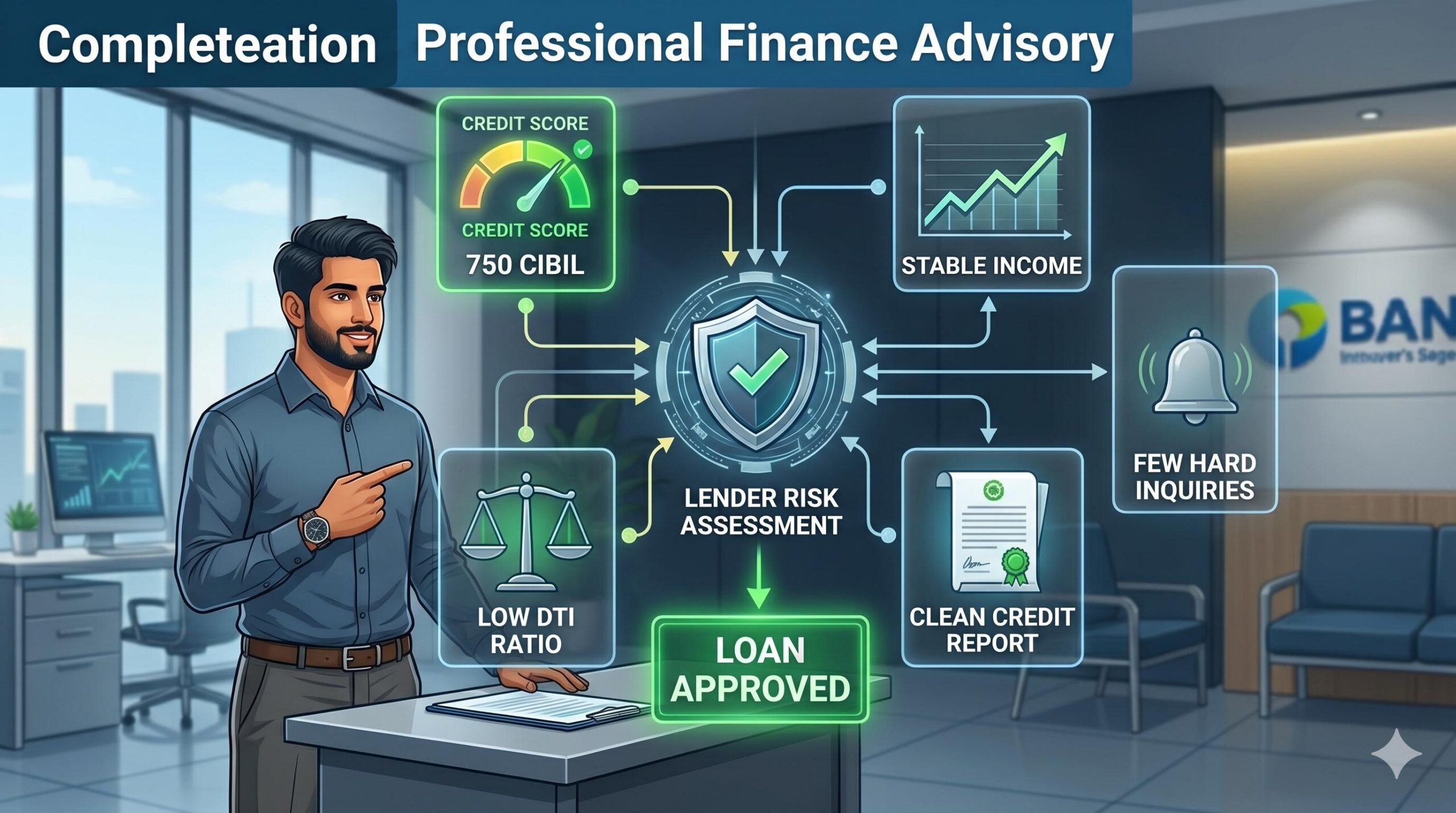
It reflects your historical repayment behavior, but it does not guarantee your current ability to take on new debt. Whether your application is approved or rejected is affected by several critical variables beyond your score, including your current Debt-to-Income (DTI) ratio, employment stability, existing financial liabilities, and the lender’s unique risk assessment policies.
Table of Contents
Understanding the Financial Concept: Why Isn’t a High Score Enough?
To understand why a loan rejected despite 750 CIBIL score happens, you must first understand how lenders view creditworthiness. Your CIBIL score is a three-digit number summarizing your credit history. It tells the lender, “Historically, this person pays their bills on time.”
However, underwriting—the process a lender uses to assess risk—requires looking at the present and the future. Even if you have a flawless history of repaying a small credit card bill, the lender must determine if you have the financial capacity to repay a large, new monthly installment today. If your current financial profile shows signs of strain, lenders will prioritize that current data over your past credit score, leading to a rejection to protect both the institution from default and you from falling into a debt trap.
Key Reasons for Rejection Even with an Excellent Credit Score
If your credit score is in the top tier, the rejection almost always stems from your current income, your existing debt burden, or specific application mismatches. Here are the primary factors lenders evaluate:
1. High Debt-to-Income (DTI) Ratio
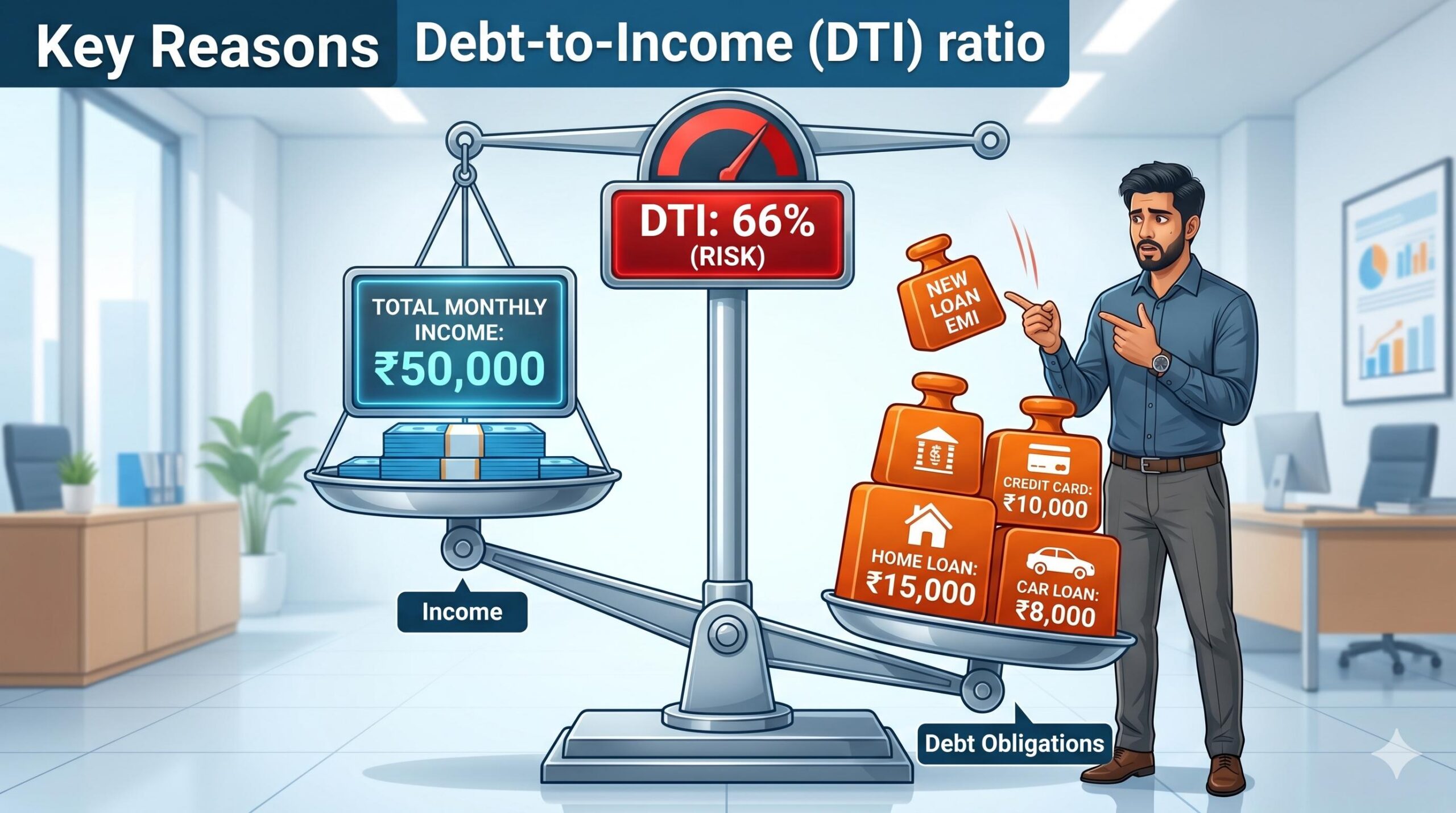
This is the most common reason for a loan rejection despite a high credit score. Your DTI ratio (often referred to as Fixed Obligation to Income Ratio or FOIR in some regions) compares your total monthly debt payments to your monthly income.
- The Rule: Lenders generally prefer that no more than 40% to 50% of your monthly income goes toward debt repayments (including the new loan EMI).
- The Impact: If you earn $5,000 a month but already pay $2,500 toward existing personal loans and credit cards, lenders will flag you as over-leveraged. Even with a 750 score, adding another loan increases the risk of default.
2. Insufficient or Unstable Income
A high credit score does not indicate a high income. You can have a 750 CIBIL score by perfectly managing a $500 limit credit card on a minimum-wage salary. However, if you apply for a $50,000 personal loan, the lender will reject it based on insufficient income. Furthermore, if you are a salaried individual who frequently changes jobs, or a self-employed professional with wildly fluctuating seasonal income, lenders view this instability as a high risk.
3. High Credit Utilization Ratio (CUR)
Your Credit Utilization Ratio measures how much of your available credit you are currently using.
- The Red Flag: If your total credit card limit is $10,000 and your balances routinely sit at $9,000, your CUR is 90%.
- The Consequence: Even if you pay the minimum dues on time (protecting your 750 score), lenders view a high CUR as a sign of financial distress or an over-reliance on credit.
4. Being “Credit Hungry” (Too Many Hard Inquiries)
Every time you apply for a new loan or credit card, the lender triggers a “hard inquiry” on your credit report. If you apply for multiple loans across different banks within a short period (e.g., a few weeks), it makes you appear desperate for funds. Lenders view this “credit-hungry” behavior as a major red flag, often leading to instant rejections regardless of your actual score.
5. Employer or Location Blacklisting
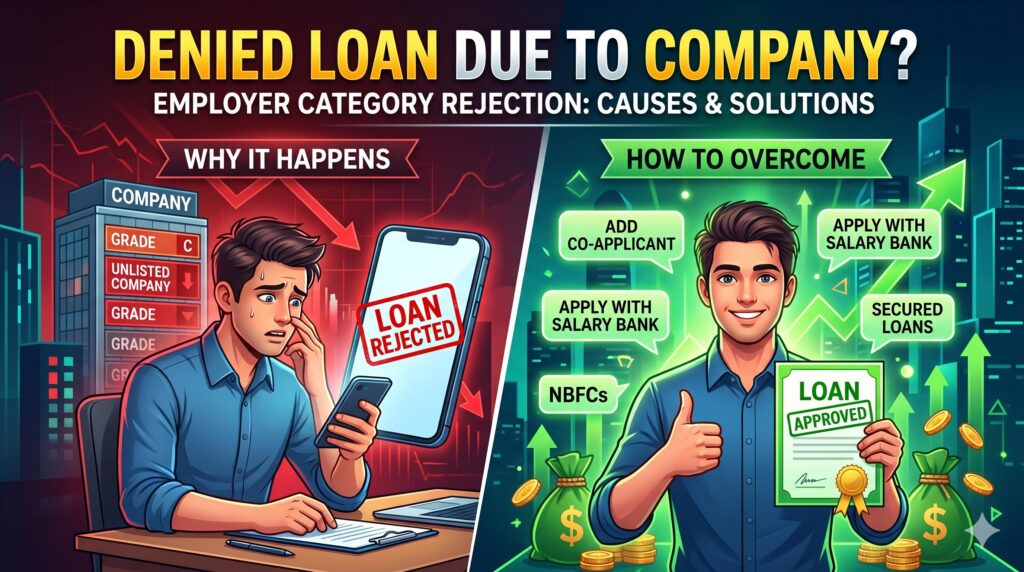
Sometimes, the rejection has nothing to do with your personal finances. Many financial institutions maintain internal lists of “negative profiles.” If your employer has a poor track record of paying salaries on time, or if you live in an area with historically high default rates, your application may be rejected based on the lender’s internal policy constraints.
Responsible Borrowing: Next Steps After a Rejection
If you face a loan rejection, do not panic and do not immediately apply to another bank. Doing so will only generate more hard inquiries and further damage your profile. Instead, follow these educational steps:
- Request a Reason: Ask the lender for the specific reason for the rejection. They are usually required to provide an “adverse action” explanation.
- Review Your Credit Report: Download a fresh copy of your credit report to check for any administrative errors, such as a mismatched address or a closed loan showing as active.
- Lower Your DTI: Focus on aggressively paying down existing debts to free up your monthly cash flow before applying again.
- Observe a Cooling-Off Period: Wait at least 3 to 6 months before submitting a new loan application.
Understanding Your Options: The Best Loans for 550–650 Credit Score
Risk Awareness Statement
Borrowing money always carries inherent financial risks. Taking on debt that exceeds your repayment capacity can lead to severe financial distress, legal action, and long-term damage to your credit profile. Always evaluate your monthly budget, ensure you have an emergency fund, and only borrow what you strictly need and can comfortably repay.
Frequently Asked Questions (FAQ)
Does a loan rejection lower my CIBIL score?
The rejection itself does not lower your CIBIL score. However, the “hard inquiry” made by the lender during the application process can cause a temporary, minor dip (usually a few points) in your overall score.
What is a healthy Debt-to-Income ratio for loan approval?
While lender policies vary, a healthy Debt-to-Income (DTI) ratio is generally considered to be below 35% to 40%. This ensures you have enough disposable income to cover daily living expenses after paying your loan installments.
Can I get a loan with a 750 score if I am a first-time borrower?
If you are a true first-time borrower, you likely do not have a 750 score, as scores are built on credit history (you may have an “NH” or “NA” rating). If you somehow have a high score through an authorized user status, approval will still depend entirely on your current verifiable income and employment stability.