Introduction
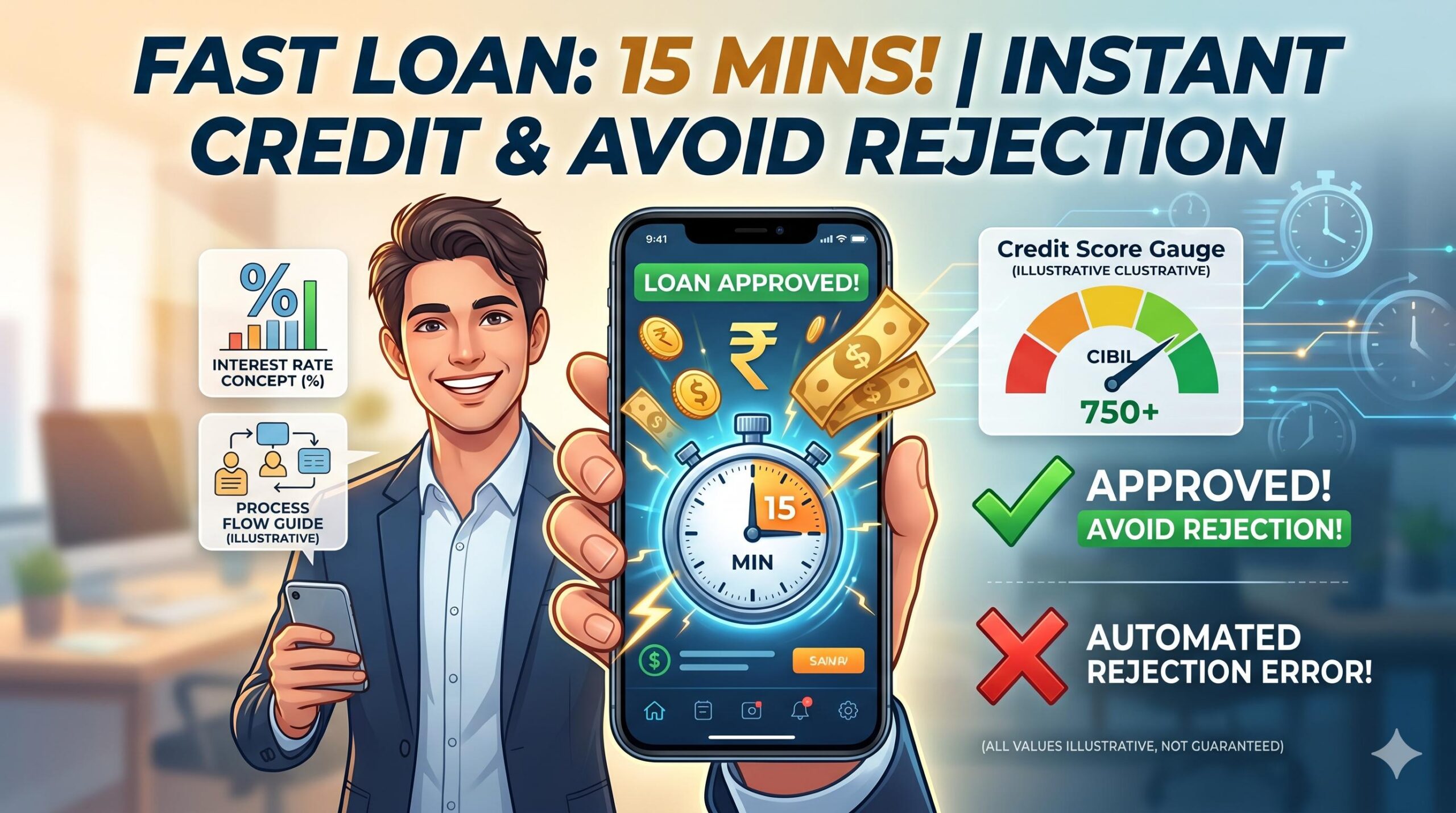
A fast loan in 15 minutes refers to a highly automated, unsecured digital personal loan where a fintech platform or online lender uses advanced algorithms to process an application, verify identity, assess credit risk, and disburse funds to a bank account in a quarter of an hour. Borrowers typically search for this specific financial lifeline when they are facing sudden, urgent cash deficits that cannot wait for a traditional bank’s multi-day approval process—such as unexpected medical emergencies, urgent vehicle repairs, or last-minute mandatory travel.

However, whether you actually receive the funds in this timeframe, and the interest rate you are ultimately charged, is strictly affected by your digital financial footprint: your real-time credit score, the verifiable stability of your monthly income, and the seamless digital matching of your identity documents.
Whether you are a salaried individual trying to bridge a gap before payday or a self-employed professional needing emergency working capital, understanding the financial mechanics behind ultra-fast lending is essential to borrowing safely and avoiding the frustration of an instant rejection.
Table of Contents
The Financial Mechanics: How Can a Loan Be Approved So Quickly?
Traditionally, applying for a personal loan required physical paperwork, manual income verification by a human underwriter, and days of waiting. A fast loan in 15 minutes eliminates the human element entirely.
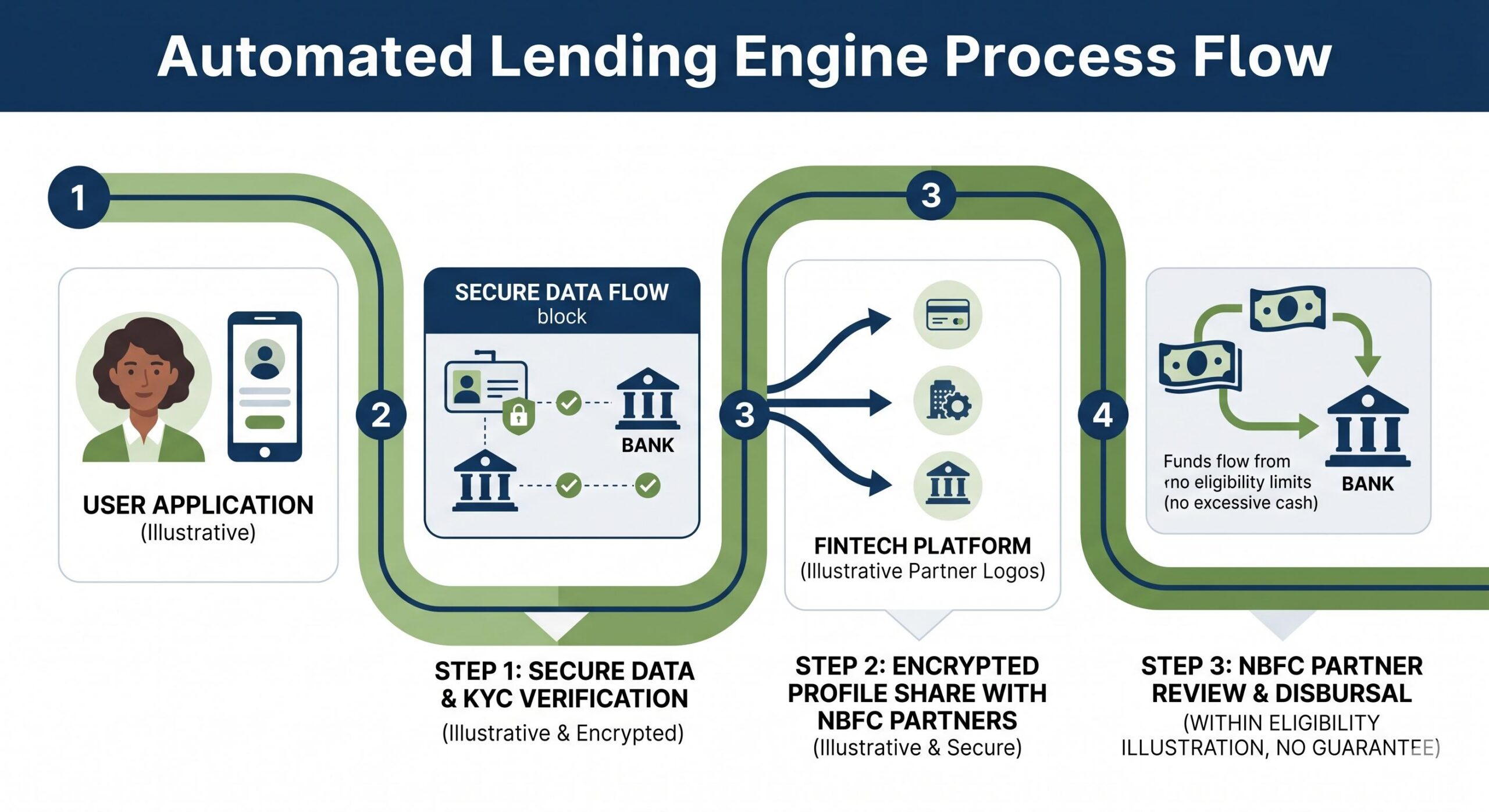
These digital platforms rely on Application Programming Interfaces (APIs) and machine learning. When you submit your details, the system instantly pings national credit bureaus to pull your credit score. Simultaneously, it may use secure banking aggregators to scan your digital bank statements, verifying your average monthly balance and income deposits. Because there is no collateral involved (unsecured debt) and no human oversight, the system relies on strict mathematical cut-offs. If your numbers align with their risk model, the money is wired via instant payment networks. If they do not, you are rejected in seconds.
The True Cost of Speed: Understanding Interest Rates on Instant Loans
The most critical financial concept to grasp before applying for a fast loan in 15 minutes is the cost of borrowing. Speed and convenience come at a significant premium. Because the lender is taking on a high level of risk by lending money instantly without physical collateral, the interest rates are almost universally higher than traditional, slower bank loans.
Risk-Based Pricing
Instant lenders utilize risk-based pricing. There is no standard, flat interest rate for all applicants. Instead, the algorithm assigns an interest rate based on how likely you are to default. If you possess an excellent credit score and a high, stable income, the algorithm views you as a low risk and offers a comparatively lower rate. Conversely, if you have a thin credit file, are a first-time borrower, or have a lower income, the system will charge a substantially higher interest rate to offset the statistical risk of you failing to repay.
The Annual Percentage Rate (APR) vs. Monthly Rates
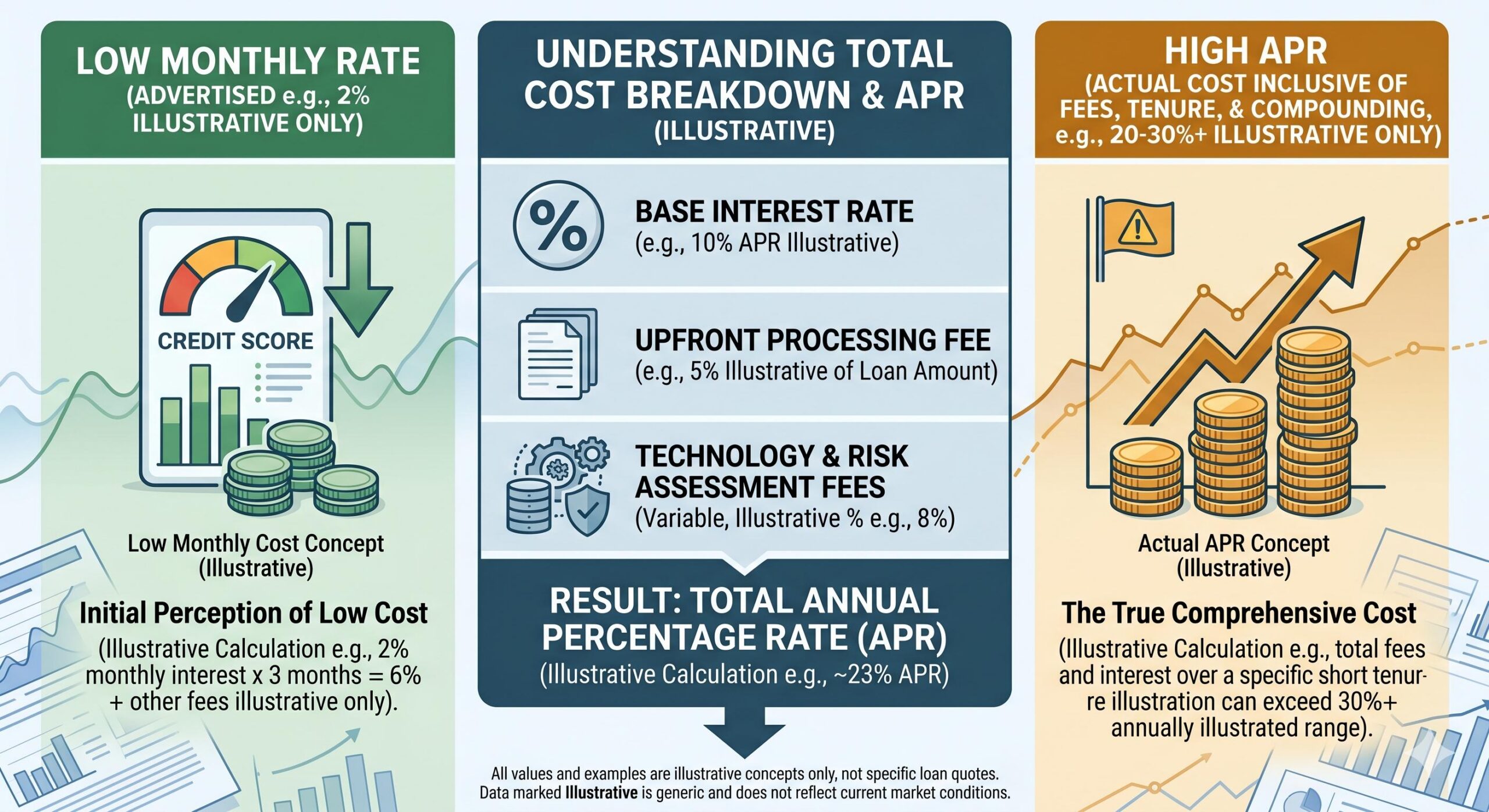
Many instant loan apps advertise a “monthly interest rate” (e.g., 2% per month) to make the loan appear cheaper. However, to understand the true cost, you must look at the Annual Percentage Rate (APR).
The APR represents the total yearly cost of the loan, inclusive of the base interest rate plus all mandatory fees.
- Processing Fees: Most 15-minute loans deduct an upfront processing fee (often ranging from 2% to 5% of the loan amount) before the money ever hits your account.
- Technology Fees: Some platforms charge onboarding or risk assessment fees.When you combine a 2% monthly interest rate with a 4% processing fee on a short-term 3-month loan, the actual APR can easily exceed 30% to 40%. Understanding this mathematical reality is vital for financial literacy.
Why Do Instant Loan Applications Get Rejected?
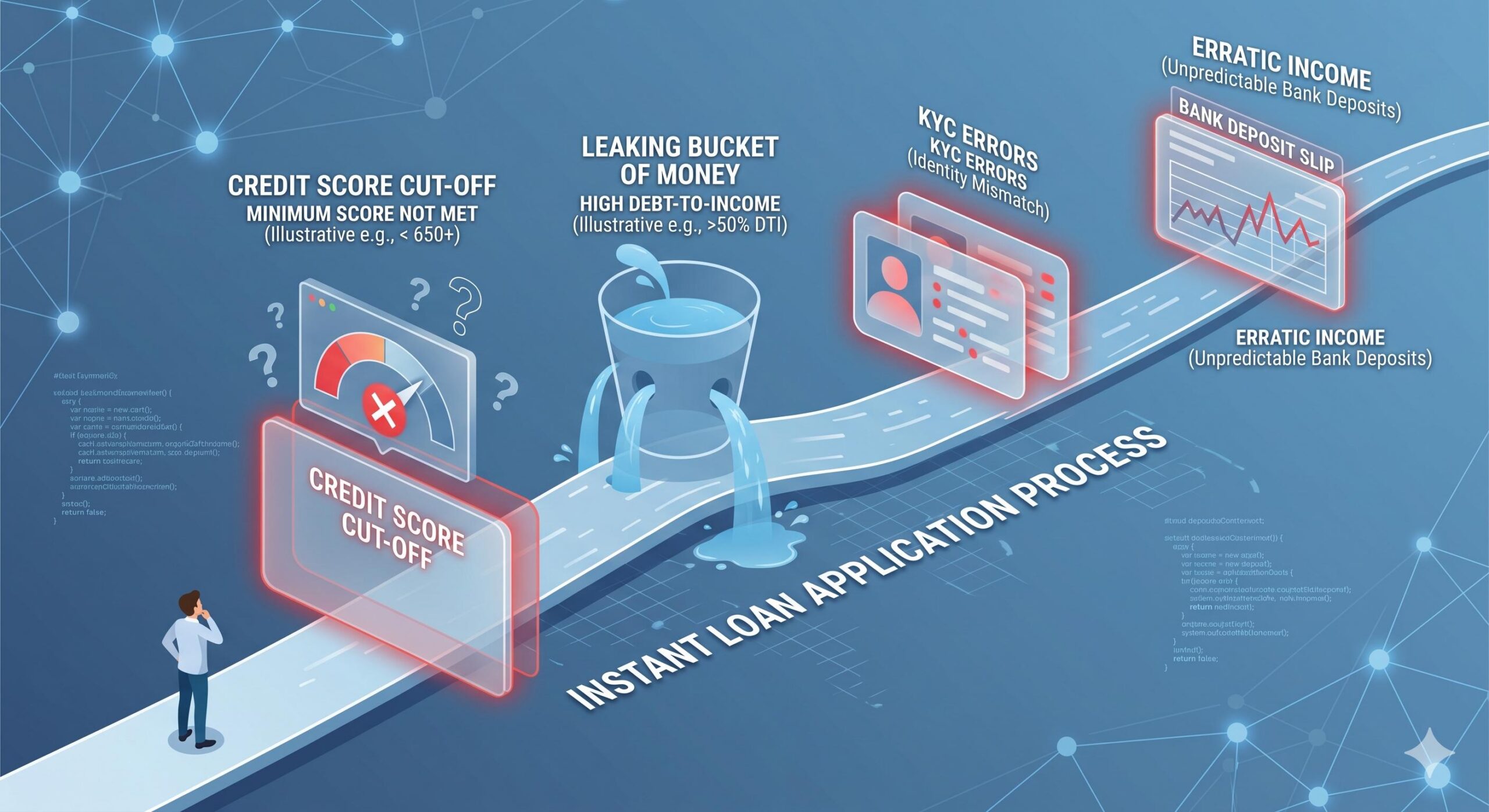
At loanrejectionhelp.com, we frequently analyze why borrowers face immediate denials when seeking emergency funds. Because a fast loan in 15 minutes is evaluated by an emotionless algorithm, rejections are swift and final. Here are the primary triggers for automated rejection:
1. Failing the Hard Credit Score Cut-Off
Algorithms have strict, non-negotiable credit score minimums. If the platform requires a minimum credit score of 650, and your score is 649 due to a late credit card payment three months ago, the system will trigger an instant rejection. There is no human underwriter to listen to your explanation; the data rules completely.
2. High Debt-to-Income (DTI) Ratio
Your DTI ratio calculates how much of your monthly income is already dedicated to paying off existing debts. If the automated scan of your credit report reveals that 50% or more of your verifiable income is already going toward credit cards and other EMIs (Equated Monthly Installments), the algorithm will determine you cannot safely afford another payment and will decline the application.
3. Insufficient or Unverifiable Income Flow
If you are applying as a salaried individual, the system looks for specific salary deposit codes in your digital bank statement on a regular date. If your income is erratic, deposited via cash, or your average daily bank balance frequently drops to zero, the algorithm will flag you as lacking the repayment capacity required for an unsecured loan.
4. KYC (Know Your Customer) Discrepancies
Because identity theft is a major risk in instant digital lending, systems are hypersensitive to data mismatches. If the spelling of your name on your tax ID/PAN card is slightly different from your bank account, or if your geolocation data does not match your declared address, the anti-fraud algorithms will instantly block the application.
How to Improve Your Chances of Automated Approval
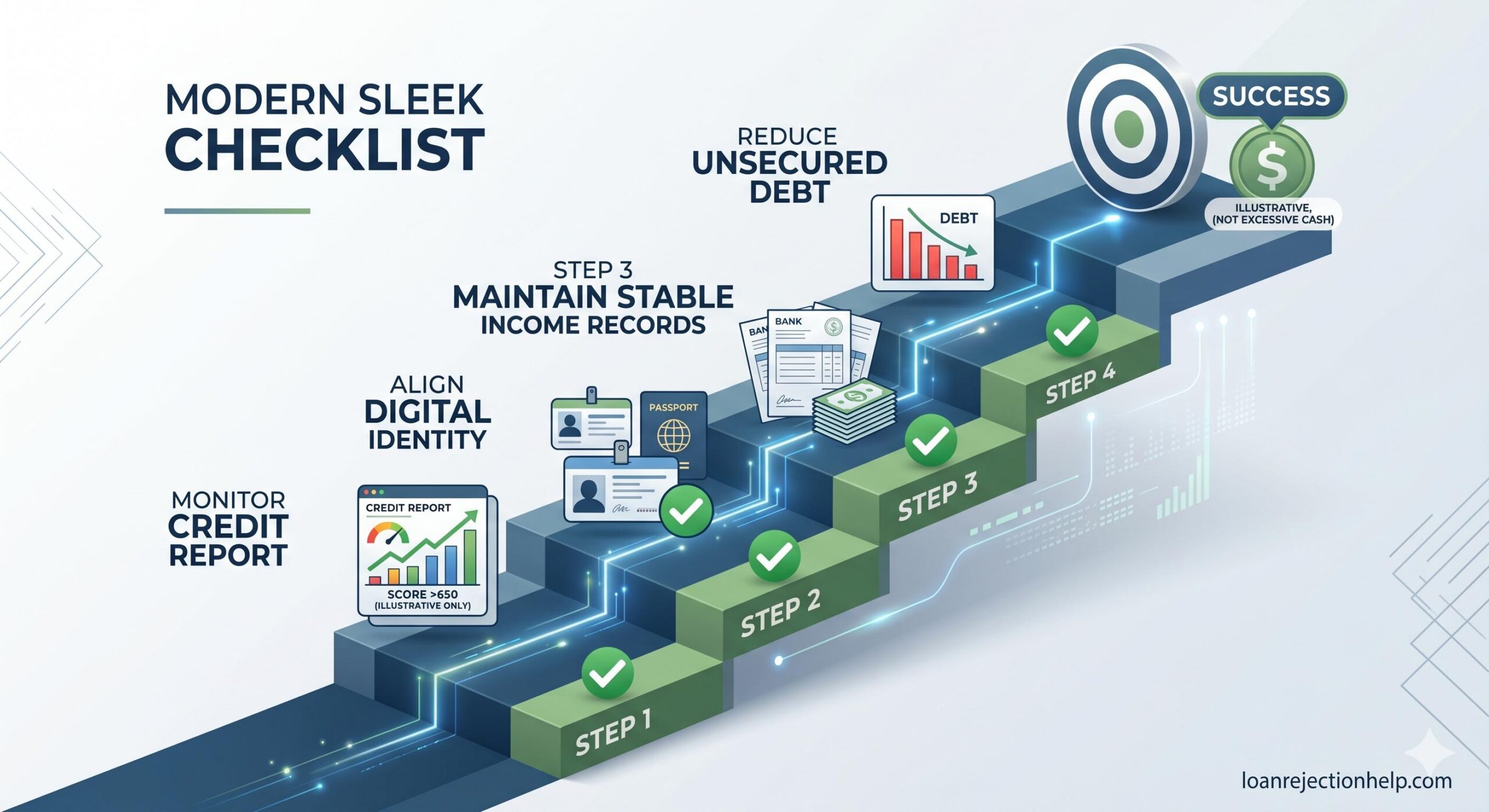
If you want to ensure you have access to a fast loan in 15 minutes during a genuine emergency, you must proactively manage your digital financial profile long before you actually need the money.
- Routinely Monitor Your Credit Report: Regularly check your credit score for free through official bureaus. Dispute any clerical errors and ensure your history accurately reflects your repayment behavior.
- Maintain Stable Banking Habits: Avoid frequent cash withdrawals that empty your account. Keep a healthy average monthly balance, as algorithms view cash reserves as a sign of financial stability.
- Align Your Digital Identity: Ensure that your name, date of birth, and permanent address are perfectly identical across all your government IDs, tax profiles, and bank accounts to prevent automated fraud rejections.
- Lower Existing Unsecured Debt: Pay down high credit card balances to lower your Debt-to-Income ratio, making you a much more attractive candidate to automated underwriting models.
Responsible Borrowing and Risk Awareness
The sheer accessibility of a fast loan in 15 minutes makes it a potentially dangerous financial tool if used irresponsibly. Never borrow high-interest, short-term money to fund non-essential lifestyle purchases, vacations, or speculative investments. These loans are designed strictly for genuine, unavoidable emergencies. Because the APR is high and the repayment windows are often incredibly short (sometimes ranging from 15 to 90 days), missing a payment will trigger aggressive late fees and penal interest rates. Furthermore, digital lenders report missed payments to national credit bureaus almost immediately.
Defaulting on an instant loan will severely damage your credit score, paralyzing your ability to secure essential, lower-interest financing—like a car loan or mortgage—in the future. Always calculate the exact repayment amount before accepting the digital terms, and ensure it fits comfortably within your monthly survival budget.

Summary
A fast loan in 15 minutes is a triumph of modern financial technology, offering an algorithmic, paperless route to emergency capital based entirely on your digital footprint. By deeply understanding how risk-based interest rates and APRs dictate the true cost of borrowing, and by maintaining a flawless credit score and clean KYC data, you can navigate automated underwriting systems successfully. However, the speed of access should never override careful financial planning; always borrow responsibly, treating ultra-fast credit as a tool of absolute last resort.
Navi Personal Loan: A Complete Guide to Interest Rates, Eligibility, and Avoiding Rejection
Frequently Asked Questions (FAQs)
1. Does applying for a fast loan in 15 minutes lower my credit score?
It depends on the lender. Many digital platforms perform a “soft pull” to show you pre-approved rates, which does not affect your score. However, once you officially accept the loan terms, they will perform a “hard inquiry,” which can temporarily drop your score by a few points.
2. Can I get an instant loan with a bad credit score?
While traditional banks usually reject bad credit outright, some specialized digital lenders offer fast loans to individuals with poor credit. However, the financial trade-off is massive: the interest rates and processing fees will be extraordinarily high to compensate the lender for the increased risk.
3. Why was my fast loan rejected if I earn a high salary?
A high salary does not guarantee automated approval. If you have a high income but an even higher amount of existing debt (a poor Debt-to-Income ratio), or if your credit history shows recent defaults, the algorithm will still classify you as a high-risk borrower and reject the application.
4. Are instant loan apps safe to use?
You must exercise extreme caution. Only apply through applications that are explicitly partnered with nationally registered and regulated banking institutions or Non-Banking Financial Companies (NBFCs). Avoid any app that demands an upfront payment before loan approval, as this is a common hallmark of a financial scam.