
Introduction to the Vidya Lakshmi Portal
The Vidya Lakshmi portal is a centralized, government-backed online platform in India designed to serve as a single-window system for students seeking education loans and scholarships. Borrowers search for the Vidya Lakshmi portal because it dramatically simplifies the historically complex and stressful process of funding higher education; instead of visiting multiple bank branches, students can use this single platform to compare educational loan schemes and apply to multiple banks simultaneously using one common form. However, simply applying through the portal does not guarantee funds. Your success on the Vidya Lakshmi platform is heavily affected by several critical factors, including the student’s academic credentials, the chosen educational institution’s accreditation, the co-applicant’s (usually a parent or guardian) credit score and income stability, and the specific risk-assessment policies of the lenders you select.

At loanrejectionhelp.com, we believe that understanding the financial product you are applying for is the first step toward securing approval. This comprehensive guide will explain exactly what the Vidya Lakshmi portal is, how it functions, and the key reasons why education loan applications are approved or rejected.
Disclaimer: The information provided in this article is for educational and informational purposes only and does not constitute financial or legal advice. Loan approval is subject to the individual policies of banks and financial institutions. Always read the terms and conditions carefully before signing any loan agreement.
Table of Contents
What Exactly is the Vidya Lakshmi Portal?
Initiated under the guidance of the Department of Financial Services (Ministry of Finance), the Department of Higher Education (Ministry of Education), and the Indian Banks Association (IBA), the Vidya Lakshmi portal is developed and maintained by NSDL e-Governance Infrastructure Limited.
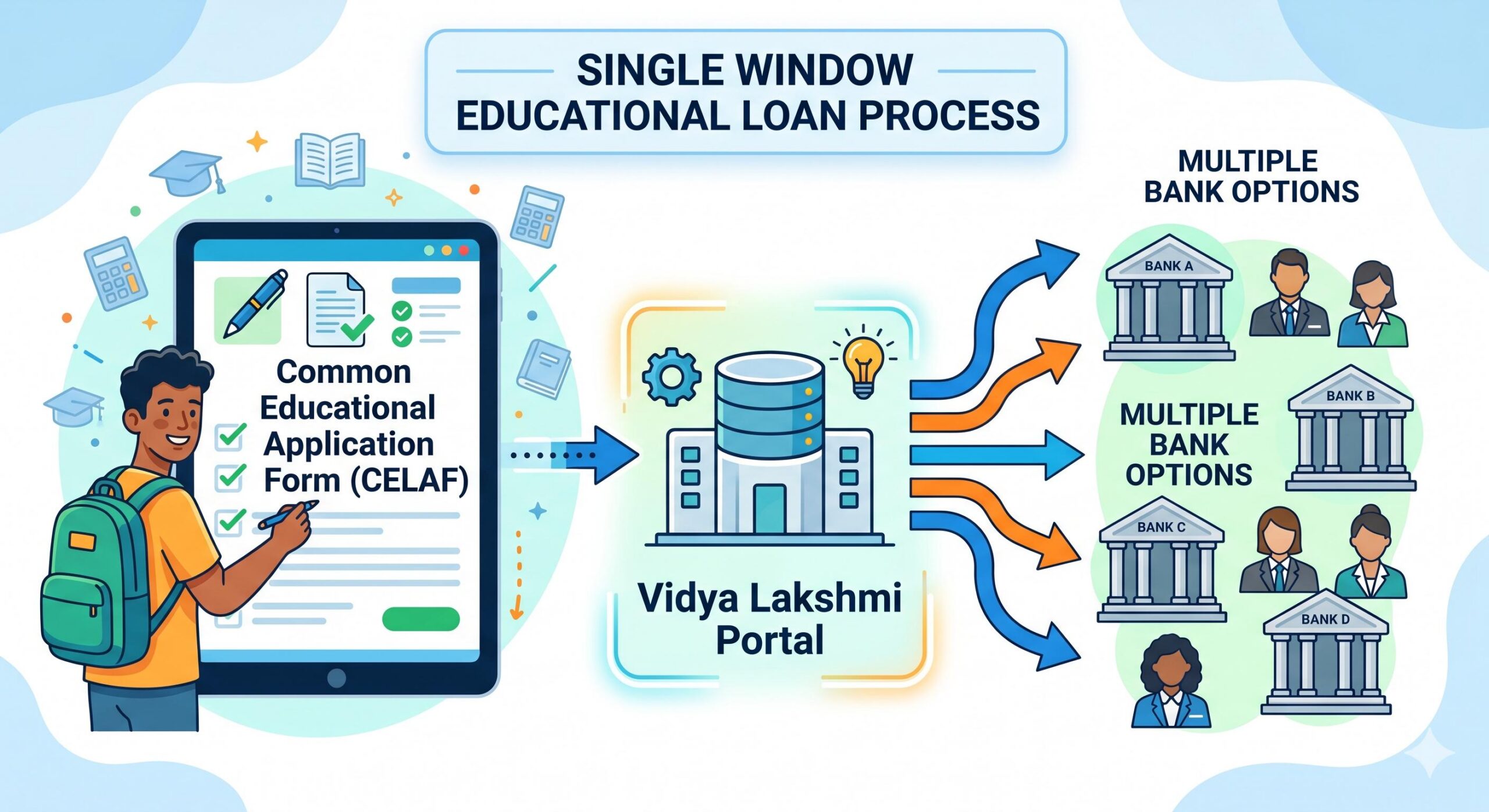
Its primary purpose is to ensure that no student in India is deprived of higher education due to a lack of financial resources. Before this portal existed, students had to physically visit different banks, collect various application forms, understand distinctly different lending criteria, and submit duplicate sets of documents.
The core feature that makes the Vidya Lakshmi portal so revolutionary is the Common Educational Loan Application Form (CELAF). The CELAF is a single, standardized form prescribed by the IBA. By filling out the CELAF just once, a student can apply for educational loans to multiple banks and multiple loan schemes simultaneously. The portal hosts over 40 registered banks offering more than 130 different education loan schemes, ranging from public sector giants like SBI and PNB to various private sector lenders.
How Does the Portal Function?
Understanding the workflow of the platform is vital for a smooth application process. Here is how the financial journey works on the portal:
- Registration and Profile Creation: The student must first register on the portal by providing basic details such as their name, email ID, and mobile number.
- Searching for Loan Schemes: Once logged in, students can search for specific loan schemes based on their needs. They can filter by the location of the institute (India or abroad), the loan amount required, and the specific banks they wish to target.
- Filling the CELAF: This is the most crucial step. The applicant must fill in comprehensive details, including personal information, academic records, the cost of the course, details of the co-applicant (parents/guardians), and any collateral being offered.
- Applying to Banks: After completing the CELAF, the student can submit the application to a maximum of three different banks.
- Dashboard Tracking: The portal features an integrated dashboard where students can track the real-time status of their applications, communicate with bank representatives regarding missing documents, and view grievances.
Education Loan Tiers in India
To understand approval and rejection on the portal, you must understand how education loans are structured in India. The IBA guidelines generally categorize education loans into three tiers, which directly dictate what is required for approval:
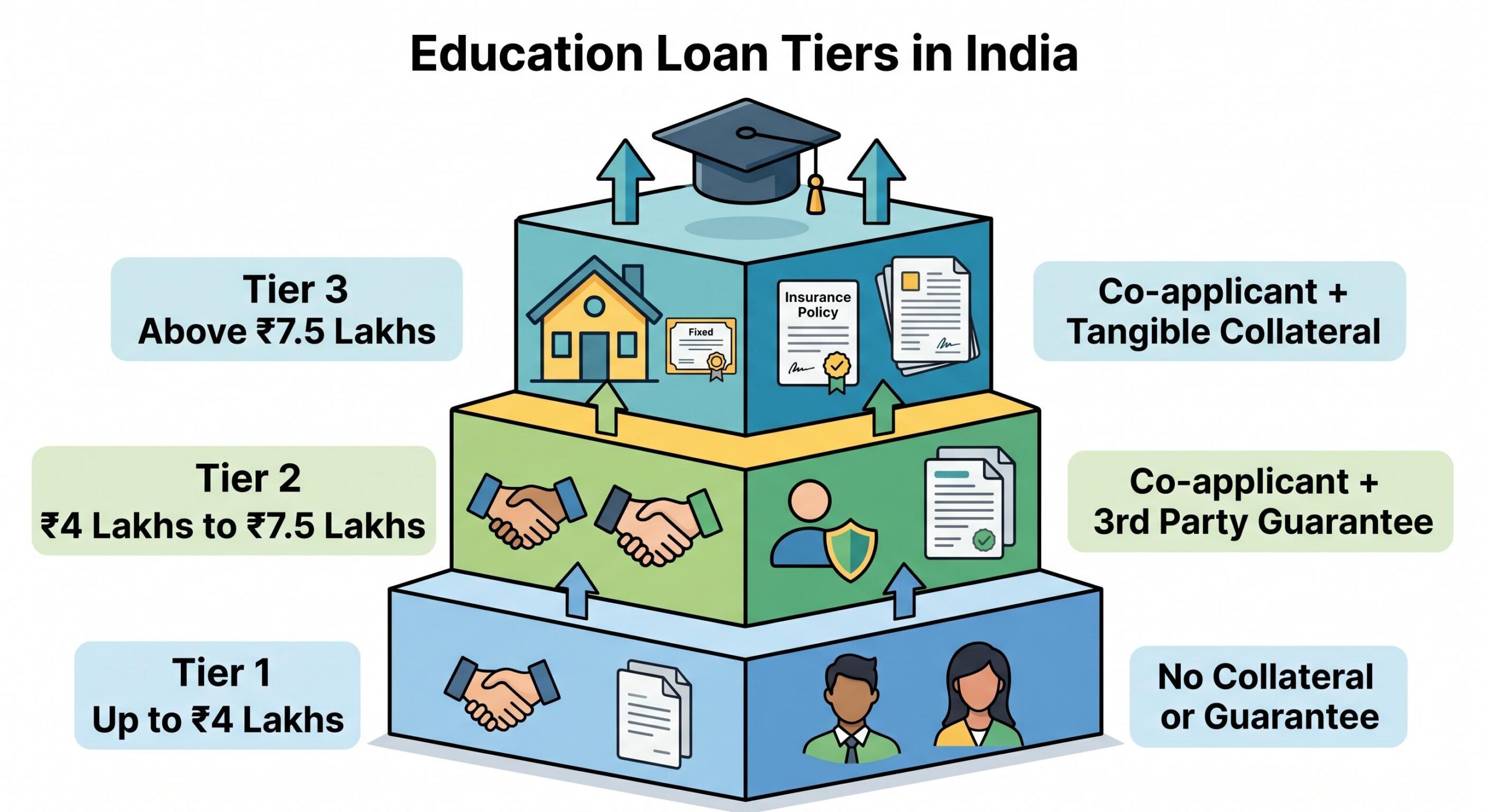
- Loans up to ₹4 Lakhs: These loans generally do not require any collateral security or third-party guarantee. The bank primarily relies on the co-applicant’s income and credit history, as well as the student’s academic potential.
- Loans between ₹4 Lakhs and ₹7.5 Lakhs: These usually require a third-party guarantee in addition to the co-applicant.
- Loans above ₹7.5 Lakhs: For higher amounts, banks strictly require tangible collateral security (such as residential property, fixed deposits, or life insurance policies with surrender value) equivalent to the loan amount, alongside the co-applicant’s financial backing.
Why Might Your Vidya Lakshmi Loan Application Face Rejection?
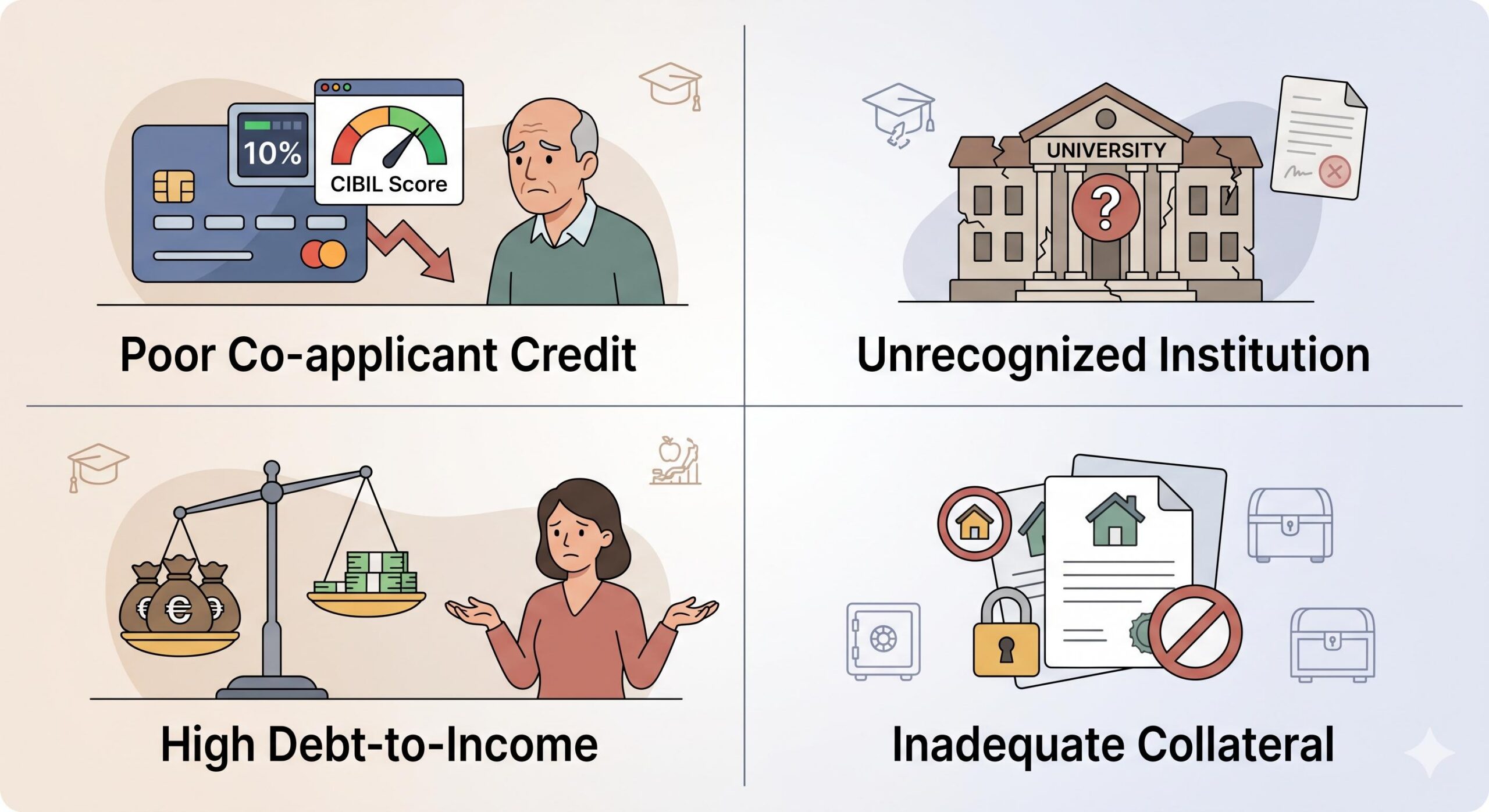
Even with the convenience of the centralized portal, banks still conduct rigorous financial underwriting. If you are facing an education loan rejection, it is likely due to one of the following factors:
1. Poor Credit Score of the Co-Applicant
Because the student usually has no credit history or income, the bank relies heavily on the co-applicant (the parent, spouse, or guardian). If the co-applicant has a low CIBIL score (typically below 700) due to past defaults, late credit card payments, or excessive existing debt, the bank will view the loan as high-risk and reject it.
2. Unrecognized Institution or Course
Banks disburse education loans based on the future employability of the student. If the college, university, or specific course is not recognized by regulatory bodies like the UGC, AICTE, or appropriate international accreditation boards, the bank will reject the application, as they cannot verify the student’s ability to secure a job and repay the loan.
3. Insufficient Income-to-Debt Ratio
For loans under ₹7.5 Lakhs that do not require physical collateral, the co-applicant’s income must be sufficient to cover their current living expenses, existing loan EMIs, and the projected future interest of the education loan. If the co-applicant is over-leveraged, the application will be declined.
4. Inadequate Collateral (For High-Value Loans)
For loans exceeding ₹7.5 Lakhs, providing collateral is mandatory. Rejections frequently occur if the property offered is involved in a legal dispute, lacks clear marketable titles, or if the bank’s independent valuation of the property falls short of the required loan amount.
5. Discrepancies in the CELAF
A surprisingly common reason for application delays and rejections on the Vidya Lakshmi portal is simple human error. Mismatched names on Aadhar cards and educational certificates, incorrect fee structures, or missing KYC documents will halt the underwriting process immediately.
How to Improve Your Chances of Loan Approval
If you are a first-time borrower applying through the Vidya Lakshmi portal, follow these financial best practices to secure your funding:
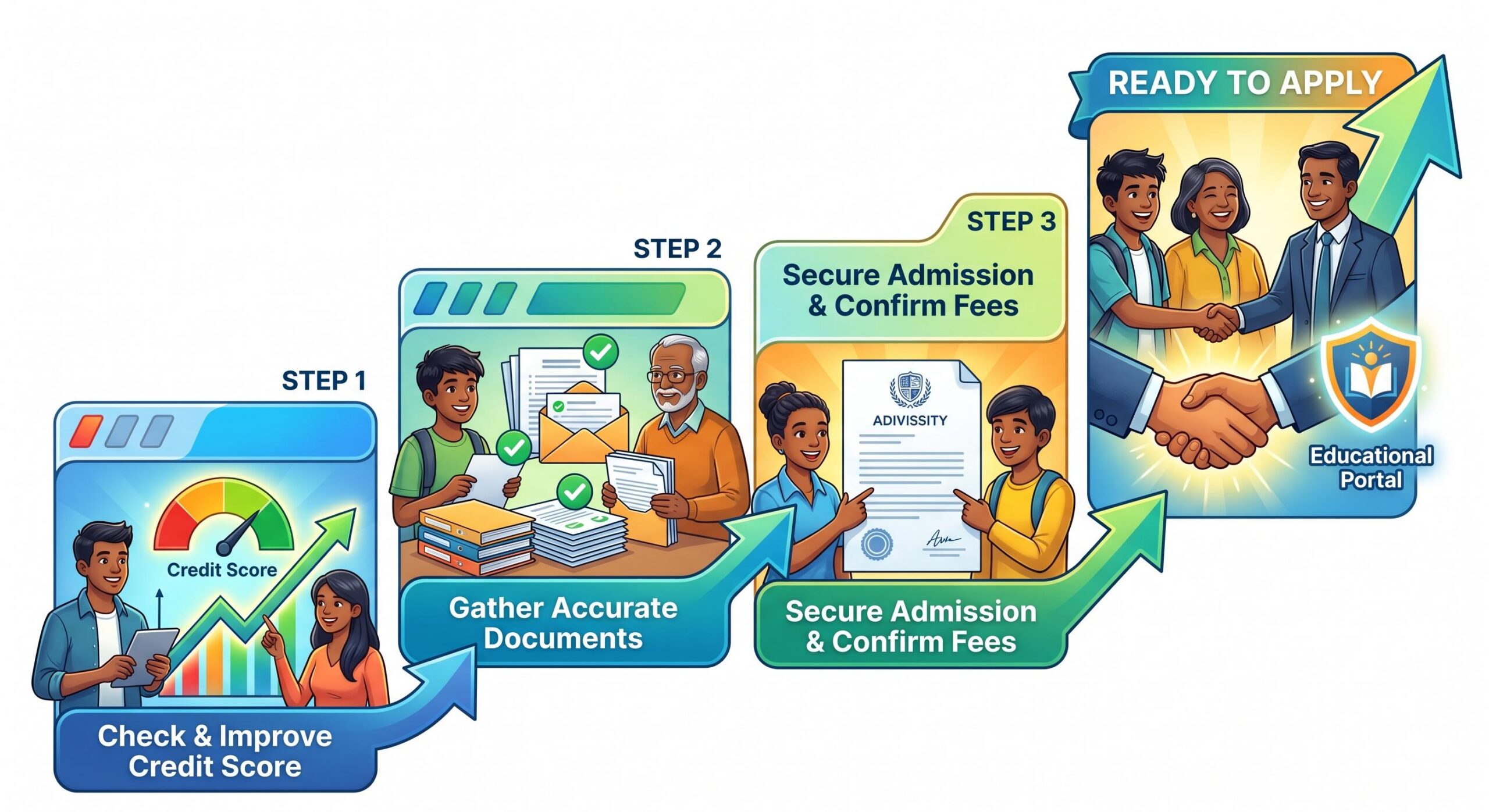
- Check the Co-Applicant’s Credit Report Early: Months before applying for the loan, pull the credit report of your parent or guardian. If their score is low, take immediate steps to improve it by clearing outstanding dues and lowering credit utilization.
- Secure Firm Admission First: Do not apply for the loan prematurely. Wait until you have a confirmed admission letter and a detailed, official fee structure from the institution. Banks need exact figures to process the CELAF.
- Prepare Your Collateral Documents: If you are applying for a larger loan to study abroad or at a premier private institute, ensure your collateral documents (property deeds, tax receipts, non-encumbrance certificates) are legally vetted and ready to be submitted.
- Target the Right Banks: Do not randomly select three banks. Research which banks have tie-ups with your chosen university. Many public sector banks offer preferential interest rates and faster processing times for premier institutes (like IITs, IIMs, and top medical colleges).
Responsible Borrowing and Financial Literacy
While the Vidya Lakshmi portal makes access to credit easier, it is crucial to remember that an education loan is a serious financial commitment.
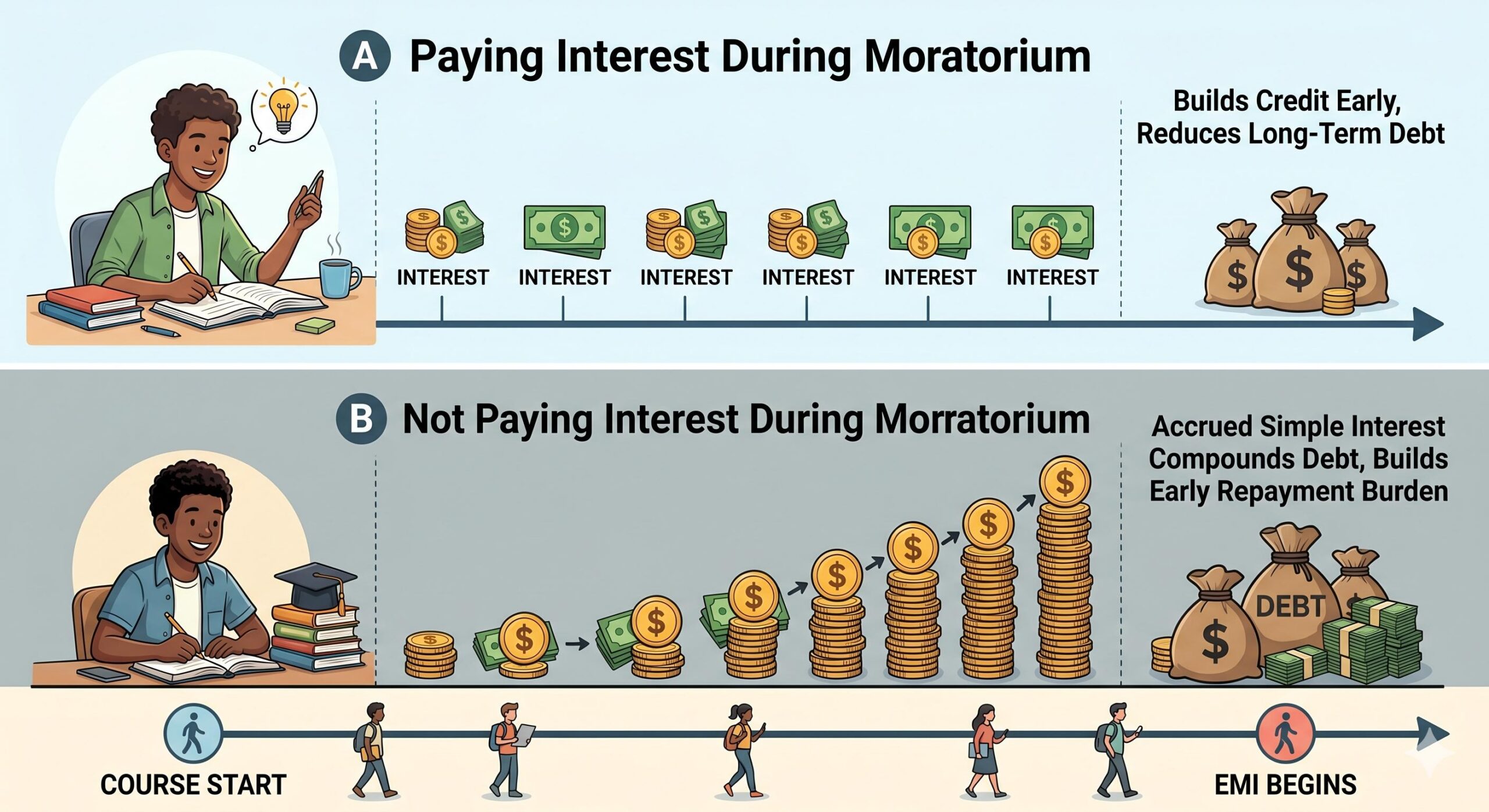
Most education loans come with a moratorium period (usually the course duration plus 6 to 12 months). During this time, you are not required to pay Equated Monthly Installments (EMIs). However, it is vital to understand that simple interest continues to accrue during this moratorium.
Whenever possible, try to pay the interest portion during your study period. Not only does this reduce the total compounded debt burden once your EMIs begin, but it also helps build a positive credit history early in your career. Borrow only what you absolutely need for tuition and essential living expenses, rather than maxing out your eligibility.
By understanding how the Vidya Lakshmi platform operates, respecting the financial underwriting process, and approaching your application with clear, verifiable documentation, you can successfully bypass the frustration of loan rejection and focus entirely on your higher education.
Understanding Loans for Blacklisted Borrowers: A Comprehensive Financial Guide
Frequently Asked Questions (FAQs)
Q1: How many days does it take for a loan to be approved on the Vidya Lakshmi portal? A: According to Indian Banks Association (IBA) guidelines, banks are expected to process and communicate their decision within 15 to 30 days of receiving a fully completed application. However, if your CELAF is missing documents or requires physical collateral verification, the process can take much longer.
Q2: Can my Vidya Lakshmi loan be rejected if my parent has a low CIBIL score? A: Yes. For education loans, especially those under ₹7.5 Lakhs that do not require collateral, the bank relies heavily on the financial health of the co-applicant (usually a parent). A CIBIL score below 700 or a history of loan defaults is one of the leading causes of rejection on the portal.
Q3: What happens if my loan application is rejected by a bank on the portal? A: If a bank rejects your application, the status will be updated on your Vidya Lakshmi dashboard, often with a reason for the rejection. Because the portal allows you to apply to up to three banks simultaneously, you may still receive approval from the other two. If all three reject your application, you must correct the underlying financial issue (like improving the co-applicant’s credit score) before reapplying.
Q4: Is collateral mandatory for all Vidya Lakshmi education loans? A: No. Under standard IBA guidelines, education loans up to ₹4 Lakhs do not require any collateral or third-party guarantee. Loans between ₹4 Lakhs and ₹7.5 Lakhs require a third-party guarantee. Only loans exceeding ₹7.5 Lakhs strictly require tangible collateral security, such as property or fixed deposits.
Q5: Are there any hidden registration charges to use the Vidya Lakshmi portal? A: No, registering and filling out the Common Educational Loan Application Form (CELAF) on the official Vidya Lakshmi portal is entirely free of cost. However, once a bank accepts your application, standard bank processing fees and documentation charges may apply as per the individual lender’s policy.
Conclusion: Securing Your Educational Future
The Vidya Lakshmi portal is a powerful tool that has successfully democratized access to education loans in India. By eliminating the need to physically visit multiple bank branches and repeatedly submit duplicate paperwork, it allows students to focus on what truly matters: their academic future.
However, the portal is ultimately just a bridge between you and the lending banks. The financial underwriting rules—credit scores, income-to-debt ratios, and collateral requirements—remain strictly in place. To avoid the frustration of loan rejection, you must approach the process with financial maturity. Ensure your co-applicant maintains a healthy CIBIL score, gather all necessary documentation before filling out the CELAF, and borrow only what you truly need for your education.
By understanding the mechanics of the Vidya Lakshmi portal and practicing responsible borrowing, you can smoothly navigate the application process and take the next big step in your educational journey without unnecessary financial stress.




2 thoughts on “Demystifying the Vidya Lakshmi Portal: A Complete Guide to Education Loans”