
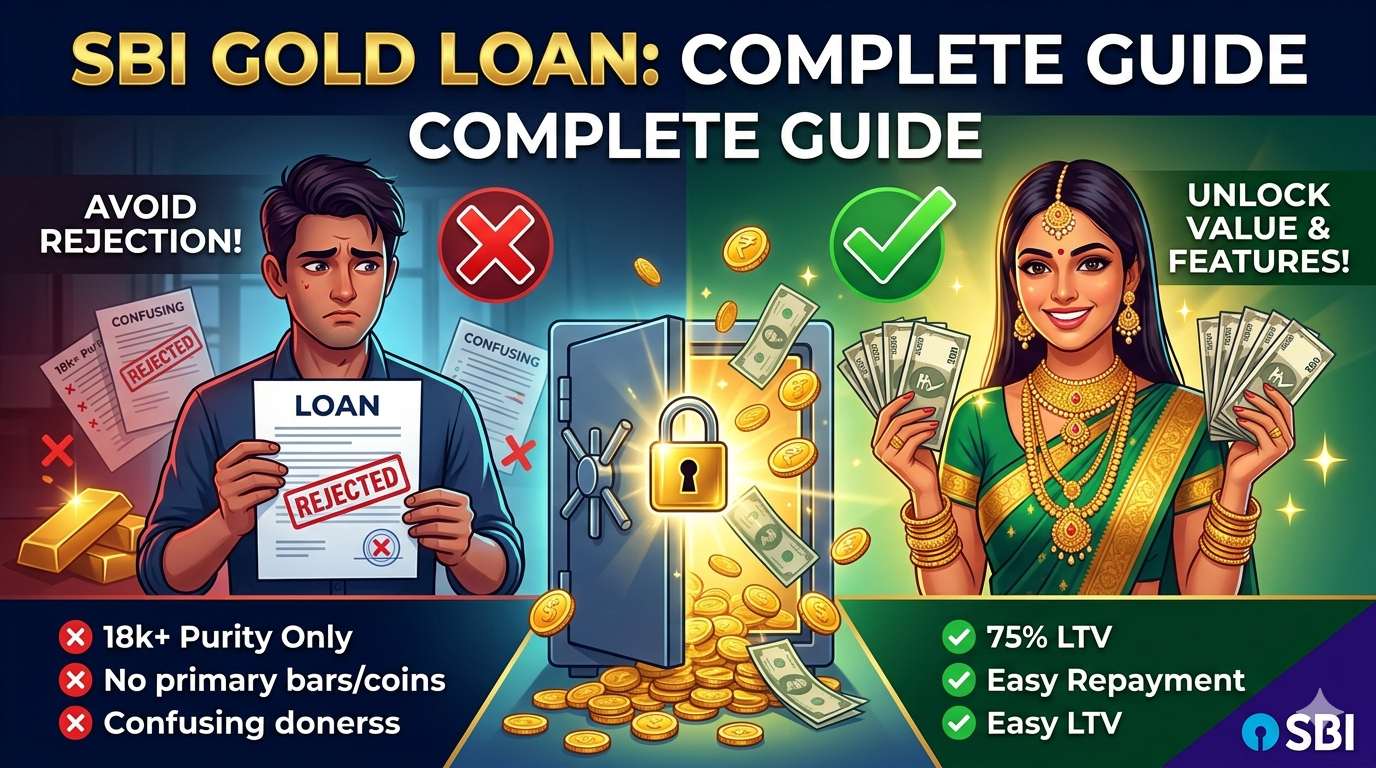
Introduction: Decoding the SBI Gold Loan
An SBI gold loan is a secure credit facility provided by the State Bank of India that allows you to borrow money by pledging your personal gold jewelry or bank-approved gold coins as collateral. Borrowers actively search for this financial product because it offers a fast, reliable way to access cash during emergencies without needing an exceptionally high credit score or a spotless financial history.
The loan amount you can receive and the interest rate applied to your account are directly affected by three main factors: the purity of your gold (measured in carats), the net weight of the actual gold (excluding stones and enamel), and the Loan-to-Value (LTV) guidelines set by the Reserve Bank of India (RBI).

Because the bank holds your physical gold as security, the interest rates are generally lower than unsecured options like personal loans. In this guide, we will break down exactly how this financial product works, what dictates the valuation of your gold, and how you can avoid common application rejections to ensure a smooth borrowing experience.
Disclaimer: The information provided on loanrejectionhelp.com is for educational and financial literacy purposes only. We are not affiliated with the State Bank of India (SBI) or any financial institution. Interest rates, loan-to-value (LTV) ratios, and approval criteria are subject to change based on the lender’s policies and Reserve Bank of India (RBI) guidelines. Always review official loan documents carefully and practice responsible borrowing.
Table of Contents
What Exactly is an SBI Gold Loan?
At its core, a loan against gold is a collateral-based borrowing system. Instead of relying heavily on your credit score or monthly income to determine your creditworthiness, the bank relies on the intrinsic, market-driven value of your physical gold.
When you apply for an SBI gold loan, you physically hand over your gold jewelry to the bank. The bank’s approved assayer (valuer) evaluates the purity and weight of the gold. Based on this valuation and the current market price of gold, the bank sanctions a loan amount. Your gold remains safely locked in the bank’s vault until you repay the principal amount and the accrued interest. Once the loan is fully settled, your gold is returned to you in its original condition.
How the Interest Rate and Loan Amount are Determined
The financial mechanics of an SBI gold loan revolve around a few key concepts:
- Interest Rates: Secured loans carry lower risk for the lender. Therefore, the interest rate on a gold loan is significantly lower than that of credit cards or personal loans. The rate is usually linked to the bank’s Marginal Cost of Funds Based Lending Rate (MCLR) or an external benchmark. SBI often offers concessions for agricultural borrowers or female applicants.
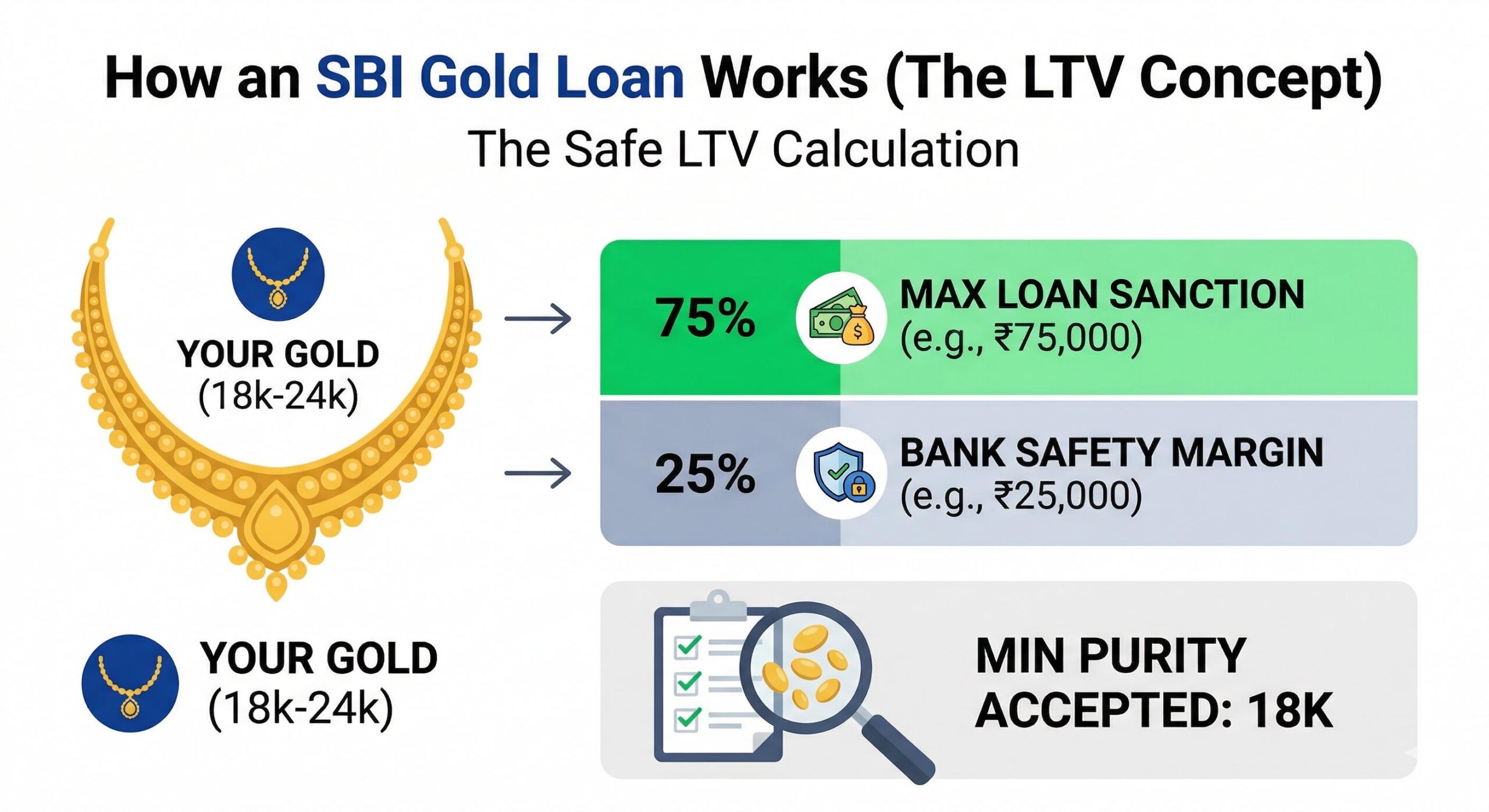
- Loan-to-Value (LTV) Ratio: You will not receive 100% of your gold’s market value in cash. The RBI generally caps the LTV ratio for gold loans at 75%. This means if your pledged gold is valued at ₹1,00,000, the maximum loan amount you can receive is ₹75,000. The remaining 25% acts as a safety margin for the bank against fluctuations in gold prices.
- Gold Purity: Banks typically accept gold that is between 18 carats and 22 carats in purity. The higher the purity, the higher the valuation of your ornaments. Precious stones, diamonds, and enamel work are deducted from the total weight; the bank only lends against the actual weight of the gold.
Key Features and Repayment Options
SBI offers flexible repayment schemes tailored to different financial situations, which is a major reason borrowers opt for this product.
| Feature | Description |
| Loan Tenure | Typically ranges from 3 months to 36 months, depending on the chosen scheme. |
| Repayment Schemes | EMI: Standard monthly installments. Liquid Gold: Overdraft facility where you only pay interest on the utilized amount. Bullet Repayment: Pay the principal and interest together at the end of the loan tenure. |
| Processing Fees | Generally low, often ranging from nil to a nominal percentage of the loan amount, subject to current bank offers. |
| Credit Score Impact | While a CIBIL score is not the primary approval factor, successfully repaying a gold loan is an excellent way to build or improve your credit score. |
Why Do SBI Gold Loans Get Rejected?
A common misconception among first-time borrowers is that because a gold loan is secured, approval is guaranteed. While approval rates are exceptionally high, rejections do occur. Understanding these rejection factors is crucial for financial literacy.
1. Inadequate Gold Purity
The most frequent reason for rejection during the appraisal process is low-quality gold. If the bank’s assayer determines that your ornaments are below 18 carats, the application will be immediately declined. Furthermore, banks do not lend against gold-plated jewelry or artificial metals.
2. Unacceptable Forms of Gold
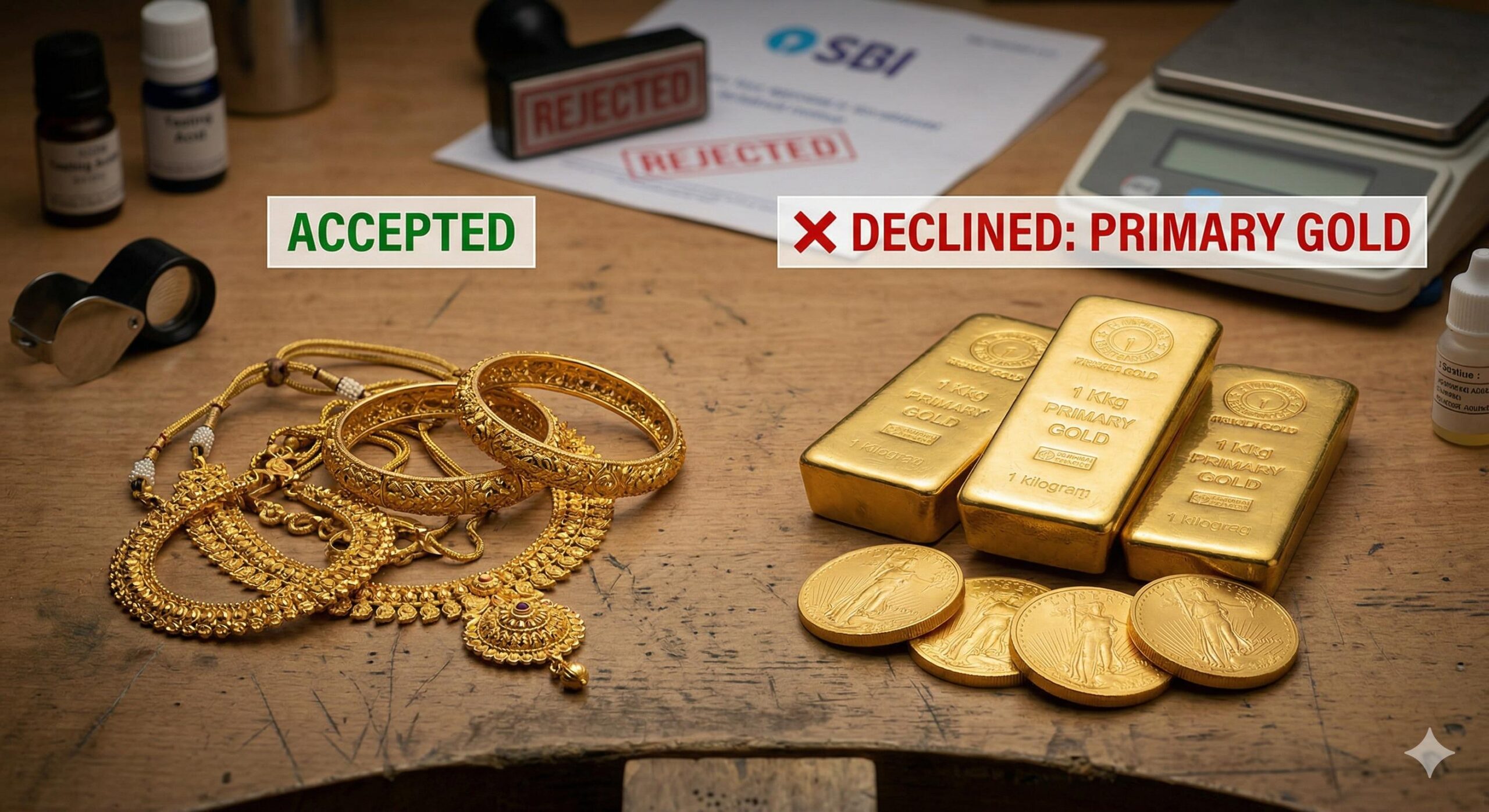
SBI has strict guidelines on what type of gold can be pledged. Standard jewelry is almost always accepted. However, gold bars, primary gold, and gold coins weighing more than 50 grams per applicant are usually not accepted under standard gold loan schemes due to regulatory restrictions meant to curb money laundering.
3. Ownership Disputes or Missing Bills
While you do not always need the original purchase receipt for standard family jewelry, the bank manager may request a declaration of ownership. If there is any suspicion that the gold is stolen, or if a third party contests the ownership during the pledging process, the bank will halt the transaction.
4. Discrepancies in KYC Documents
Even with valid collateral, financial institutions must adhere to strict Anti-Money Laundering (AML) laws. If your Aadhaar card, PAN card, or address proof is mismatched, expired, or illegible, the loan application will be put on hold or rejected until the documentation is rectified.
5. Severe Delinquency with the Bank
While a low credit score won’t automatically disqualify you, having a history of severe defaults—specifically being marked as a Non-Performing Asset (NPA) with SBI or having a history of fraudulent financial activities—can lead to the bank declining to do business with you entirely.
How to Ensure Your Gold Loan Application is Approved
If you are planning to apply for an SBI gold loan, follow these proactive steps to ensure a seamless experience and avoid unexpected rejections:
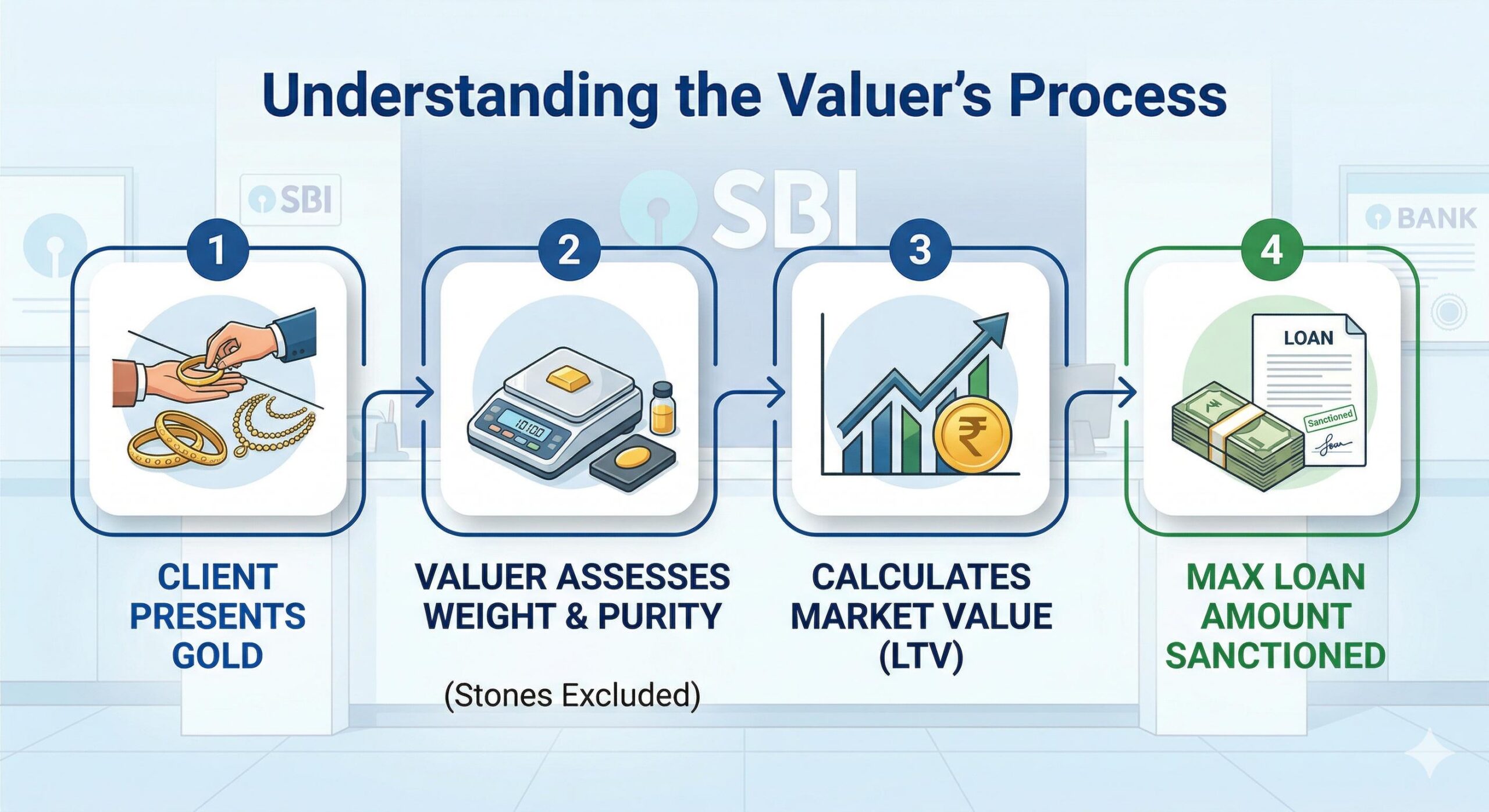
- Pre-Assess Your Jewelry: Before visiting the branch, understand what you are pledging. Remember that the weight of stones, pearls, and heavy enamel will be subtracted from the total weight. Mentally calculate your expectations based on the solid gold content only.
- Carry Complete Documentation: Bring your original KYC documents (Aadhaar, PAN, Voter ID, or Passport) along with self-attested photocopies. Ensure that your name and address match across all documents.
- Check Branch Capabilities: While SBI is a massive network, not every single branch has an assayer available every day. It is highly recommended to call your local branch ahead of time to confirm the availability of the gold valuer.
- Understand the Overdraft vs. EMI Options: Choose a repayment plan that matches your cash flow. If you have an irregular income (like many self-employed professionals), the Bullet Repayment or Overdraft (Liquid Gold) option might prevent you from missing monthly EMIs.
Understanding the HDFC Gold Loan Interest Rate: Factors, Approval Tips, and Risks
Responsible Borrowing and Risk Awareness
At loanrejectionhelp.com, we strongly advocate for financial literacy and safe borrowing practices. While an SBI gold loan is a highly accessible and educational entry point into formal banking, it carries inherent risks.
The Risk of Auction: The most critical factor to remember is that your gold acts as security. If you fail to repay the loan within the stipulated tenure, and ignore the bank’s legal notices, the bank has the legal right to auction your pledged gold to recover their funds. This can result in the permanent loss of heirlooms or emotionally valuable jewelry.
Credit Score Implications: Defaulting on a gold loan will be reported to credit bureaus like CIBIL. A default will severely damage your credit score, making it incredibly difficult to secure home loans, auto loans, or credit cards in the future. Always borrow only what you need and what you can comfortably afford to repay.
Frequently Asked Questions (FAQs) About SBI Gold Loans
1. Does SBI check my CIBIL score for a gold loan? While SBI may pull your credit report to check for severe past defaults or a history of fraudulent activity, a low CIBIL score alone is rarely a reason for rejection. Because a gold loan is a secured product backed by physical collateral, the bank relies on the value of your gold rather than your credit history for approval.
2. Can my application be rejected if I do not have proof of regular income? No, a lack of income proof is generally not a reason for rejection. Since the loan is fully secured by your gold, SBI typically does not mandate strict income documents like salary slips or Income Tax Returns (ITR) for standard gold loan schemes. This makes it an ideal option for self-employed individuals, farmers, and homemakers.
3. What happens if my gold jewelry is less than 18 carats in purity? If the bank’s authorized assayer (valuer) determines that your pledged gold is below 18 carats in purity, your loan application will be rejected. Banks require a minimum purity standard to ensure the collateral holds sufficient market value to cover the loan amount in case of default.
4. Will I get the full market value of my gold in cash? No. According to RBI regulatory guidelines, banks can only lend up to a specific percentage of your gold’s total market value. This is known as the Loan-to-Value (LTV) ratio, which is typically capped around 75%. The remaining 25% acts as a safety margin for the bank to protect against sudden drops in global gold prices.
5. What happens to my pledged gold if I fail to repay the loan? If you fail to repay the principal amount and accrued interest within the agreed-upon tenure, and you ignore the bank’s official reminder notices, the bank has the legal right to auction your gold. The proceeds from the auction are used to recover the outstanding loan balance. Additionally, the default will be reported to credit bureaus, severely damaging your credit score.
Conclusion

The SBI gold loan is a powerful financial tool that leverages the idle value of your physical assets to provide immediate liquidity. By understanding the core concepts of LTV, gold valuation, and interest mechanics, you can make informed decisions that benefit your financial health. By preparing your documents, ensuring the quality of your gold, and practicing responsible borrowing, you can easily avoid the common pitfalls of loan rejection and secure the funds you need with confidence.






1 thought on “Understanding the SBI Gold Loan: A Complete Guide to Features, Valuation, and Avoiding Rejection”