
Introduction
When individuals need funds urgently, they frequently search for the Muthoot Finance gold loan interest rate. Simply put, this rate is the exact cost you pay to borrow cash by pledging your personal gold jewelry as collateral with this major non-banking financial company (NBFC). Borrowers search for this specific term so they can calculate the extra money they will owe on top of their principal loan. Knowing this helps them compare costs and ensure they can afford repayments before handing over family assets. This interest rate is not a single, static number; it is heavily affected by the loan scheme you choose, the loan-to-value (LTV) ratio, the loan tenure, and your repayment discipline.
At LoanRejectionHelp.com, our mission is to provide clear financial literacy to help you borrow confidently. Gold loans offer quick access to capital for salaried individuals and business owners. However, failing to understand how the interest rate works can lead to severe financial distress, including the permanent loss of your pledged gold.

This guide explains how this interest rate works, how costs are calculated, the hidden risks involved, and how to safeguard your credit profile during the approval process.
Disclaimer: This content is for educational purposes only and is not financial advice. Loan rates and terms change frequently, so always verify directly with your lender before pledging assets.
Table of Contents
Understanding the Mechanics of Gold Loan Interest Rates
To make smart financial decisions, you must understand how a secured loan works. A gold loan is secured because you offer a tangible asset (gold jewelry) as a guarantee. Because the lender physically holds this security, their risk of losing money is much lower compared to an unsecured personal loan. Consequently, the interest rate on a gold loan is generally lower.
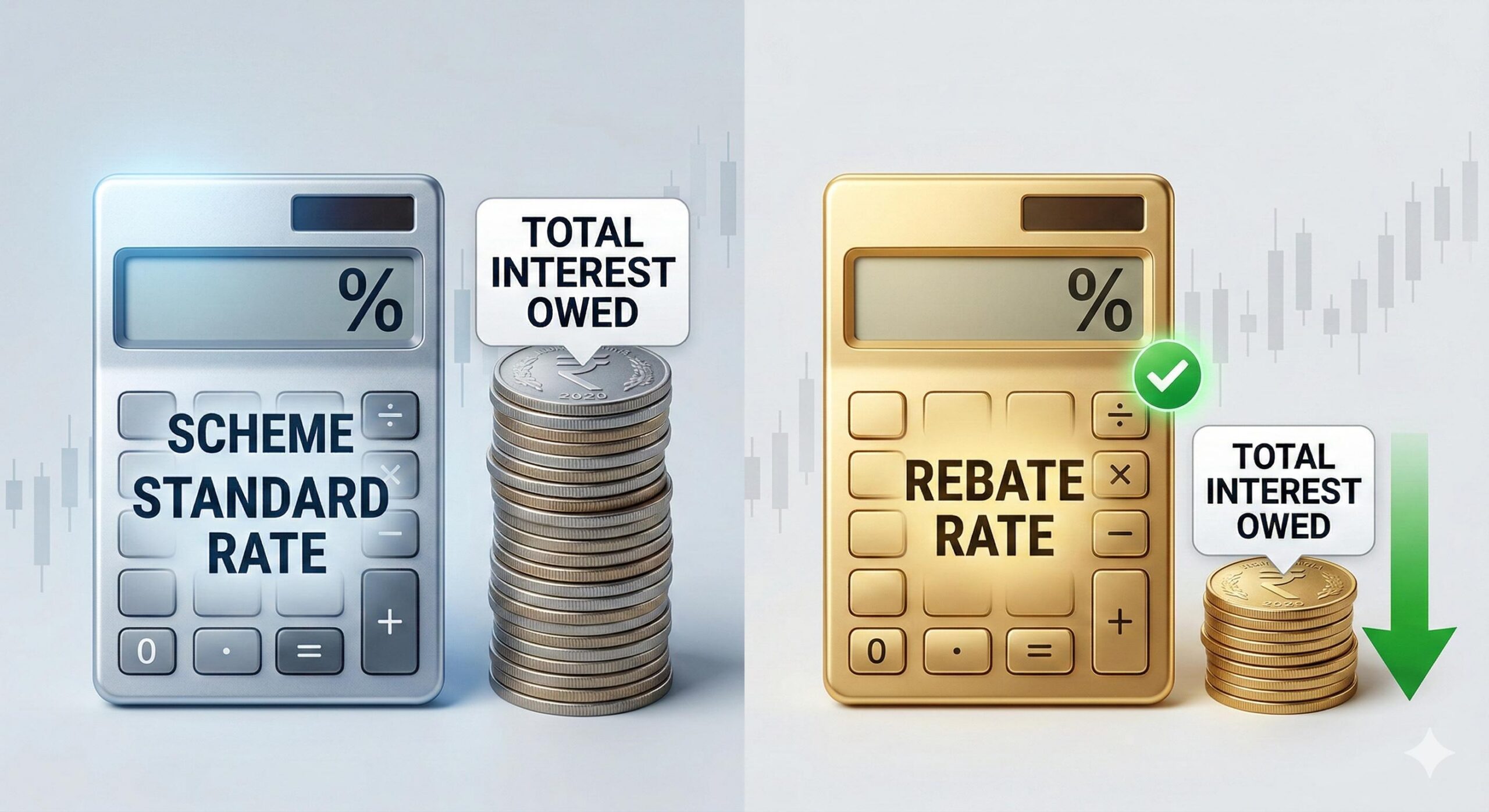
However, the advertised interest rate is only a starting point. The actual rate applied to your account depends on the specific lending scheme you select. NBFCs offer a tiered structure of interest rates to cater to different needs, from ultra-short-term cash crunches to longer-term business requirements.
Fixed Versus Rebate-Linked Interest Rates
Many borrowers assume the lowest advertised rate applies to them automatically. In reality, lenders often use a rebate-linked interest structure.
Under a rebate structure, the lender assigns a standard, slightly higher interest rate to your account. However, if you diligently pay your interest every single month on or before the due date, the lender grants a “rebate” (a discount) on that rate. If you miss a monthly payment, the rebate is revoked, and the higher standard rate is applied.
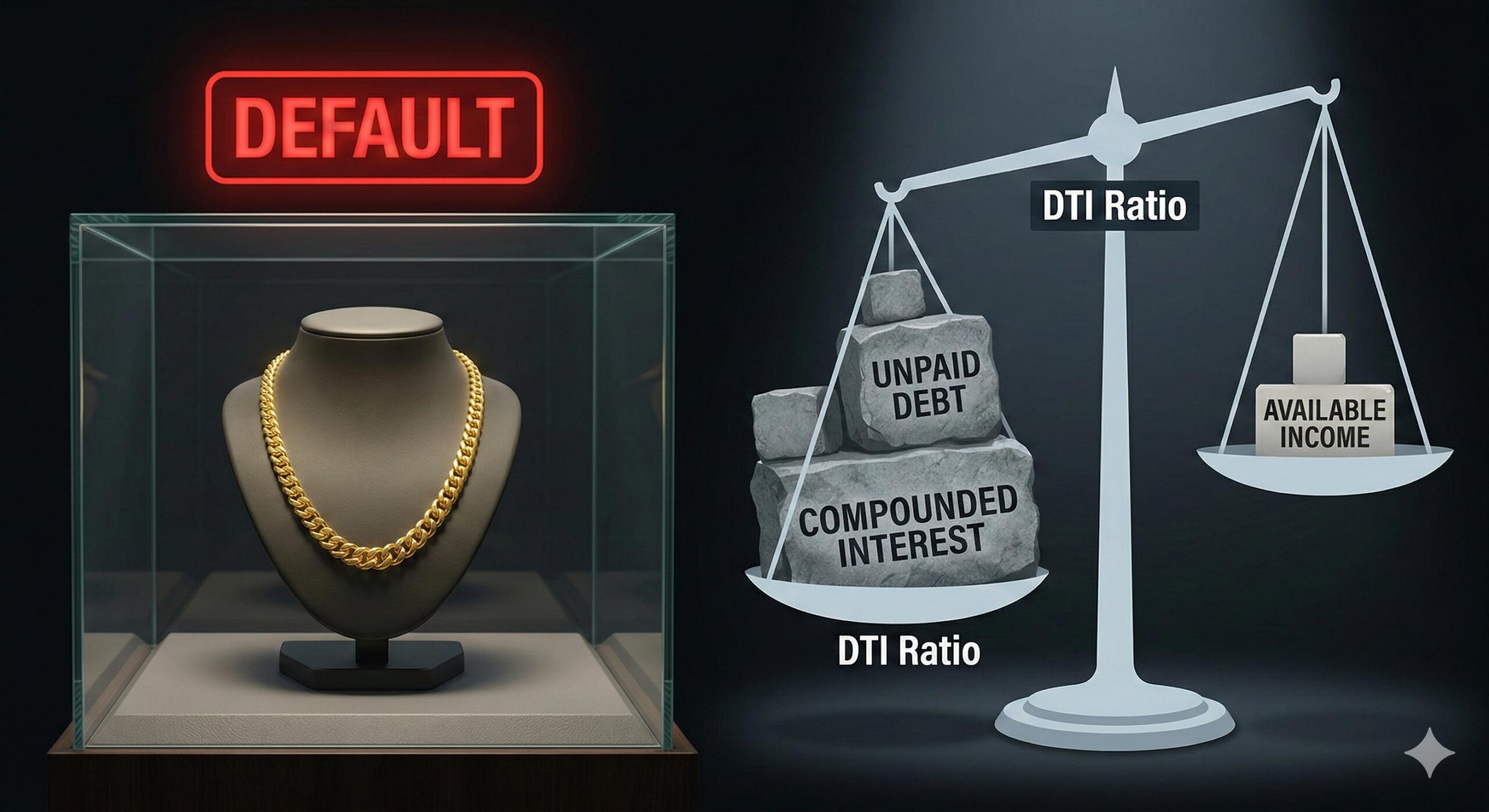
Furthermore, some schemes calculate interest on a compounding basis if you fail to pay monthly. This means unpaid interest is added to your principal balance, and you begin paying interest on top of your interest, rapidly inflating your total debt. Borrowers who plan to pay off the entire loan only at the end of the tenure often end up paying a much higher effective interest rate.
Factors That Directly Affect Your Specific Interest Rate

Lenders do not assign rates arbitrarily. The interest rate on your gold loan is carefully calculated based on risk. Several primary factors determine your final rate.
The Loan-to-Value Ratio
The Loan-to-Value (LTV) ratio represents the percentage of your gold’s total market value that the lender is willing to give you as cash.
If you request the maximum possible loan amount against your gold (a high LTV), the lender views this as a slightly higher risk. Therefore, these schemes generally carry a higher interest rate. Conversely, if you only need a small loan amount but pledge a large amount of gold (a low LTV), the lender’s risk is minimal, and they will typically offer a lower, more competitive interest rate.
Loan Tenure and Repayment Frequency
The duration of your loan (the tenure) heavily influences the cost. Gold loans are generally short-term, usually ranging from three months to a year.
Schemes designed for very short tenures often feature lower interest rates, provided the loan is closed on time. If you need funds for a longer duration, the base rate may be higher to account for market fluctuations in gold prices. Schemes that allow you to defer all payments until the very end of the term usually carry the highest interest burden.
Gold Purity and Valuation
Lenders specifically evaluate the purity of your gold, measured in karats. Standard gold loans are typically issued against jewelry ranging from 18 to 22 karats.
The valuation is strictly based on the pure gold content. The lender subtracts the weight of any precious stones or enamel before calculating the value. The purer the gold, the higher its intrinsic value. A higher valuation gives you the flexibility to choose a low-LTV scheme, which consequently lowers your interest rate.
The Importance of Calculating the True Cost of Borrowing

Looking solely at the primary interest rate can be misleading. Financial literacy requires analyzing the Annual Percentage Rate (APR) and the total cost of borrowing, which includes hidden fees.
Before signing an agreement, you must account for:
- Processing Fees: A flat fee or percentage charged at disbursement.
- Valuation Charges: The cost of the appraiser testing and weighing your gold.
- Prepayment Penalties: Fees charged if you close the loan before a minimum specified period.
- Auction Expenses: If you default, you are legally liable for the costs associated with auctioning the gold.
Adding these charges to the core interest rate reveals the true cost of your loan.
Comparing Gold Loan Rates to Alternative Financing
To understand the value of gold loan rates, compare them to other credit options.
Unsecured personal loans rely heavily on your credit history and income. Because there is no collateral, their interest rates are much higher, and the approval process is lengthy.
Credit cards offer quick cash, but cash advances carry exorbitant interest rates that begin compounding daily immediately.
In contrast, gold loans provide a lower-cost alternative with almost instant disbursement, making them highly attractive for urgent emergencies or business needs.
Approval and Rejection Factors for Secured Collateral

Understanding the interest rate is useless if your application is rejected. Because gold loans are secured, rejections are rarely based on your income; they are tied to the asset and regulatory rules.
Purity and Asset Quality Failures
The most common reason for rejection is failing the minimum purity standard. If jewelry is heavily alloyed, falls below 18 karats, or is counterfeit, it will be declined. Lenders also typically reject solid gold bars or bullion due to RBI regulations.
Know Your Customer (KYC) Discrepancies
To secure approval, your identity documentation must be flawless. If there is a mismatch between your government ID (like an Aadhaar or PAN card), your proof of address, and your application, the lender will reject the loan.
Ownership Disputes and Suspicious Patterns
Lenders are vigilant against stolen goods. If a borrower brings in an unusually large quantity of gold inconsistent with their profile, or if the gold is subject to a legal dispute, it cannot be pledged. Clear ownership is mandatory.
The Relationship Between Pledged Assets and Your Credit Score
Many believe credit scores are irrelevant for secured loans. While NBFCs do not require a high CIBIL score for initial approval, your repayment behavior heavily impacts your long-term financial health. The NBFC reports your account to credit bureaus.
Building Credit Through Secured Borrowing
If you make every interest payment on time, a gold loan acts as an excellent credit-building tool. Successful repayment demonstrates financial reliability, which will steadily increase your credit score.
The Consequences of Default
If you ignore the loan, miss payments, and go into default, the consequences are severe. The lender will legally auction your family gold and report the default to credit bureaus. This will drastically drop your credit score, making future borrowing very difficult.
Strategies for Responsible Borrowing and Risk Management
To safely leverage a gold loan, borrowers must practice extreme financial discipline.
Choose the Right Repayment Scheme
Do not blindly choose the scheme offering the highest loan amount. If you only need a fraction of what your gold is worth, opt for a low-LTV scheme to secure a lower interest rate. Align the repayment structure with your income, opting for monthly interest servicing to prevent debt growth.
Service the Interest Constantly
The most dangerous mistake is ignoring the loan until the end of the year. Due to compounding interest and rebate structures, your debt will balloon rapidly. Make it a strict habit to pay off accrued interest every single month to protect your asset.
Understand the Auction Process
Pledging gold means temporarily transferring possession. If your total outstanding debt exceeds the market value of your pledged gold, the lender will send legal notices demanding payment. If ignored, they have the legal right to liquidate the asset through a public auction.
Frequently Asked Questions About Gold Loan Interest Rates
How is the exact interest rate for my gold loan decided?
It is primarily decided by your chosen Loan-to-Value (LTV) ratio, your repayment scheme, and the loan tenure. Borrowing a lower amount compared to the total value of your gold (low LTV) usually results in a lower interest rate.
Will a low CIBIL score cause my gold loan application to be rejected?
Generally, no. Because the physical asset secures the loan, lenders do not heavily rely on your credit score for approval. Rejections are usually caused by failing purity tests or having mismatched KYC documents.
What happens if I miss my monthly interest payment?
On a rebate-linked scheme, you lose your discounted rate and are charged the higher standard rate. Unpaid interest may also compound, meaning you pay interest on top of existing interest, rapidly increasing your debt.
Are there any extra fees besides the advertised interest rate?
Yes. The true cost (APR) includes the core interest rate plus hidden charges like processing fees, valuation charges, and potential prepayment penalties.
Can a lender auction my family gold without telling me?
No, lenders are legally required by the RBI to send you multiple formal warnings before initiating an auction. However, if you ignore these notices, they will liquidate the asset to recover their money.
Conclusion
Understanding the Muthoot Finance gold loan interest rate requires looking beyond marketing numbers. It is a dynamic figure shaped by your loan amount, gold purity, and repayment discipline.
When used responsibly, pledging gold generates immediate liquidity. However, the ease of approval should never overshadow the need for strict repayment planning. Protect your credit score, service your interest monthly, and ensure your borrowing decisions align with your long-term financial stability.




1 thought on “Muthoot Finance Gold Loan Interest Rate: A Complete Guide for Borrowers”