Introduction
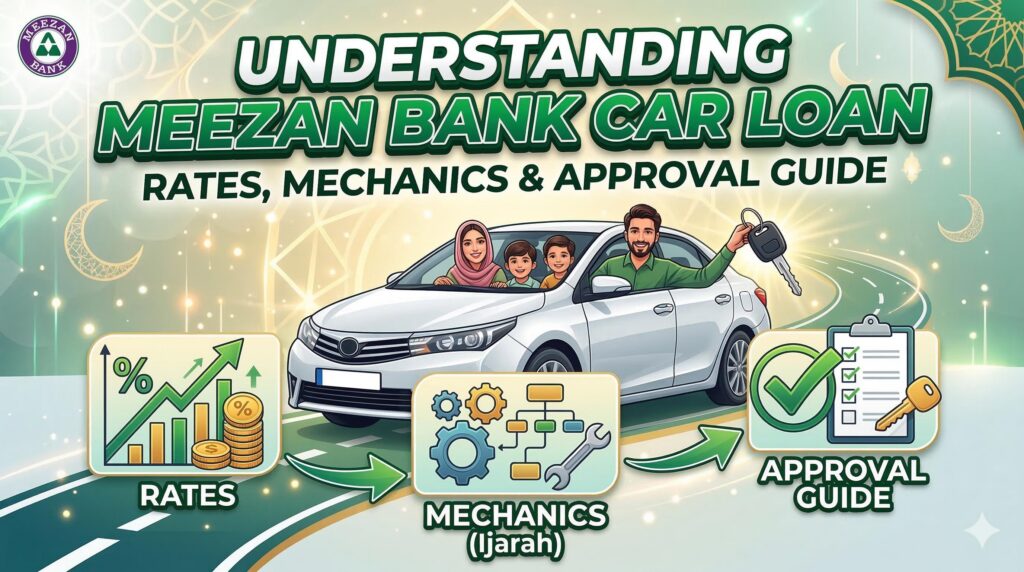
When searching for a meezan bank car loan, borrowers in Pakistan are actually looking to understand “Car Ijarah,” which is a Shariah-compliant auto financing facility. In simple terms, this keyword refers to an Islamic leasing agreement where the bank purchases the vehicle on your behalf and rents it to you, rather than lending you cash with an attached interest rate.
Borrowers actively search for this specific financial product to finance a new, used, or imported car while strictly avoiding conventional interest (Riba). The exact terms of this facility—specifically your monthly rental payment and whether your application is approved—are heavily affected by the national KIBOR (Karachi Interbank Offered Rate), your initial security deposit, and your personal Debt Burden Ratio (DBR).

At loanrejectionhelp.com, our goal is to improve your financial literacy so you can make informed decisions. Before worrying about the application process or a potential loan rejection, it is critical to understand the financial mechanics behind Islamic auto financing and how the pricing actually works.
Table of Contents
What is a Meezan Bank Car Loan? (The Concept of Ijarah)
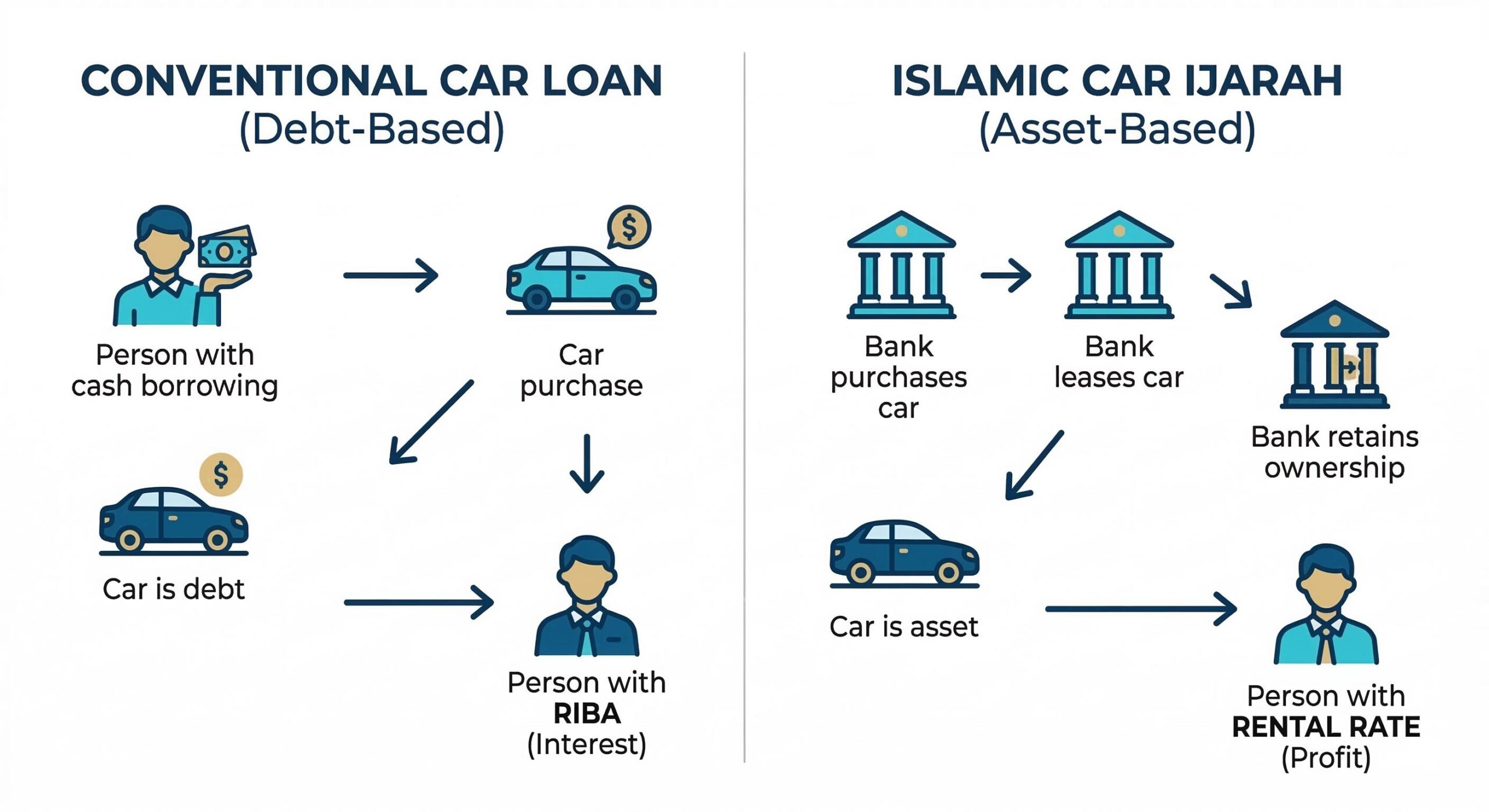
The most important distinction to grasp as a first-time borrower is that Meezan Bank does not offer a conventional “car loan.” In standard banking, a lender gives you money to buy a car, and you pay back the principal plus interest.
Under the Islamic concept of Ijarah (leasing), the transaction works differently:
- The Bank Purchases the Asset: You select the car you want. Meezan Bank purchases the car directly from the dealership or seller.
- The Leasing Agreement: The bank rents the car to you for an agreed-upon tenure (usually between 1 to 5 years). You pay a monthly rental fee for the right to use the vehicle.
- Ownership Transfer: Throughout the lease, the bank retains ownership of the car. However, upon successful completion of the lease term and the payment of all rentals, the bank transfers ownership of the vehicle to you through a separate, pre-agreed contract.
This structure allows middle-class families and self-employed professionals to finance a vehicle without engaging in interest-based borrowing.
How the “Interest Rate” Works in Islamic Auto Financing
Since Islamic banking prohibits Riba (interest), you might wonder how the bank makes a profit and how your monthly payments are calculated. The bank earns a profit through the rental rate charged for the use of its asset.
The Role of KIBOR
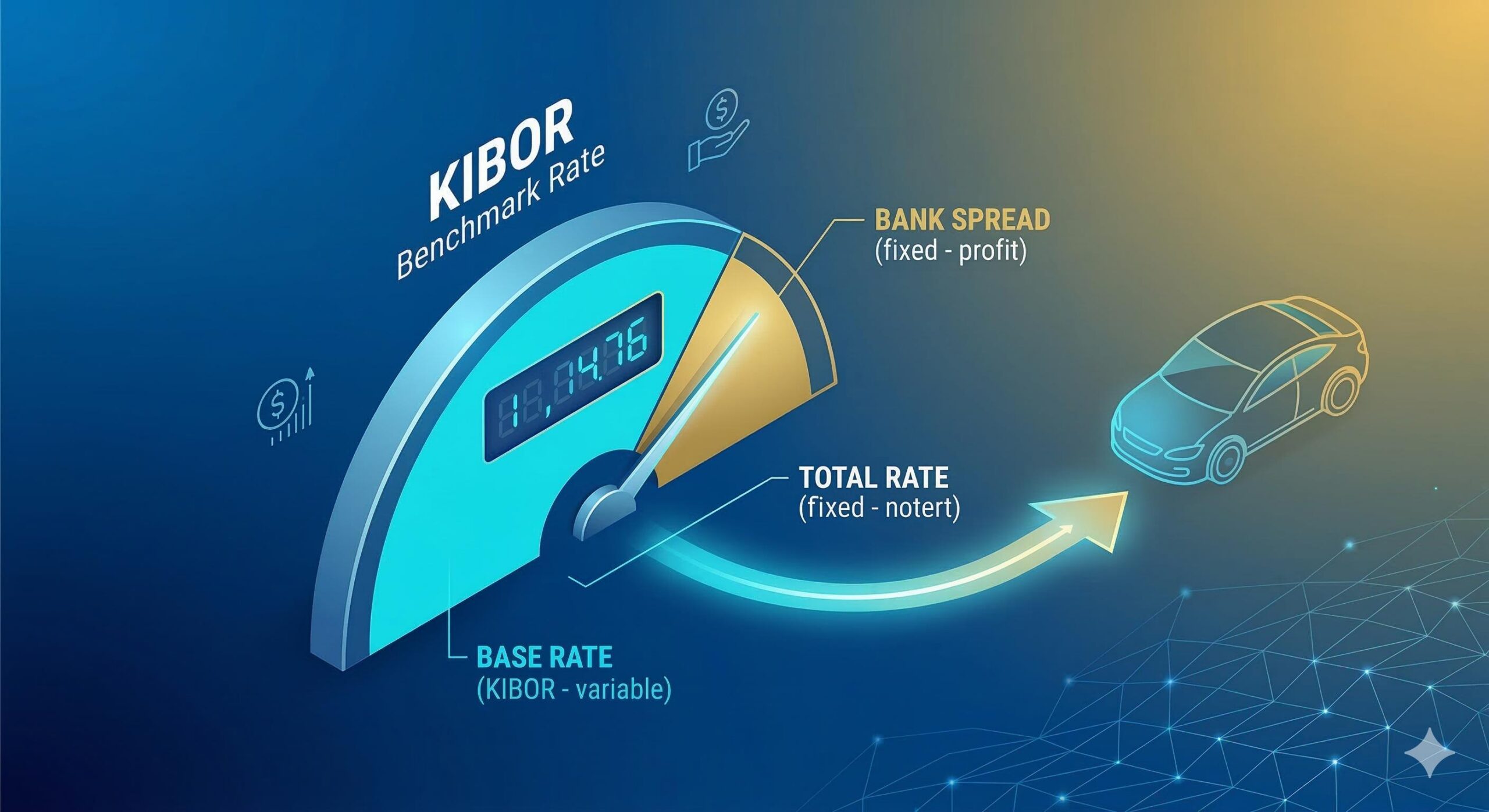
While Islamic banks do not charge interest, they must operate within the national economy. To price their rental rates competitively, Meezan Bank uses the Karachi Interbank Offered Rate (KIBOR) as a benchmark.
Your rental rate is typically quoted as “KIBOR + Bank’s Spread”.
- KIBOR: The benchmark rate that fluctuates based on the State Bank of Pakistan’s monetary policy and national economic conditions.
- Bank’s Spread: A fixed percentage added by the bank to cover its operational costs and profit margin.
Variable Rental Model
Most Ijarah contracts utilize a variable rental model. This means your monthly rental payment is not fixed for the entire 5-year term. Instead, it is usually revised annually or semi-annually based on the current KIBOR. If the national benchmark rate drops, your monthly rental decreases. If the benchmark rate rises to control inflation, your monthly rental will increase. Understanding this floating rate is essential to prevent “payment shock” during your lease tenure.
Key Factors That Affect Your Monthly Rental
When you apply for a meezan bank car loan, the total cost of your financing is determined by a few critical variables.
1. The Security Deposit (Down Payment)
In an Ijarah agreement, you do not make a “down payment” to buy equity in the car upfront. Instead, you provide a security deposit (typically ranging from 15% to 50% of the car’s value, or as low as 20% for used cars). A higher security deposit means the bank’s financial investment in the asset is lower, which directly results in a lower monthly rental payment for you.
2. The Lease Tenure
You can choose a repayment period typically between 12 and 60 months (1 to 5 years). Choosing a longer tenure stretches out the cost, resulting in a much smaller monthly rental. However, you will pay rent for a longer period, making the overall cost of the car higher. A shorter tenure increases your monthly burden but saves you money in the long run.
3. Takaful (Islamic Insurance)
Conventional car loans require comprehensive insurance. Under the Ijarah model, because the bank owns the car, the bank is responsible for securing the asset. Meezan Bank arranges Takaful (Islamic Insurance) for the vehicle. The cost of this Takaful is divided and built directly into your monthly rental payment, ensuring the asset is protected against theft or total loss without requiring a separate out-of-pocket payment from you each year.
Understanding Loan Rejection and Approval for Car Ijarah
At loanrejectionhelp.com, we frequently see borrowers frustrated by a declined application. Even though Car Ijarah is asset-backed (meaning the bank owns the car and can repossess it if you default), underwriters still strictly evaluate your ability to afford the monthly rentals.
If your application is rejected, it almost always comes down to these fundamental financial metrics:
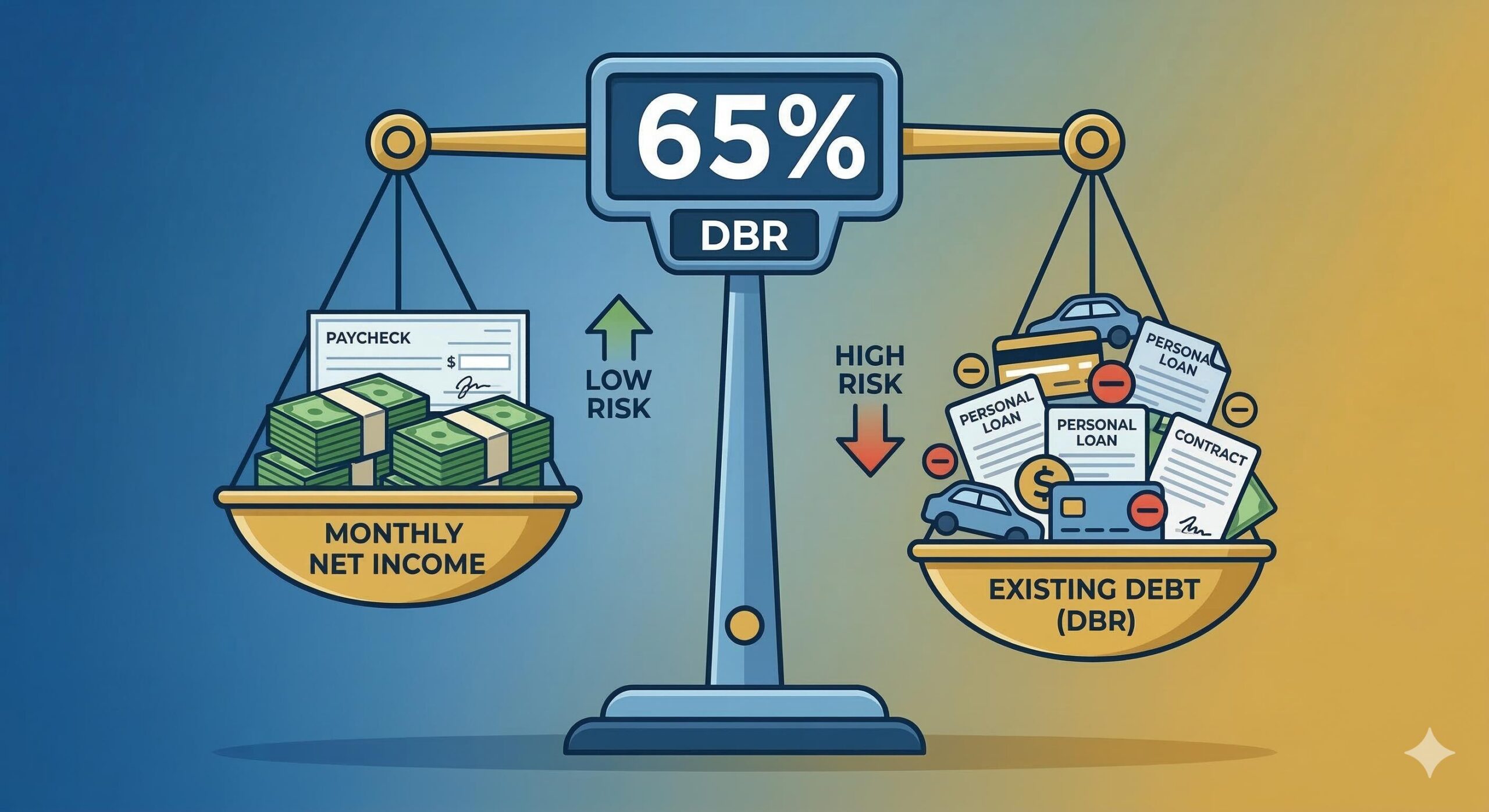
1. Exceeding the Debt Burden Ratio (DBR)
The State Bank of Pakistan mandates that a borrower’s total debt obligations should not exceed a certain percentage of their verified net income—usually capped around 40% to 50%.
- The Calculation: The bank adds up your existing credit card minimum payments, personal loan installments, and the projected Car Ijarah rental. If this total is more than half of your monthly take-home salary, your application will be automatically rejected to prevent financial over-leveraging.
2. Adverse eCIB Report (Credit History)
Whenever you apply for financing, the bank pulls your credit report from the Electronic Credit Information Bureau (eCIB). If your report shows late payments, defaulted credit cards, or written-off loans within the last 12 months, you will be flagged as a high-risk applicant. A clean eCIB is mandatory for approval.
3. Unverifiable or Unstable Income
Salaried applicants must provide recent salary slips and corresponding bank statements showing consistent salary credits. Self-employed individuals and small business owners face stricter scrutiny; they must provide audited accounts, tax returns, or strong business bank statements to prove they have the cash flow to sustain a multi-year lease.
Strategies to Improve Your Approval Odds
If you are a first-time borrower or recovering from a previous loan rejection, taking proactive steps can significantly enhance your profile before you submit an application:
- Clear Existing Minor Debts: Pay off small credit card balances before applying. This immediately lowers your DBR and frees up your income capacity for the car rental.
- Increase Your Security Deposit: If your income is on the borderline of the bank’s requirement, offering a 30% or 40% security deposit (instead of the minimum) reduces the monthly rental amount, making it easier to fit within your allowed Debt Burden Ratio.
- Check Your eCIB Profile: Before applying, ensure you have not missed any utility or credit card payments in the last six months.
- Maintain Banking Discipline: Avoid bouncing checks or overdrawing your accounts. A clean, stable bank statement proves to underwriters that you manage your money responsibly.
Frequently Asked Questions (FAQ)
1. Can I pay off a Meezan Bank Car Ijarah early?
Yes, you can terminate the lease agreement before the tenure ends. Because it is a lease, you essentially purchase the asset from the bank early. The bank will calculate the remaining principal value of the car. Be aware that early termination may involve specific administrative adjustments; always review your contract terms.
2. Who pays for the car’s maintenance?
In an Ijarah agreement, the bank (the owner) is technically responsible for major, fundamental asset risks (like total loss or major engine failure not caused by negligence). However, the customer (the lessee) is responsible for all routine, day-to-day maintenance, such as oil changes, tire replacements, and regular servicing to keep the car in good running condition.
3. What happens if the car is stolen or totaled in an accident?
Because the bank arranges comprehensive Takaful, the insurance provider will cover the loss. The Ijarah contract is immediately terminated since the leased asset no longer exists. You will not be required to continue paying monthly rentals for a car that is gone, and your security deposit will be adjusted against the Takaful claim settlement.
4. What happens if I pay my monthly rental late?
Unlike conventional banks that charge compound interest as a late fee (which is Riba), Islamic banks cannot financially benefit from late payments. However, to discourage delays, you undertake to pay a specific penalty amount if you are late. This penalty is not kept by Meezan Bank; it is legally required to be transferred to a designated Charity Fund administered by the bank.
Mazda Finance: A Complete Guide to Auto Loans and Financing
Conclusion
A Meezan Bank car loan—properly understood as Car Ijarah—is an excellent financial tool for individuals seeking Shariah-compliant vehicle ownership. By understanding that your payments are rental rates influenced by the KIBOR benchmark rather than conventional interest, you can better plan your long-term budget.
Remember that approval is never guaranteed. It relies entirely on your financial discipline, a healthy eCIB credit report, and a manageable Debt Burden Ratio. Prepare your finances, save for a robust security deposit, and only commit to a vehicle that comfortably fits your monthly cash flow.

Educational Disclaimer: The information provided in this article is for educational and financial literacy purposes only and does not constitute professional financial advice. Auto financing involves long-term financial commitments and risks. Rental rates and approval criteria are subject to change based on central bank policies and individual bank underwriting guidelines. Always read the official terms and conditions provided by the financial institution before signing any leasing agreement.